Short answer
A defensible scope for feces or bodily fluid cleanup explains why each step is included, what evidence supports it, and how completion will be verified. It names the contamination source and water category, maps the affected area, lists which materials are removed versus cleaned, specifies disinfectant and contact time, describes waste handling, and sets a written re-occupancy condition. This illustrative example walks through that reasoning step by step.
What a defensible scope means
A scope of work is the written list of tasks a provider will perform. A defensible scope goes one step further. Each line has a reason attached, and someone who was not on site, such as an insurance adjuster, a property owner, or a family member, could read it and understand why the work was needed.
This matters because sewage and waste jobs often involve tearing out material that looks fine to an untrained eye. Carpet can look dry on top while the pad underneath is saturated. Drywall can appear intact while the lower portion has wicked contaminated water well above the visible stain line. Without a clear explanation, those removals look like padding the bill.
The example below is entirely hypothetical and simplified. It is meant to show a way of thinking, not to set a standard for any real property. Your provider, local rules, and the actual conditions in your home will shape what is right for you.
The scenario: sewage in a finished basement
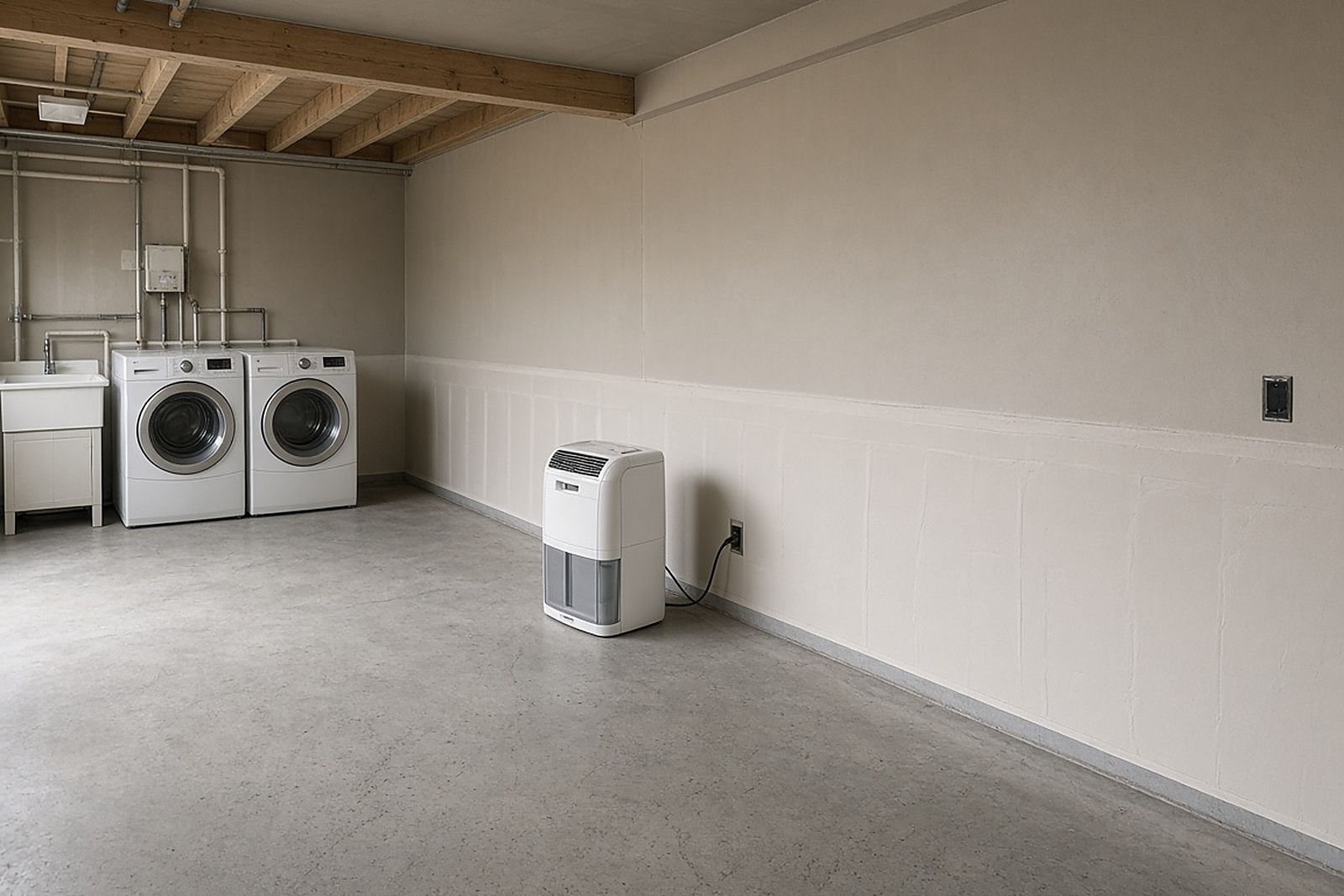
Imagine a hypothetical two-story house with a finished basement. After heavy rain, the municipal sewer line surcharges and sewage comes up through a basement floor drain overnight. By morning, there is standing wastewater across roughly half the basement, which includes a family room with wall-to-wall carpet, a laundry area on sealed concrete, and a small bathroom with vinyl plank flooring.
The homeowners notice the smell before they see the water. They keep their two young children and the family dog upstairs, shut the basement door, and call their plumber, who confirms the drain is no longer backing up. Then they call a cleanup provider and their insurance company.
Before anyone touches anything, the homeowners take photos and short videos of every affected area. That single step will make every later conversation easier.
They also shut off the basement's forced-air return by closing the register, so the smell does not travel through the rest of the house while they wait. Nobody attempts to mop or use a shop vacuum, since that would spread contaminated water and put the adults at risk without the right protection.
Documenting the starting conditions
On arrival, the technician walks the basement and records what they see. They note the source of the water and assign it to the most contaminated water category because it came from a sewer line. They sketch a rough floor plan and mark where water pooled, where it wicked, and where it did not reach.
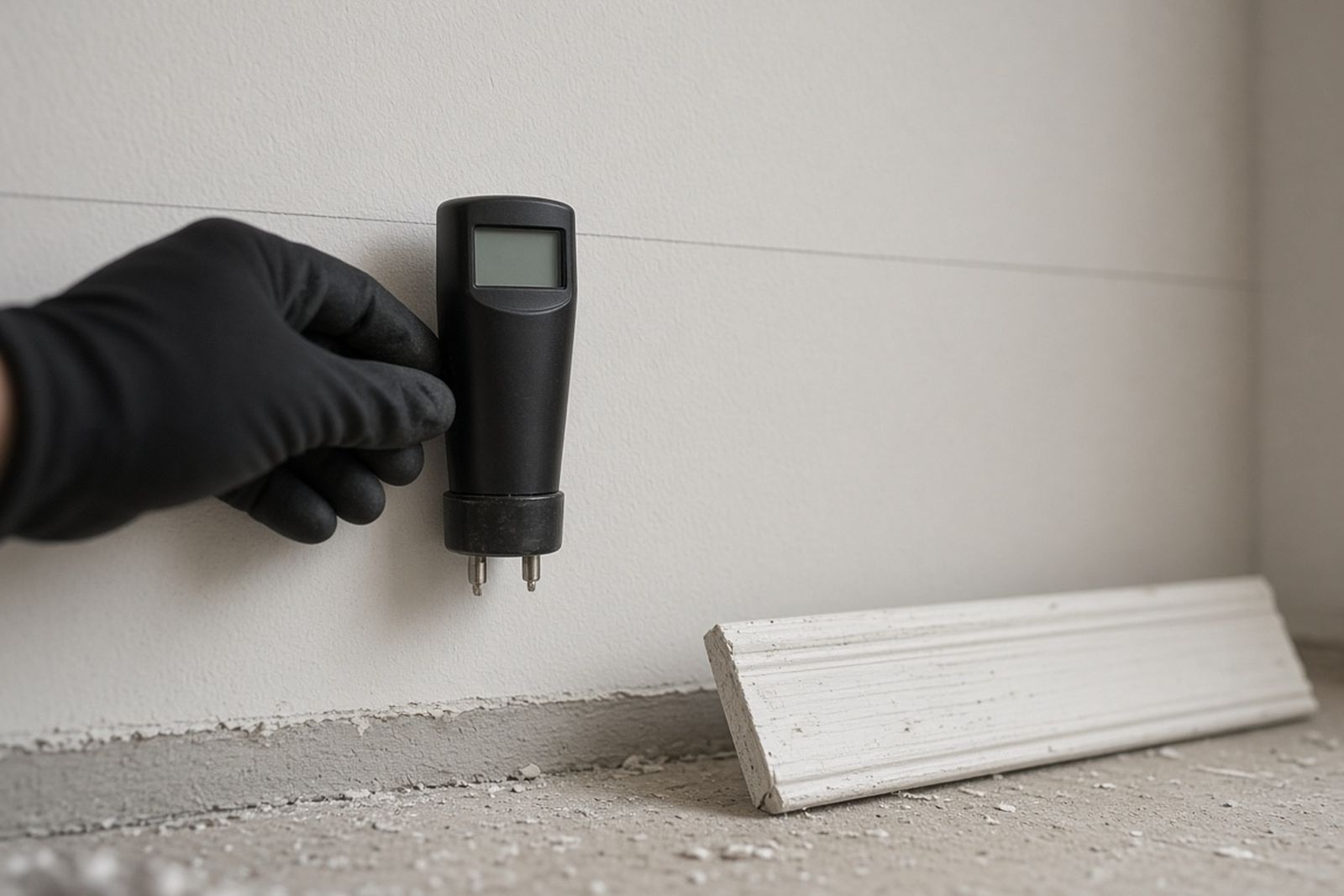
They use a moisture meter along the base of every wall and in the carpet at several points. Readings show that water traveled under the wall between the family room and the bathroom, a detail invisible from the surface. They also check whether any water reached the furnace or water heater platform.
Before starting, the technician checks the air near the floor drain for gases associated with sewage, since the basement had been closed overnight. Human waste breaking down in a warm, enclosed space can produce ammonia and hydrogen sulfide, and both are hazardous at high levels. Readings here are low, but documenting that check matters.
- Source: municipal sewer surcharge through floor drain
- Water category: most contaminated category, due to sewage origin
- Affected rooms: family room, bathroom, laundry area
- Unaffected: storage room behind a raised threshold, stairs
- Air check: performed before entry, results recorded
Which materials are removed, and how is each decision justified?
This is where a scope earns trust. The provider lists each material and gives a short reason for keeping or removing it. The goal is to remove what cannot be reliably cleaned and disinfected, and to save what can.
Carpet and pad in the family room are removed because they are porous, saturated with sewage, and cannot be adequately disinfected in place. Drywall in the family room and bathroom is cut out to a height above the highest moisture reading plus a margin, because the gypsum core and paper facing absorbed contaminated water. Insulation behind that drywall is also removed.
The vinyl plank flooring in the bathroom is lifted, since water got underneath it and the click joints trap residue. The sealed concrete in the laundry area stays, because it is nonporous enough to clean and disinfect. The washer and dryer are metal and enamel on the outside, but the provider notes that the homeowners should have an appliance technician check whether water reached internal components.
A wooden bookcase with particleboard shelves is listed for disposal, while a solid metal shelving unit is cleaned and kept. Each item appears on a list with a photo, which the homeowners can share with their insurer.
Cleaning and disinfection in the plan
The scope separates cleaning from disinfection, because they are different jobs. Cleaning removes the physical residue with detergent, water, and scrubbing. Disinfection uses a registered product to inactivate organisms on the cleaned surface.
The provider names the disinfectant and notes that it carries a claim against norovirus, a common and hardy enteric virus. EPA's List G of products proven effective against norovirus contains roughly 600 products with contact times from 30 seconds to 15 minutes, according to the agency's 2026 listing. The scope records which one is being used and its specific wet time, so the homeowners can check it.
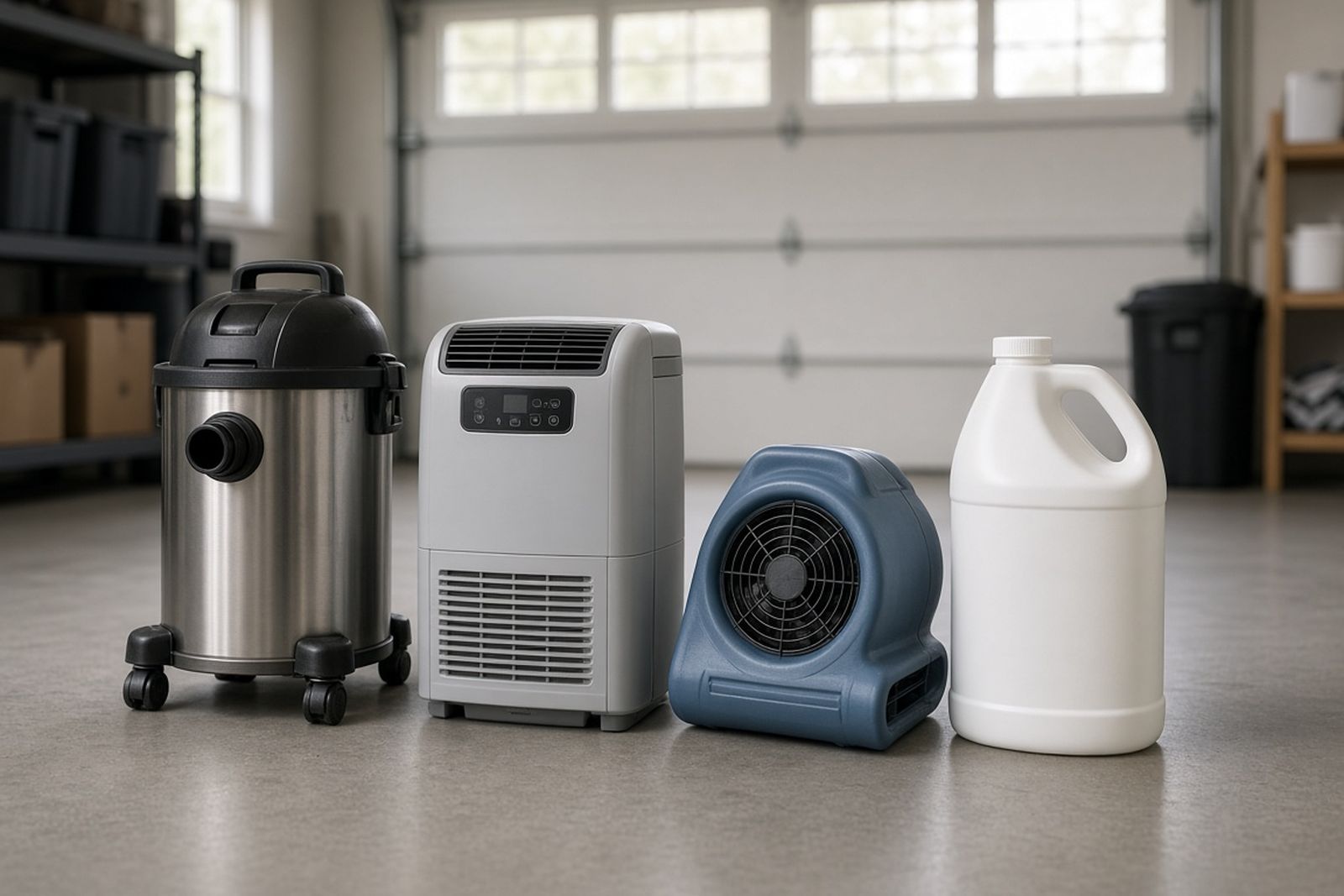
Exposed framing, the concrete slab, and the bottom plates of walls are cleaned and then disinfected. After disinfection, the space is dried with dehumidifiers and air movers, and the scope says drying will continue until moisture readings reach the provider's stated dry standard for each material.
Waste handling and worker protection
The scope explains how removed materials are bagged, where they are staged on the property, and how they leave. Sewage-soaked building materials are usually handled as contaminated construction debris, but local rules decide the details, including whether the waste can go to a standard landfill and what paperwork is needed.
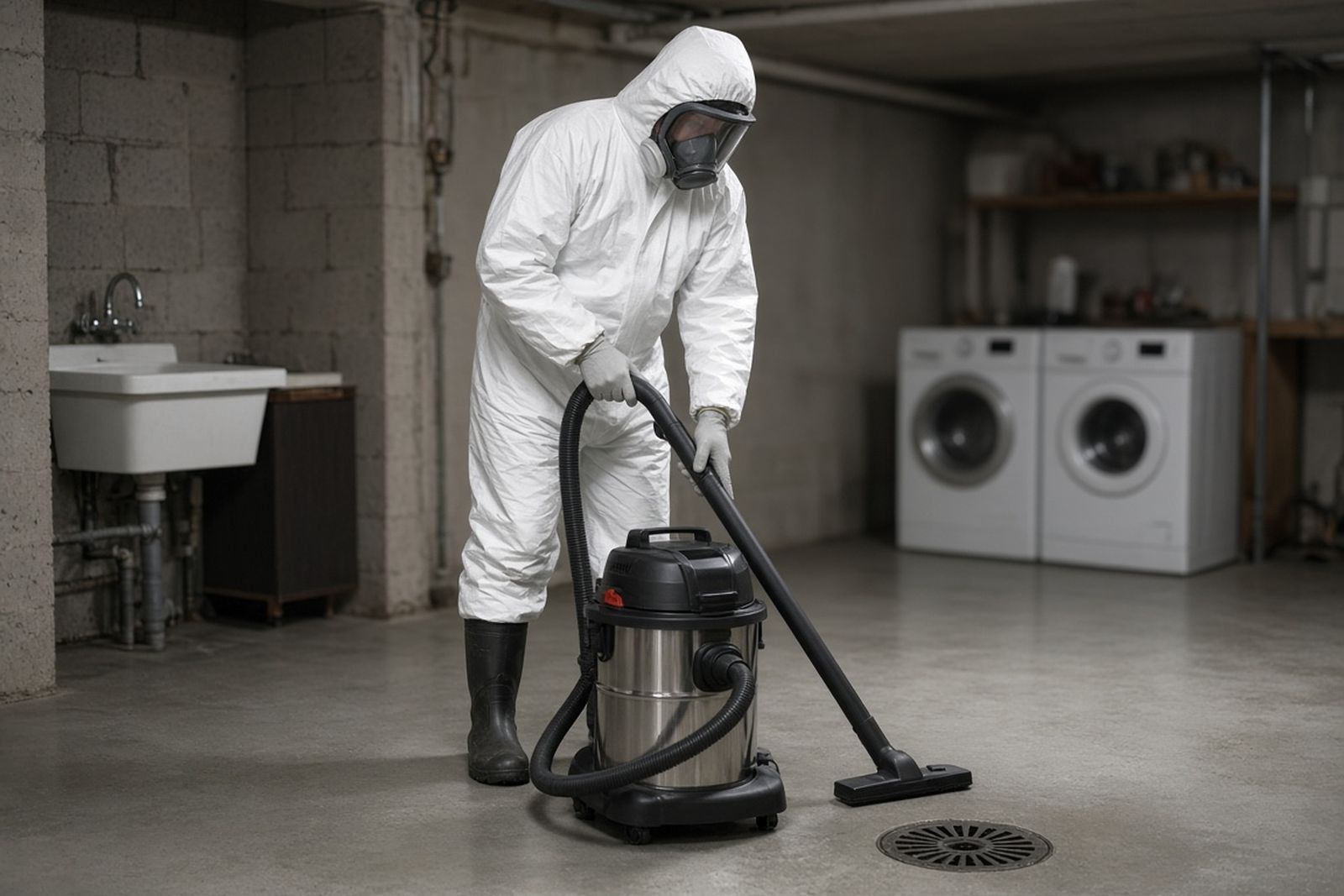
It also describes containment. Plastic sheeting separates the work area from the stairs, and the HVAC return in the basement is sealed so dust and odor are not drawn through the house. Technicians wear protective suits, gloves, boots, eye protection, and respirators appropriate to the task, and they remove that gear at a set point before going upstairs.
Listing these steps may seem excessive to a homeowner who just wants the smell gone. But containment and protective gear are what keep a basement problem from becoming a whole-house problem.
When an adjuster or second contractor questions the scope
In our hypothetical, the insurance adjuster visits two days later and asks why the drywall was cut higher in the family room than in the bathroom. Because the provider logged moisture readings at each wall, they can show that water wicked further in the family room, where the carpet held it against the wall for hours. The answer is in the record, not in anyone's memory.
The adjuster also asks whether the vinyl plank floor could have been cleaned in place. The provider points to photos of residue found under the planks once the first row was lifted. That kind of evidence tends to settle questions quickly.
If a second contractor is hired for rebuilding, the same packet tells them exactly what was removed and to what height. They do not have to guess, and they will not accidentally close up a wall cavity that was never dried.
Not every question will be resolved in your favor, and coverage decisions belong to the insurer. But a scope with reasons, readings, and photos gives you the strongest footing for that conversation.
Defining done, and the habits worth copying
Before work begins, the provider and homeowners agree on what done looks like. In this example, the basement is considered ready for rebuilding when every item on the removal list is gone, all remaining surfaces have been cleaned and disinfected, moisture readings meet the stated dry standard, and no sewage odor is detectable after the space has been closed for a period.
The provider walks the homeowners through the empty basement at the end, pointing out the cleaned framing and slab. They share a closeout packet with photos, moisture logs, the disinfectant used, and waste disposal records.
Only after that walkthrough do the homeowners schedule drywall and flooring. Once walls are closed, nobody can confirm what is behind them, so this checkpoint matters.
The details of any real job will differ. The value of the example is in the habits it shows, which you can ask for regardless of the provider you choose.
For waste disposal, rebuilding permits, and any claim against the municipal sewer utility, ask your solid waste agency, building department, and sewer utility what they require.
- Photograph everything before work starts.
- Ask the provider to state the water category and explain it.
- Request a removal list with a reason and photo for each item.
- Confirm the disinfectant name, its label claims, and the contact time.
- Agree on a written re-occupancy condition at the start.
- Walk the space before any rebuilding covers the framing.
- Keep every log, receipt, and photo in one folder for the insurer.