Each service below fits a different kind of mess, from one soiled room to a basement full of sewage. Find the one that matches your home to see who it serves, what the work involves, and which records to ask for at the end.
Get an email reply about feces & bodily fluid cleanup
Send a short message to the follow-up inbox. A coordinator can reply by email. This form does not send emergency help; call 911 first if anyone is in danger.
How are these services different?
Some jobs are about solid waste in one spot. Others are about urine that slowly soaked into floors over months. A sewer backup can touch a whole level of a home. A single job often uses more than one service, such as waste removal followed by odor work.
Tell the company what happened, how long it has been there, and whether a plumber has been out. Those facts decide which service fits and how the crew plans the visit. If you are not sure, describe what you see and smell and let them sort it out.
The services, one by one
Human Waste Remediation
Who it is for: Homeowners, family members, and landlords facing feces on floors, walls, furniture, or bedding. It fits illness, a person in crisis, or a unit left in poor shape.
The crew finds every soiled spot, including ones hidden behind furniture. They lift solids without scraping them into dust, then cut out soaked carpet, pad, or mattress material. Remaining surfaces are scrubbed and treated with a disinfectant, and if a doctor has named an illness such as C. diff, the crew picks a product whose label covers it.
What you should get: Photos and a written record of every item taken out and every surface cleaned. It should also name the products used.
Bodily Fluid Decontamination
Who it is for: Homes and rentals with urine, vomit, or other body fluids, often from an aging relative, a long illness, or a tenant who left. It also covers beds and chairs used by someone who could not reach a bathroom.
Urine often wicks far past the stain, so the crew checks moisture across the whole floor. Soaked pad, cushions, and mattress layers are removed. Hard surfaces are washed with a cleaner that breaks down the fluid, then disinfected. If urine reached the wood below, it may be cleaned and sealed so smell does not rise again.
What you should get: A floor map or photos showing where fluid was found, plus a note on anything sealed rather than replaced.
Odor Elimination
Who it is for: Anyone with a lingering waste or urine smell after the visible mess is gone. It is also used as a final step after the other services.
The crew first confirms the source has been removed, because smell comes back if it has not. They clean remaining surfaces, change air filters that pulled in odor, and seal stained wood or concrete. Air cleaners or ozone machines may be used, but ozone requires everyone, including pets and plants, to be out of the space.
What you should get: A note separating what was removed from what was treated, and advice on when to check again on a humid day.
Sewage Backup Cleanup
Who it is for: Homes and buildings where a sewer line, septic system, or toilet backed up into living space or a basement. It pairs with a plumber who clears the line.
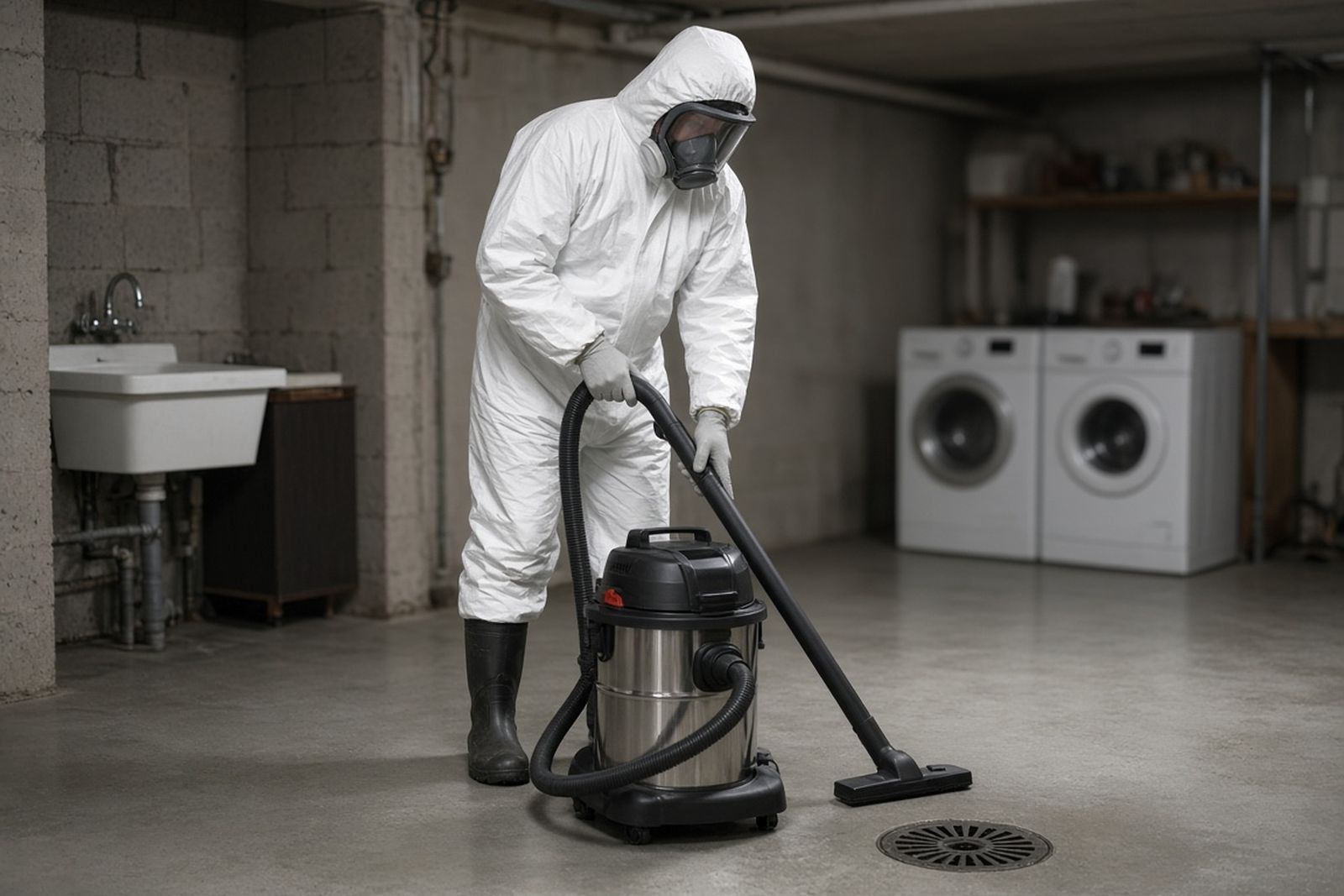
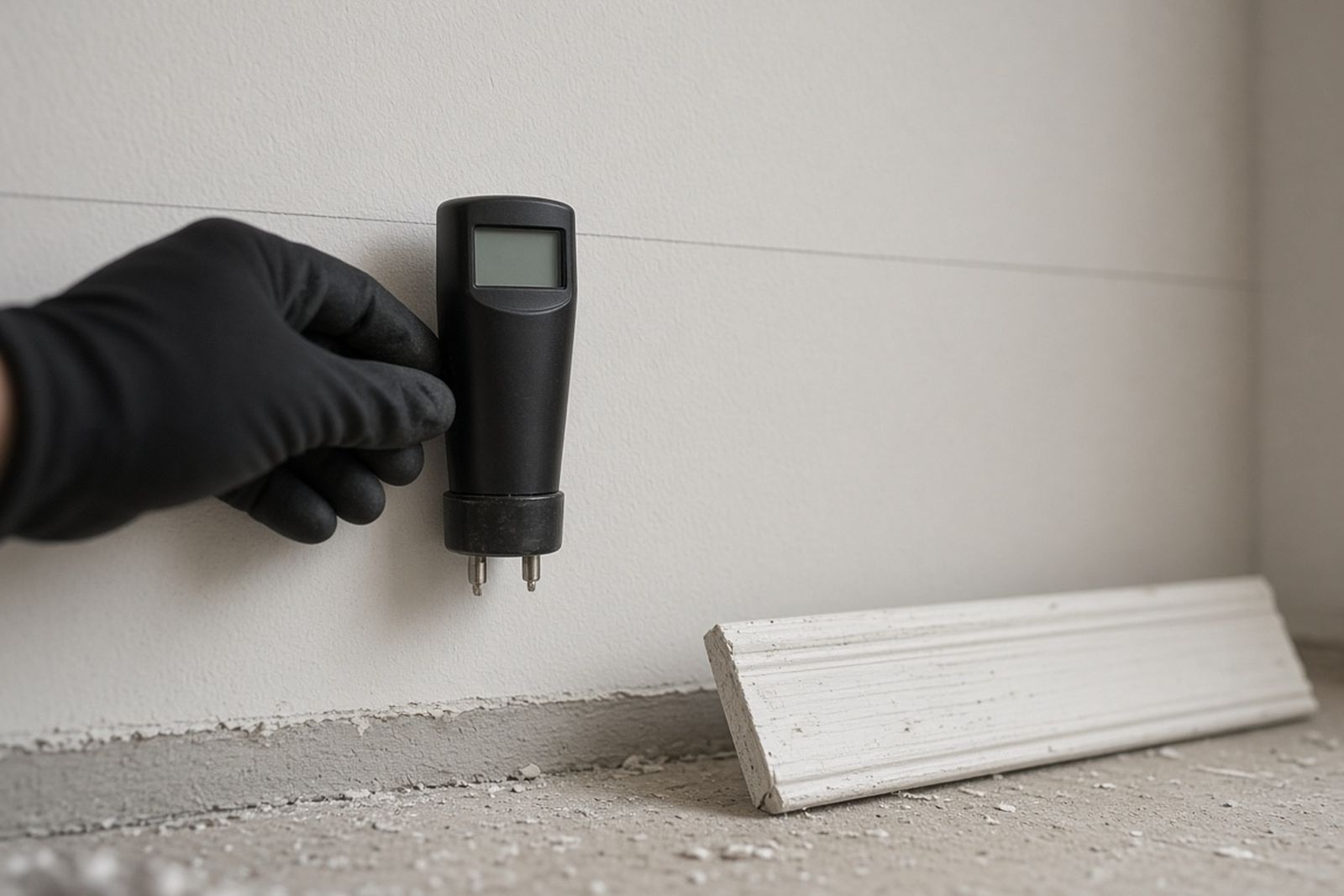
Once the line is fixed, the crew pumps out standing sewage and seals off the area. Carpet, pad, drywall, and insulation that touched the water are removed. The structure is scrubbed, disinfected, and dried with fans and dehumidifiers until moisture readings are back to normal.
What you should get: Photos, daily moisture readings, and a scope your insurer can match to the plumber's report on the cause.
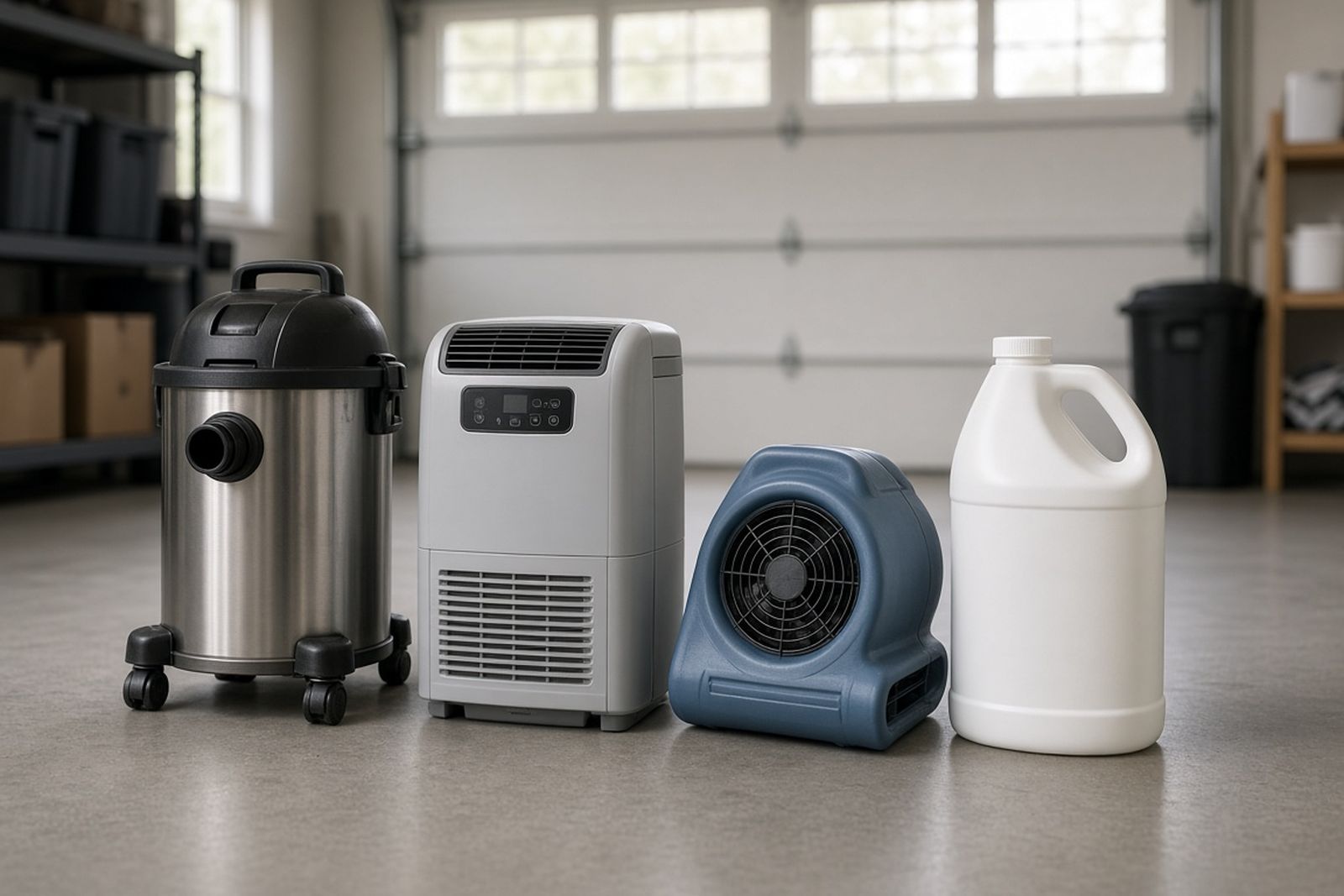
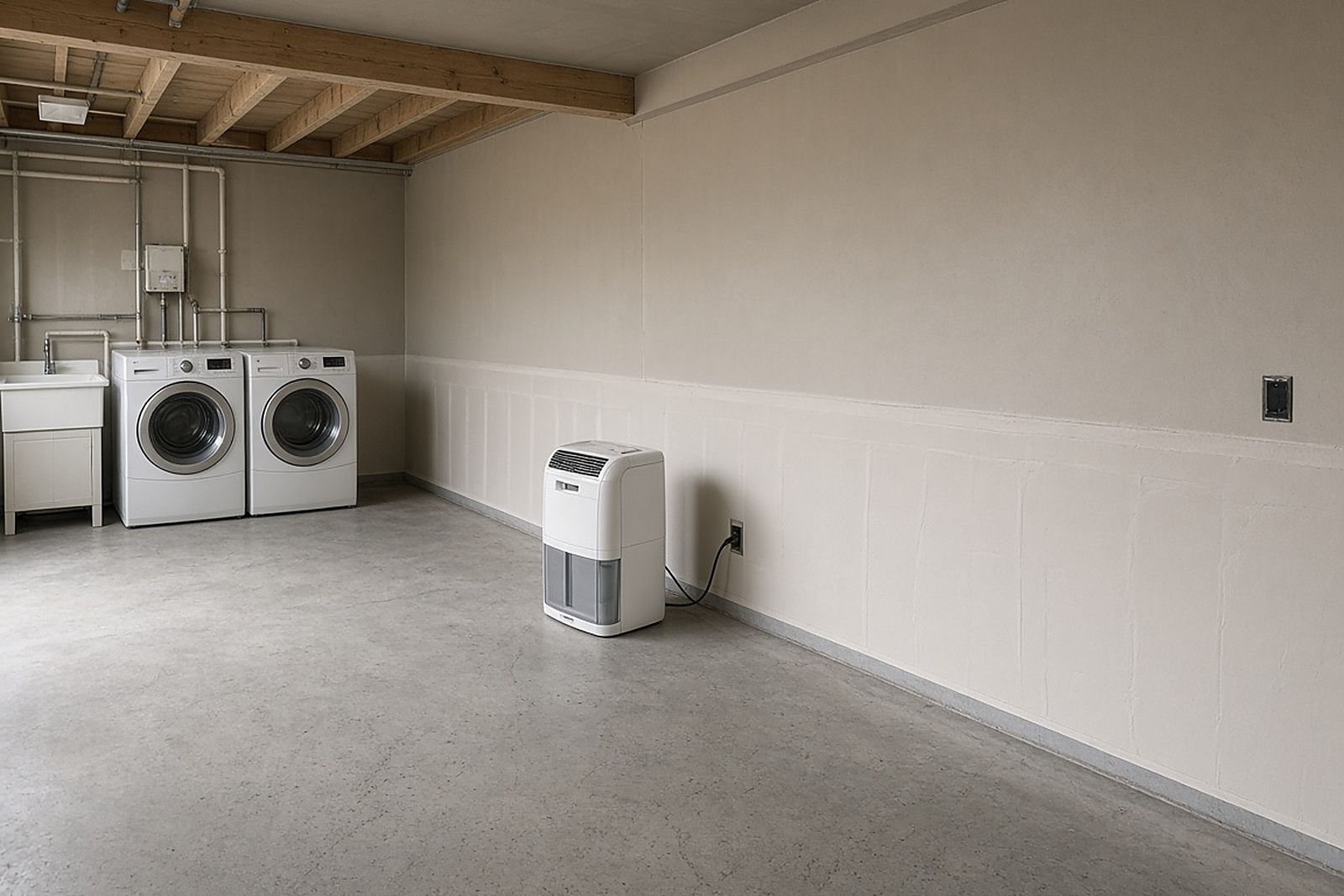
Illustrative photo, not a job record. Wet vacuum, dehumidifier, air mover and disinfectant jug staged in a garage.Illustrative photo, not a job record. Dry, clean basement laundry area with new lower wall panels and a dehumidifier running.
Feces & Bodily Fluid Cleanup in numbers
7 days
Hepatitis B virus remains infectious for at least 7 days on surfaces; in 2023 the US recorded 2,214 reported cases but an estimated 14,400 actual infections.
Read with care: Surface survival does not mean casual contact transmits infection.
CDC estimated 223,900 hospitalized C. difficile cases, 12,800 deaths and $1 billion in attributable healthcare costs in 2017, rating the threat 'urgent'.
Read with care: Counts hospitalized cases only; community-associated cases are not declining.
These figures are public research and agency data, not this network's own job records. Keep each number with its population, year and limits; none of them predicts cost, timing or outcome at a specific property.
Work that falls outside these services
Fixing the pipe, sewer line, or toilet that failed. A plumber handles that, and a septic company pumps a full tank.
New floors, walls, and cabinets once the damaged ones are gone. A contractor or flooring installer does that work.
Medical advice about exposure or illness. Talk to a doctor, nurse line, or your local health department.
Day-to-day personal care for someone with incontinence. A home health agency or the person's doctor can help set that up.
Settling who pays between a landlord, tenant, neighbor, or insurer. Your insurer, a tenant rights office, or an attorney can advise.
What happens after the crew leaves?
A faint smell may linger for a few days while the space airs out. If a strong waste odor returns, especially on warm, damp days, call the company back, since it often means a hidden wet spot. Before new flooring goes in, make sure the subfloor is fully dry and any sealing is done. Keep the final paperwork with your home records in case you sell or file a claim later.
If this happened because someone you love is losing control of their bladder or bowels, you are not alone, and it is not a failure. Their doctor can check for causes and suggest supplies like waterproof mattress covers. Your local Area Agency on Aging can point you to in-home help and caregiver support.
Findings from published studies of people and properties in situations like this one. They describe what researchers observed in a specific group; they are not predictions for your case.
Sporicidal products were common in contact-isolation rooms but uncommon in ordinary rooms.
Every count is a real visitor vote; nothing is seeded or padded. One vote per poll per device, and you can change your answer.
Your experience
When you discovered a sewage backup or waste problem at home, what did you do first?
No visitor votes yet
Process
How did you decide whether soaked carpet could be saved?
No visitor votes yet
Your experience
As a landlord, how do you usually handle a unit left with waste or fluid damage at move-out?
No visitor votes yet
Before you hire: feces & bodily fluid cleanup questions
Can the crew work around someone who is bedbound?▼
Yes, with planning. The crew can often clean one room at a time while the person stays in another, keeping doors shut and air moving away from them. Tell the company about oxygen tanks, medical beds, and any breathing problems. Some odor methods, like ozone, cannot be used while anyone is in the home. Ask whether they can pick products and methods that let the person stay safely.
What if sewage reached the crawl space or under a slab?▼
A crawl space is tight and dark, and sewage can soak the soil and insulation there. Crews usually remove wet insulation, lift out soiled soil or cover it, and disinfect the wood above. Under a slab, the issue is usually a broken pipe, which a plumber must find with a camera. The cleanup plan should say how the crawl space will be dried and checked afterward.
Can a mattress or couch be saved after urine or waste?▼
Usually not if the fluid soaked past the cover. Foam and padding hold liquid deep inside, and cleaning the surface leaves the source in place. A waterproof mattress protector that did its job can often be washed and the mattress kept. Hard furniture frames, like wood or metal, may be cleaned. The crew should show you what they found before anything is thrown away.
Why does the company ask so many questions about the cause?▼
The cause shapes the plan. A clean supply-line leak that later mixed with a toilet is handled differently from a city sewer backup. Knowing how long the mess sat helps the crew guess how deep it went. The cause also matters for your insurance claim, and the company's notes may be read by your adjuster. Answer honestly and share the plumber's findings if you have them.
What changes if the home has a septic system?▼
When a septic tank backs up, the tank may need pumping before anything else. Call a septic company to pump it and check the field. Stop using water until they say it is safe. The cleanup inside is much the same as a city sewer backup. Outdoors, sewage on the ground may be a concern for wells and neighbors, so check with your local health department.
What if waste got into a heating duct or wall?▼
Floor vents are a common path for overflow water, and walls can hold waste behind trim and baseboards. The crew may open the duct run or wall to reach the soiled area. Metal duct sections can often be cleaned, while flexible duct and duct board are usually replaced. Change the furnace filter after the work, and ask the crew to note these spots in the report.
Can one visit fix a problem that keeps happening?▼
A cleanup can remove the damage that is there now, but it cannot stop new accidents or backups. For repeated sewer problems, ask a plumber about a backwater valve or line repair. For repeated accidents by a family member, talk with their doctor and consider washable floor coverings in key rooms. Some families set up a follow-up visit with the crew to check the area later.