Short answer
Before you hire anyone to clean sewage, urine, or human waste, ask how they will find contamination you cannot see, which materials they expect to remove, what disinfectant and contact time they will use, how workers are protected and trained, how waste is disposed of, what documentation you will receive, and how changes to the scope are approved. Clear, specific answers matter more than a low price.
Interview the company, even when you just want the mess gone
When there is sewage on the basement floor or a room that smells of old urine, the natural impulse is to hire whoever can come first. That urge is understandable, and speed does matter. But the company you choose will decide what gets removed, what stays, and whether contamination is left behind in places you cannot see.
A carpet cleaning or general janitorial company may be excellent at routine work and still not be set up for waste that carries pathogens. The difference usually shows in how a company answers a few direct questions. You can ask all ten of the questions below in a single phone call of about fifteen minutes.
Take notes as you go. If you are comparing two or three providers, those notes will make the choice clearer than any price.
Questions 1 and 2: hidden contamination and what comes out
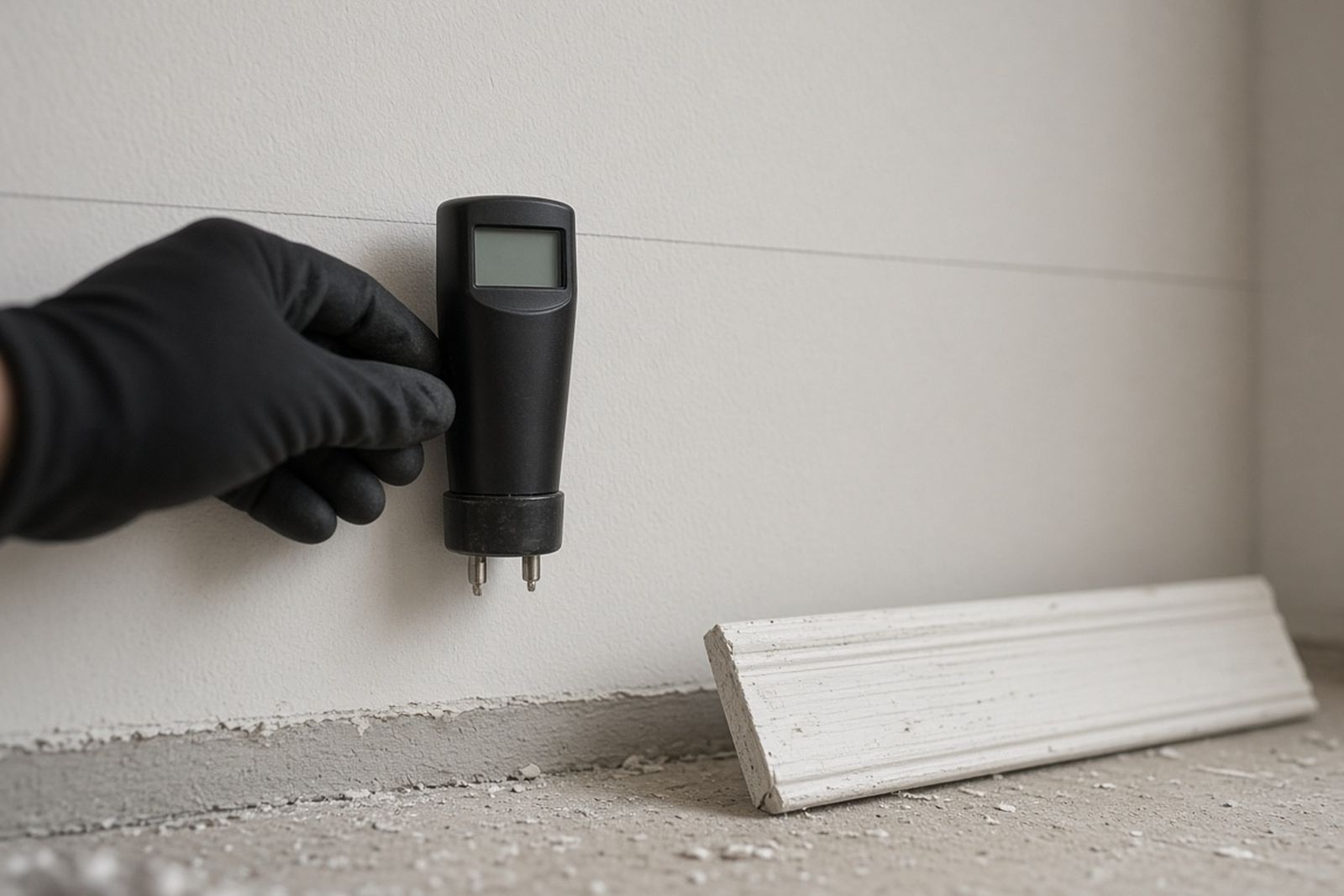
Question 1: How will you determine how far the contamination has spread? A strong answer mentions moisture meters, lifting flooring edges, checking baseboards and cabinet bases, and looking at adjacent rooms and lower floors. Some providers also use ultraviolet lights to trace old urine. A weak answer is that they will clean what they see.
Question 2: Which materials do you expect to remove rather than clean? You want to hear a reasoned distinction between porous and nonporous materials. Carpet pad that absorbed sewage, drywall that wicked fluid, and particleboard that swelled are usually removed. Sealed tile and metal can usually be cleaned. Be wary of anyone who promises to save everything, and equally wary of anyone who wants to gut a room without explaining why.
Both answers should end up in the written scope, room by room, so you can compare what one company plans to remove with what another does.
Questions 3 and 4: the disinfectant and its contact time
Question 3: Which disinfectant do you plan to use, and what is its EPA registration number? Registered products list the organisms they are proven against on the label. A company that cannot name its product or says it uses a proprietary blend without a registration number is not giving you enough to verify.
Question 4: What contact time does the label require, and how will you make sure surfaces stay wet that long? Contact time is the period a surface must stay visibly wet for the disinfectant to work. On large floors or walls, products can dry early or run off, so crews may need to reapply. A good answer is specific: the label says a certain number of minutes, and here is how we meet it.
If someone in the home has a known illness, such as norovirus or C. difficile, mention it. The provider should explain whether their chosen product carries a claim for that organism.
Questions 5 and 6: protection and training
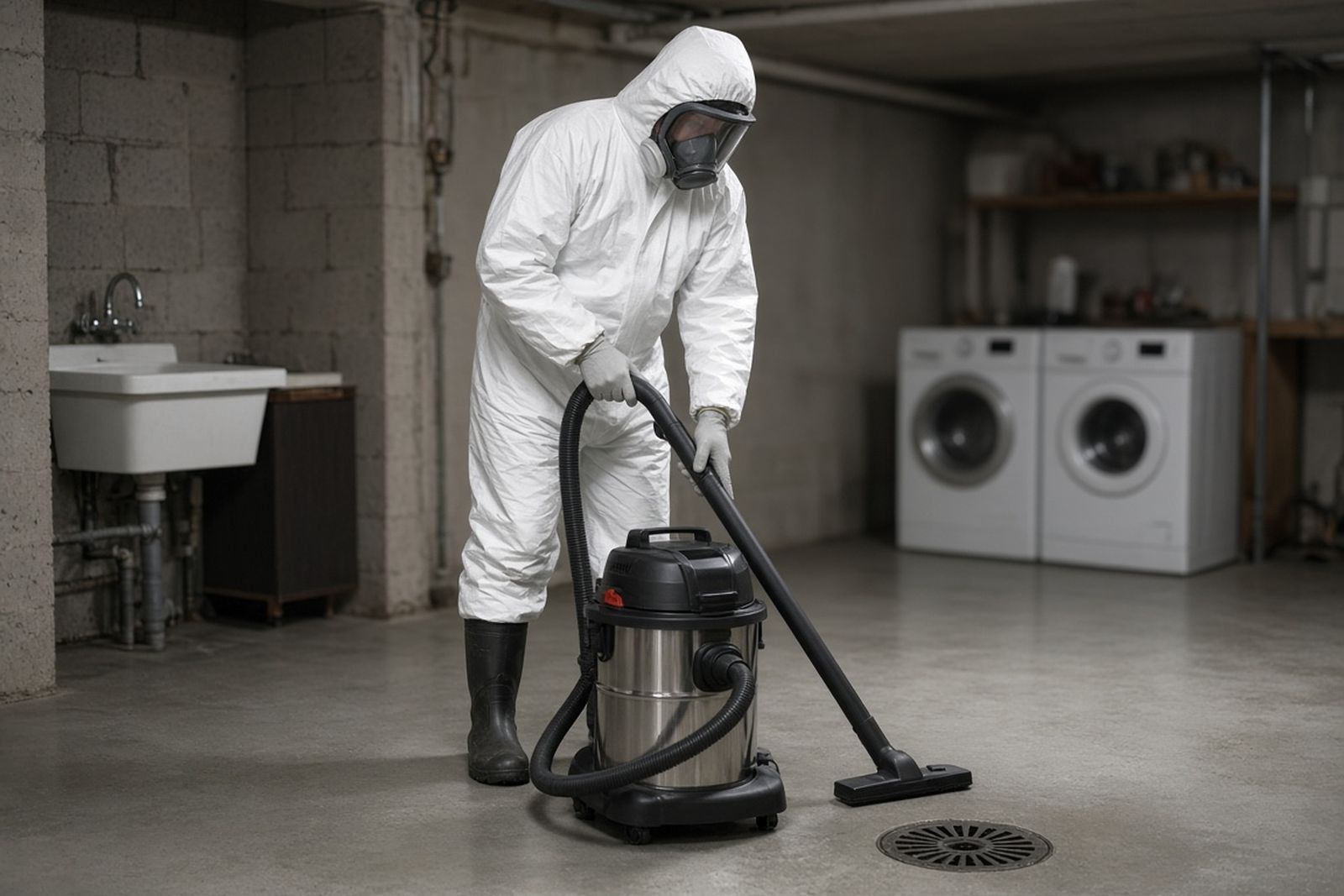
Question 5: What protective equipment will your crew wear, and how do they avoid tracking contamination through the house? Look for disposable suits, gloves, eye protection, respirators suited to the conditions, and a clear process for removing gear at the edge of the work area.
Question 6: What bloodborne pathogen and respiratory training do your technicians have, and are they offered hepatitis B vaccination? This question matters because human waste and fluids can carry more than stomach bugs. CDC noted in 2025 that hepatitis B virus remains infectious for at least 7 days on surfaces; in 2023 the US recorded 2,214 reported cases but an estimated 14,400 actual infections.
A provider who takes worker safety seriously is more likely to take your household's safety seriously. Ask how training is documented and whether you can see a summary of it. If the company says it holds a state or local license or registration, ask for the number and confirm it with the agency that issued it.
Questions 7 and 8: waste and paperwork
Question 7: How will you package, transport, and dispose of contaminated materials? The answer should explain how bags or containers are sealed, how they leave the property, and where they end up. Local rules on waste from homes can vary, so the provider should know what applies in your county.
Question 8: What documentation will I receive when the job is finished? At minimum, ask for a list of removed materials, photographs before and after, the disinfectant used and its contact time, and a disposal record. Landlords, sellers, and anyone filing an insurance claim will want more detail, such as moisture readings and measurements.
Documentation is not busywork. It is how you prove the job was done if a tenant, buyer, carrier, or neighbor raises a question months later.
Questions 9 and 10: surprises and returning odor
Question 9: If you find more contamination than expected, how will you tell me and how is the change approved? The only acceptable answer involves stopping, showing you, and getting written approval before continuing. Surprises are common in this work, especially under flooring, so the process for handling them matters as much as the original price.
Question 10: What happens if the odor comes back after you leave? Ask whether a follow-up inspection is included, how long after the job it can be requested, and what the company will do if the source turns out to be something they missed. Vague reassurance is not enough; you want to know the actual steps.
You can add your own question at the end: is there anything about this situation you think I have not asked? Experienced providers often use that opening to flag something useful.
What should landlords and property managers add?
If you manage rental units, the same ten questions apply, but a few additions can save you trouble later. Your decisions affect tenants who did not choose the provider, and your records may be reviewed by a housing inspector, an attorney, or a carrier.
Ask whether the provider can work around occupied neighboring units, and how they will keep odors and dust from traveling through shared hallways or ventilation. Ask whether they can meet you at the unit or accept access through a lockbox, and who on their team will be the single point of contact for updates.
It is also worth asking whether the company can provide documentation in a form you can share with a tenant without revealing private details about a previous occupant. A report that focuses on materials, methods, and results rather than on the person involved is usually the right tone.
Finally, ask how quickly the unit can be released for reconstruction. The remediation company may not do the rebuild, so you will want a clear handoff point and a report your contractor can rely on.
Two phone calls, side by side
The following is an illustrative case, not a real client. An adult daughter is arranging cleanup in her father's home after he was hospitalized. He had been unwell for weeks, and the bedroom and bathroom carpet are soiled. She calls two companies.
The first company offers a quick flat rate over the phone, says they will shampoo and deodorize the carpet, and does not ask any questions about how long the problem existed. When she asks about disinfectant, they say it is hospital grade but cannot give a product name.
The second company asks how long her father was ill, whether there is flooring under the carpet, and whether anyone else lives in the home. They explain that carpet and pad will likely need removal and that they will check the subfloor. They name the disinfectant, describe the contact time, and offer to email a written scope after a walkthrough.
The second call takes longer and the estimate is likely higher. It is also the only one of the two that gives her something she can verify.
Red flags that justify ending the call
Most providers in this field are honest people doing difficult work. A few patterns, though, are worth treating as warning signs regardless of price.
If you hear any of these, it is reasonable to thank the caller and move on to another provider.
- A firm price quoted over the phone without any questions about the situation
- Refusal to name the disinfectant or share its label
- Pressure to sign today, or claims that your insurer will definitely pay
- No mention of removing porous materials that absorbed waste
- Unwillingness to provide a written scope before work starts
- No clear answer about where contaminated waste will go
- Dismissive comments about protective equipment or training