Short answer
List each kind of waste your cleanup will create. Then check the rule for each one. Pumped-out sewage water generally belongs in the sanitary sewer or with a septic professional, never in a storm drain. Soaked building materials and belongings usually go to a landfill as solid waste, under your hauler's rules and local rules. Needles and other sharp items need containers that cannot be punctured. Care facilities may face state medical waste rules.
Why disposal needs its own homework
Once the mess is out of a room, it still has to go somewhere. After a basement backup or a bathroom that was neglected for a long time, there can be a lot. You may have gallons of pumped-out wastewater and several contractor bags of soaked carpet and pad. You may have cut pieces of drywall and insulation, ruined furniture, and bags of used protective gear.
People often assume one EPA rule covers all of it. There is no such rule. Different pieces go to different places. The rules come mostly from state and local agencies, your sewer or septic system, and your trash hauler.
Looking up the rules before the work starts helps you avoid a common problem. You do not want a pile of dirty debris at the curb that the hauler refuses to take. You do not want wastewater sent somewhere it was never supposed to go.
Disposal also affects cost and timing. A cleanup company may have to make several trips to a transfer station, rent a dumpster, or pay special handling fees. It will build that into its price. Knowing the local rules helps you understand those charges. It also helps you spot a bid that leaves disposal out completely.
The kinds of waste a typical cleanup creates
Make a list of what your cleanup will produce, and note roughly how much of each. That list is the backbone of your homework.
Some items, such as the pumped-out water, are liquid and have one set of options. Others are solid and have another. Sharp items and some waste from care settings are handled on their own.
- Pumped-out sewage or water soiled with body fluids
- Soaked carpet, pad, and the tack strip that holds the carpet down
- Drywall, insulation, baseboards, and other building materials
- Furniture, mattresses, and other belongings that cannot be cleaned
- Soiled linens, clothing, and bedding that you will throw out
- Diapers and incontinence products, most of all when you are caring for someone
- Used protective gear (PPE), rags, and cleaning supplies
- Needles, razors, or broken glass found in the waste
- Empty or leftover disinfectant containers
Where should pumped-out sewage water go?
Sewage water is already sewage. So the goal is to return it to a system built to treat it. If your home is on a public sewer, you usually pour or pump it into a toilet, a sink connected to the sanitary sewer, or a cleanout. A cleanout is a capped opening into your sewer line. Do this only after the clog that caused the backup has been cleared.
Never send sewage water into a storm drain, gutter, yard, or ditch. In many communities, storm drains flow straight to streams and lakes with no treatment. Sewage in the environment is a serious problem on its own. EPA's 2004 report to Congress estimated total sanitary sewer overflow volume at between 3 and 10 billion gallons of untreated sewage per year.
If your home uses a septic system, talk to a licensed septic professional before you send large amounts of water back into it. This matters most if a septic failure caused the backup. They may suggest pumping the tank instead.
Cleanup companies often handle the pumped-out water as part of their job. Ask how they get rid of it, and confirm that it goes into a sanitary system.
Soaked building materials and belongings
Carpet, pad, drywall, insulation, and furniture from a home sewage cleanup are usually treated as solid waste. In many areas, they can go to a city or county landfill, or to a site for construction and demolition debris. They must be properly bagged or wrapped first.
The details are local. Your hauler may want dirty materials double-bagged. It may limit how much you can put out at once. For larger loads, it may require a bulk pickup or a rented dumpster. Some landfills have their own rules for materials soiled by sewage. A construction and demolition landfill may not take household trash, and a household landfill may not take construction debris.
Wrap large items such as mattresses and carpet rolls in heavy plastic to keep liquid from leaking. Label the bags if your hauler asks you to. Keep the dirty materials away from children, pets, and scavengers until they are picked up.
Take photos before it goes
Before you throw anything away, take a photo of it and make a simple list. Insurance companies often want to see damaged belongings and materials. Once they go to the landfill, that proof is gone. If you have filed a claim or plan to, ask the adjuster a question first. Do they want to inspect the items, or are photos enough?
Do federal waste rules apply to households?
Mostly not, at least not directly. Under the federal hazardous waste program, waste from households is generally left out of hazardous waste rules. EPA does not run a federal medical waste program for homes. Even so, you cannot do just anything with waste at home. States and local governments can set their own rules. Some household items, such as certain chemicals or electronics, have special disposal options.
As a homeowner, federal law touches you in two practical ways. One is the Clean Water Act, which is why sewage must not reach storm drains. The other is the label on your disinfectant, which often tells you how to throw out the container.
Businesses are a different story. A restaurant, daycare, clinic, or care facility that creates waste during a cleanup may fall under state solid waste or medical waste rules. Those rules do not apply to a private home.
Sharp items and waste from care settings
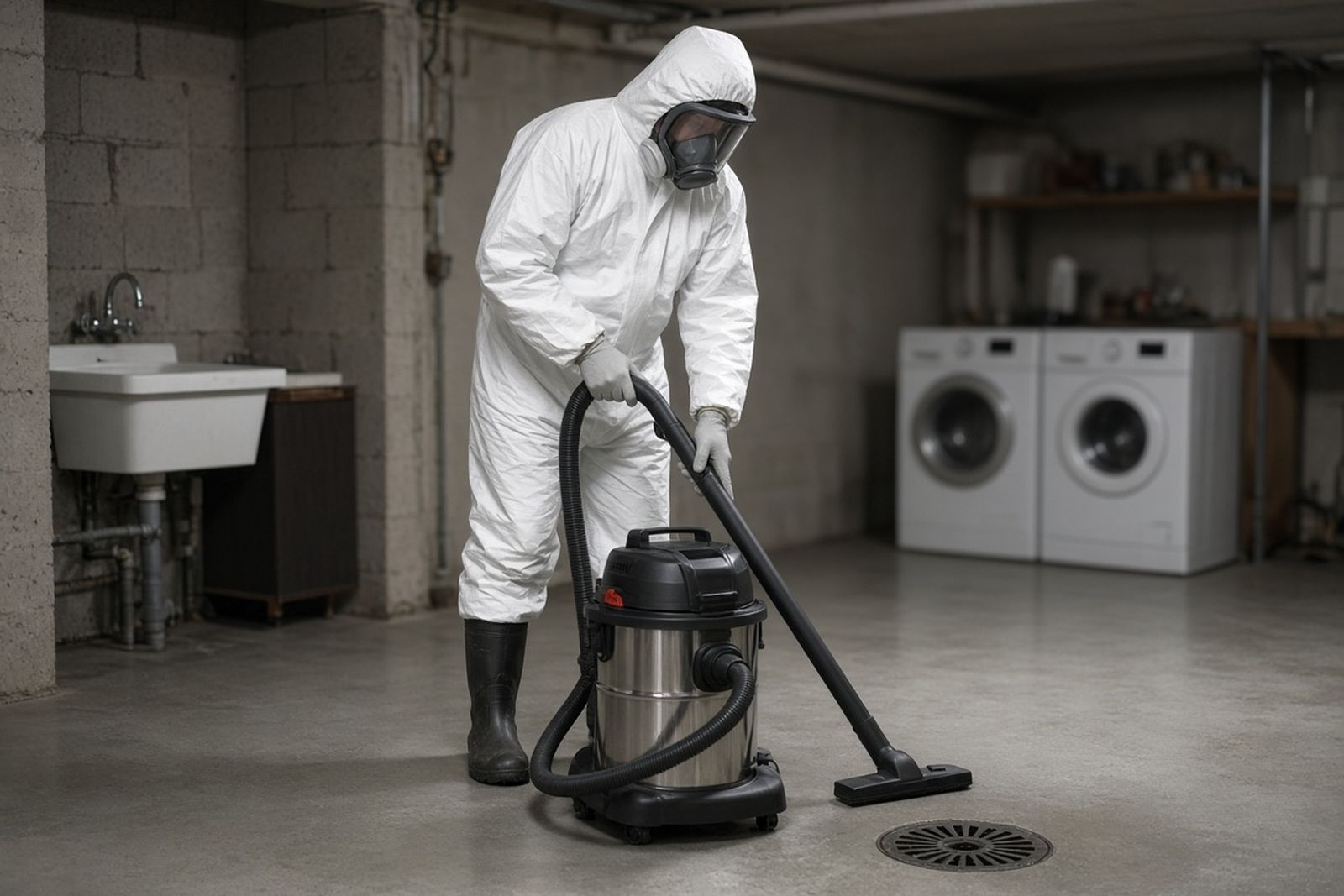
Needles, razors, lancets, and broken glass sometimes turn up in sewage. They also turn up in homes where someone has been ill or living in hard conditions. These sharp items are often called sharps. Do not reach blindly into waste. Use tools to move debris. Place any sharps straight into a rigid container that cannot be punctured and has a secure lid.
Rules for getting rid of household sharps are not the same everywhere. Some communities allow sealed containers in the household trash. Others require you to drop them off at a pharmacy, hospital, or collection site. Your local health department or solid waste agency can tell you what applies.
In care facilities, waste that contains blood or certain body fluids may be regulated medical waste under state rules. Diapers and incontinence products are generally handled as ordinary solid waste in homes. Facilities should check their state rules.
Linens and clothing you plan to keep
Soiled linens and clothing that you want to keep can often be washed. You do not have to throw them out. Handle them with gloves and do not shake them. Wash them on the hottest setting the fabric allows, and dry them fully. Some items are heavily soaked with sewage, torn, or stained past saving. Those are usually better thrown out with the other solid waste.
Questions for local agencies and haulers
A few short calls usually answer everything. Start with your solid waste agency or trash hauler. Next call the sewer utility or your septic professional. Then call the health department if sharps or care-setting waste are involved.
Write down each answer with the date and the name of the person you spoke with. If a cleanup company is handling disposal for you, ask it the same questions and request the disposal receipts.
If you rent your home, tell your landlord before you put large amounts of dirty material out for pickup. The landlord may have a contract with a hauler. The landlord may want the cleanup company to handle disposal, or may need a record of the materials for the building's insurance.
- Can building materials soiled by sewage go in regular curbside pickup, and how must I package them?
- Is there a limit on how much, or do I need a bulk pickup or dumpster?
- Which landfill or transfer station takes this material?
- Where should pumped-out sewage water go for my home?
- How should I get rid of needles or other sharps found in the waste?
- Do any special rules apply because this is a rental, business, or care setting?
Worked example: planning disposal after a septic backup
This worked example is here to teach. It is not a real job. A homeowner in a rural area has a septic system that backs up into a finished basement during heavy rain. Sewage covers a carpeted rec room. It soaks the bottom of the drywall and a sofa.
The homeowner calls a septic company first. The septic professional pumps the tank and finds that the drain field is waterlogged. He advises against sending the pumped-out water back into the system until repairs are made. The cleanup company agrees to collect that water in the tank on its truck. It will take the water to a site that accepts septic waste.
The homeowner then calls the county solid waste office. The office explains that the dirty carpet, drywall, and sofa can go to the county transfer station if they are bagged or wrapped. They cannot go out in the weekly curbside pickup. The cleanup company hauls the load there and gives the homeowner a receipt.
While pulling up carpet, a worker finds an old razor blade under the tack strip. It goes into a sharps container the company carries. The company disposes of it with its other sharps.
Keeping disposal records
Keep your receipts, hauler tickets, and photos of materials before they were removed. They support your insurance claim. They show a tenant or buyer that the mess was properly removed. They protect you if questions come up later.
If you hired a cleanup company, ask for a written summary. It should list what was removed, where it went, and how the pumped-out water was handled.
Rules vary by state and county, so check with your local authority before debris leaves your property. The best sources for the rules in your area are your solid waste agency, your sewer utility or septic professional, and your local health department.