Short answer
For sewage and bodily fluid cleanup, the credentials that matter most are documented bloodborne pathogen and respiratory training, a written exposure control plan, hepatitis B vaccination offered to workers, familiarity with recognized water-damage and contamination standards, proper insurance, and any license your state or county requires. Just as important is the paperwork the company gives you after the job, which proves what was actually done.
Why training matters for a sewage or waste job
It is tempting to think of sewage and human waste cleanup as simply a very unpleasant cleaning job. In practice, it involves pathogens that can survive on surfaces for days or longer, gases that build up in enclosed spaces, porous materials that hide contamination, and waste that needs careful handling on the way out of your home.
Training is how a crew learns to deal with those hazards without spreading them. A technician who understands how fluid migrates will check the subfloor. One who understands respiratory hazards will ventilate a basement before working in it. One who understands exposure risk will remove protective gear in a way that keeps contamination out of the rest of the house.
You cannot watch every step a crew takes. Asking about training and documentation is how you judge whether those steps are likely to happen when you are not looking.
Which kinds of training should a sewage crew bring to your home?
Several kinds of training are relevant to this work. Not every company will describe them the same way, but a qualified provider should be able to speak to each area.
Ask whether the crew assigned to your job has current training in these areas, not just whether someone at the company once took a course.
Supervisors matter as much as technicians. On a large sewage loss, the person running the job decides where containment goes, when a room is ready for disinfection, and whether more material needs to come out. Ask what experience the job lead has with contaminated-water losses specifically, and whether that person will be on site or only reachable by phone.
- Bloodborne pathogens, including how exposures happen and what to do after one
- Respiratory protection, including medical clearance and fit testing where respirators are used
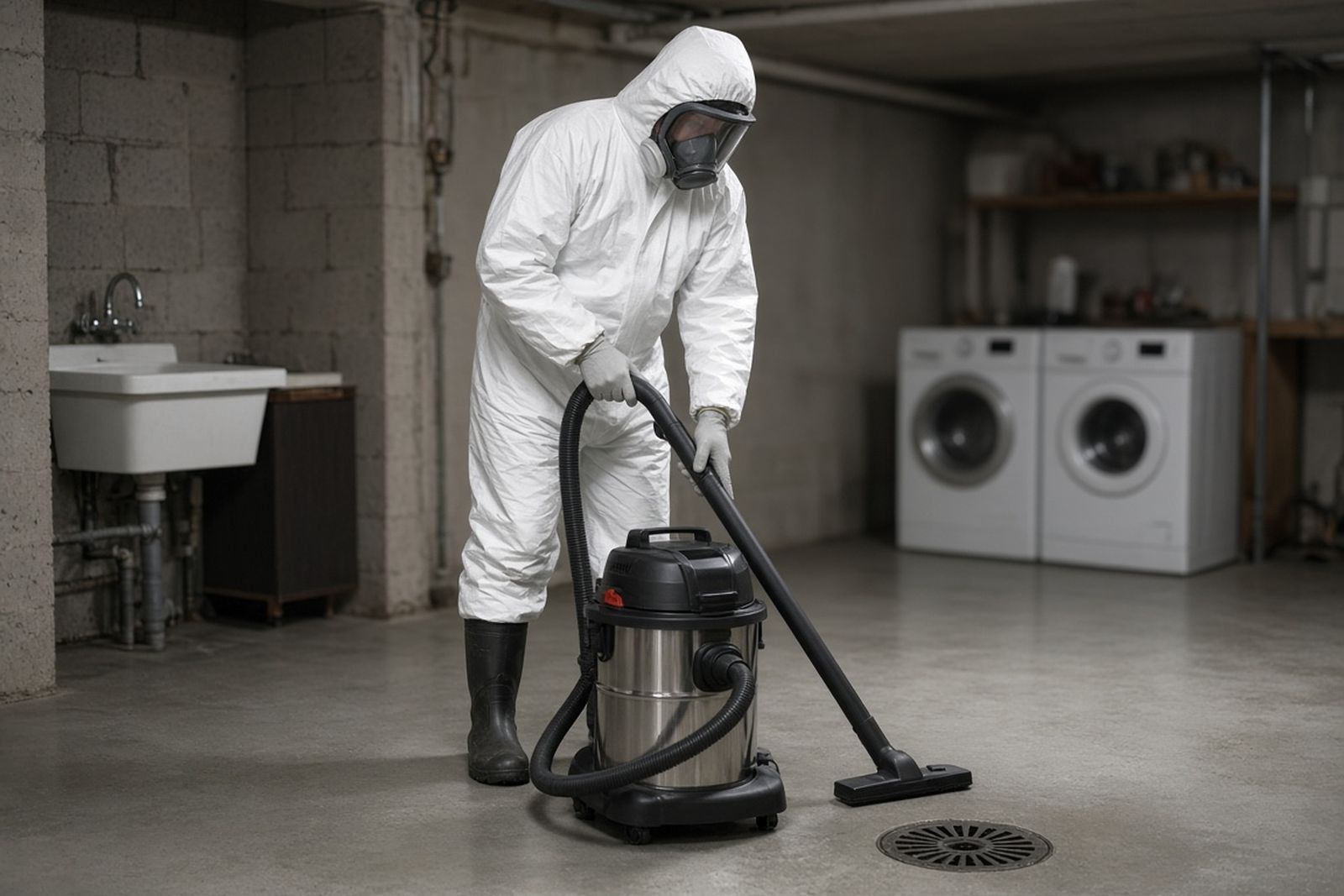
- Selection, donning, and removal of protective clothing, gloves, and eye protection
- Hazard communication for the chemicals they bring into your home
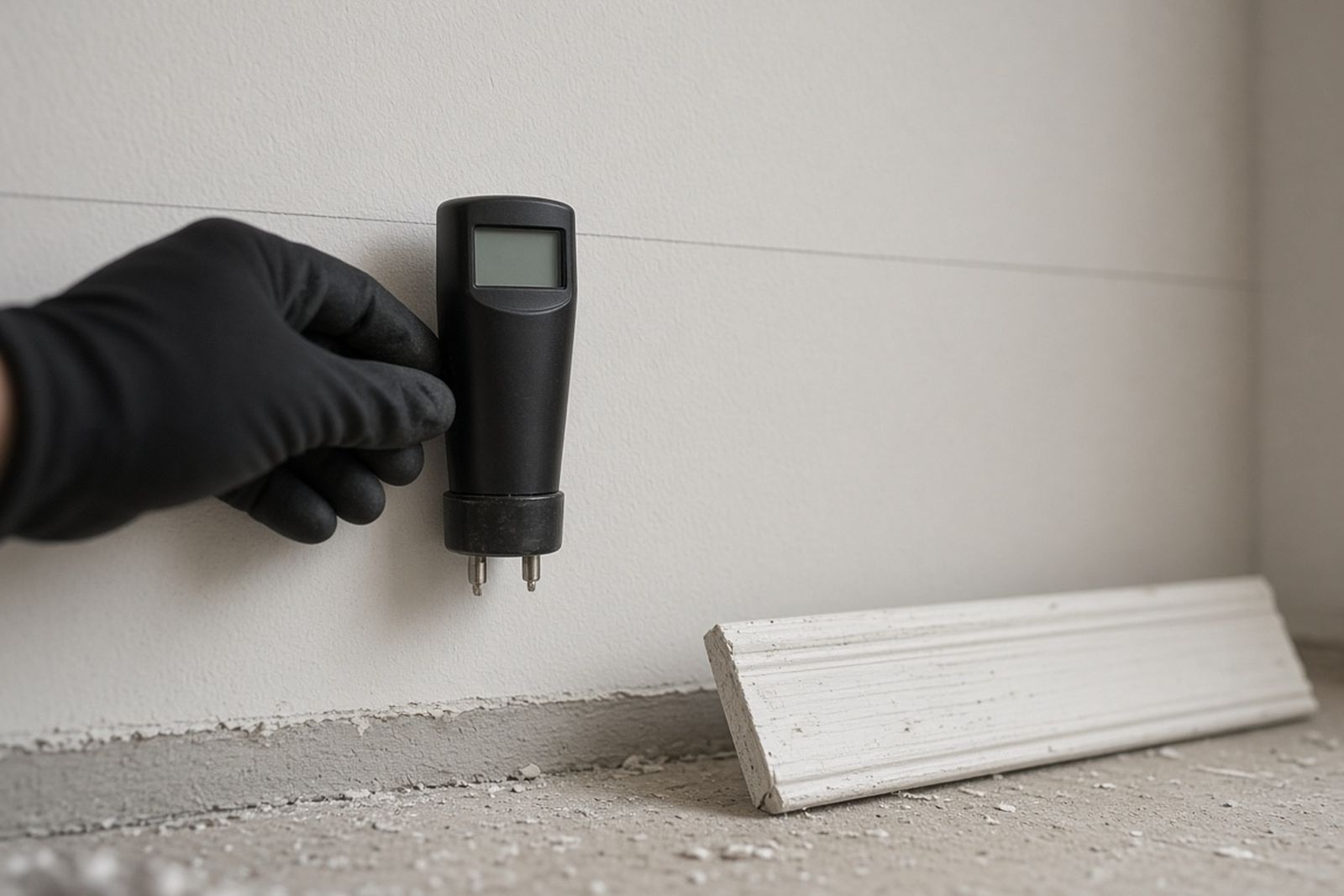
- Water damage and contaminated-water restoration methods, including moisture mapping
- Waste packaging and transport rules that apply in your area
Fit testing, PPE instruction, and exposure control plans
It does, and research from related cleanup work suggests the gap is real. In a 2024 study of mold remediation after Hurricane Ida in southeast Louisiana, Foreman and colleagues found that 73% of 26 company-employed workers reported instruction in PPE use, and 69% of those company-employed workers reported a mask-fit test. That means a meaningful share of paid cleanup workers in that study had not received either.
Mold remediation is not identical to sewage cleanup, but the working conditions overlap: wet, porous materials, confined basements, and airborne particles stirred up during demolition. If paid workers in a comparable field sometimes go without fit testing, it is worth asking your provider directly.
A good answer is specific. The company can tell you when technicians were last fit tested, which respirator type they use for sewage work, and who oversees the respiratory protection program.
Employers whose workers may be exposed to blood or other potentially infectious materials are generally expected to maintain a written plan that describes how exposure is prevented and what happens if it occurs. Human waste can contain blood, and sewage mixes waste from many sources, so many remediation companies treat their work as falling within that framework.
You do not need to read the whole document. It is reasonable, though, to ask whether the company has one, when it was last updated, and whether technicians are offered hepatitis B vaccination. A company that hesitates or does not know what you mean may not have the structure in place to protect its workers, and by extension your household.
Specific obligations depend on how a business is set up and where it operates. If you need a definitive answer about what applies, your state occupational safety agency is the place to ask.
Certifications, licenses, and insurance
Certifications from recognized training organizations can be a useful signal. They show that someone at the company completed coursework on water damage, contaminated-water categories, or biohazard remediation, and they often come with a code of ethics or continuing education.
A certificate alone is not proof of quality. It may belong to the owner rather than the technicians who will be in your home, it may have lapsed, or it may cover a different type of work. Ask whose name is on it, when it was issued, and whether it is current.
Local licensing is a separate question. Some jurisdictions require specific licenses or registrations for biohazard or trauma cleanup, while others do not. Home improvement or contractor licenses may also be needed if the company will remove and replace building materials. The company should know what applies where you live and be willing to show you the relevant license.
Insurance is part of a provider's credentials even though it rarely appears on a website. General liability coverage protects you if the crew damages something unrelated to the contamination. Workers' compensation protects you from liability if a technician is injured in your home. Some companies also carry pollution or contractors' environmental coverage.
Ask for a certificate of insurance before work starts, and check that the policy is current and in the company's legal name. Landlords and property managers may want to be listed as a certificate holder.
A reputable provider will not be offended by this request. It is a routine part of hiring anyone to work inside a property.
What documentation should you receive after the job?
Training and credentials describe what a company is capable of. The paperwork you receive afterward shows what it actually did. That record may matter to an insurer, a buyer, a tenant, a housing inspector, or simply to your own peace of mind.
A thorough completion package usually includes photographs before and after, a room-by-room list of materials removed, moisture readings taken during and at the end of the job, the disinfectant name and registration number, the contact time used, and a disposal record for contaminated materials. Some providers include a clearance note stating the conditions at completion.
Keep the package with your property records. If you sell the home years later, a buyer's inspector may notice patched drywall or new flooring in a basement and ask what happened. A clear report showing that sewage-affected materials were removed and the space was disinfected and dried answers that question far better than a memory of the event. The same record can help if a similar backup happens again and a new provider needs to know what was replaced last time.
If a provider says it does not give written reports, or charges extra for basic records, consider that a sign that the job itself may not be well documented as it happens.
How credentials can change a caregiver's decision: an illustration
This illustration is a composite, not a real client. A son arranges cleanup for his mother's apartment after she moves to assisted living. She had been struggling with incontinence for months, and the bedroom carpet and a recliner are heavily soiled. He calls two providers.
The first provider's website lists an impressive certification badge. When the son asks who will do the work, the owner admits the certificate is his and the crew is new. There is no written exposure plan, and the crew uses dust masks rather than fitted respirators.
The second provider has a less polished website but explains that each technician has current bloodborne pathogen training and annual fit testing. They offer a certificate of insurance, a written scope, and a final report with photos and a list of removed items. The son can share that report with the building manager to show the unit is ready for the next occupant.
The badge on the first site was real, but it did not tell the son anything about the people who would be in his mother's home. The second company's answers did.
Verifying what a company tells you
Verification does not need to be complicated. Ask for copies or photos of training records for the assigned crew, the certificate of insurance, and any license your jurisdiction requires. Check licenses on your state or county website where possible, and confirm that the insurance certificate names the same business you are hiring.
Online reviews can add context, especially if they mention how the crew communicated, what they found, and how they handled surprises. Be cautious about reviews that are vague or posted in large batches.
Finally, trust the way the company handles your questions. A qualified provider will expect them, answer calmly, and often volunteer more than you asked. A company that treats basic verification as an inconvenience is telling you something important before the work even begins.