Short answer
How long feces and bodily fluid cleanup takes depends on how far the contamination spread, how long it sat, and what it soaked into. A contained spill on tile can be finished relatively quickly, while sewage backups or long-term urine saturation can take days because flooring, drywall, and subfloor must be removed, cleaned, disinfected, and dried before rebuilding starts. Contact time and drying set the pace.
Why no one can quote a timeline over the phone
Human waste incidents range from a child's accident on a bathroom floor to a sewer line that pushed water across an entire finished basement. The words are the same, but the jobs have almost nothing in common beyond the need for protection and disinfection.
Three questions drive most of the timeline. How much area is affected? What materials did the waste reach, and did it soak in? How long did it sit before anyone started cleanup? A small spill found immediately on sealed tile is a very different problem from urine that has been seeping into carpet and subfloor for months.
A good provider will not quote a duration over the phone without asking those questions. If you get a firm time before anyone has asked what the floor is made of, take it as an estimate at best.
It also helps to separate cleanup time from total disruption. The crew might finish its part quickly, but drying, clearance, and repairs can keep a room unusable for much longer. Knowing both numbers lets you plan where people will sleep, bathe, and cook while work is underway.
The first hours, before cleanup begins
Before any cleaning, the source has to be stopped. For sewage, that usually means a plumber clearing a blockage or repairing a line, and nobody using sinks, showers, or toilets that drain to the affected area until the problem is fixed. For a medical or incontinence situation, it means making sure the person involved is safe and cared for first.
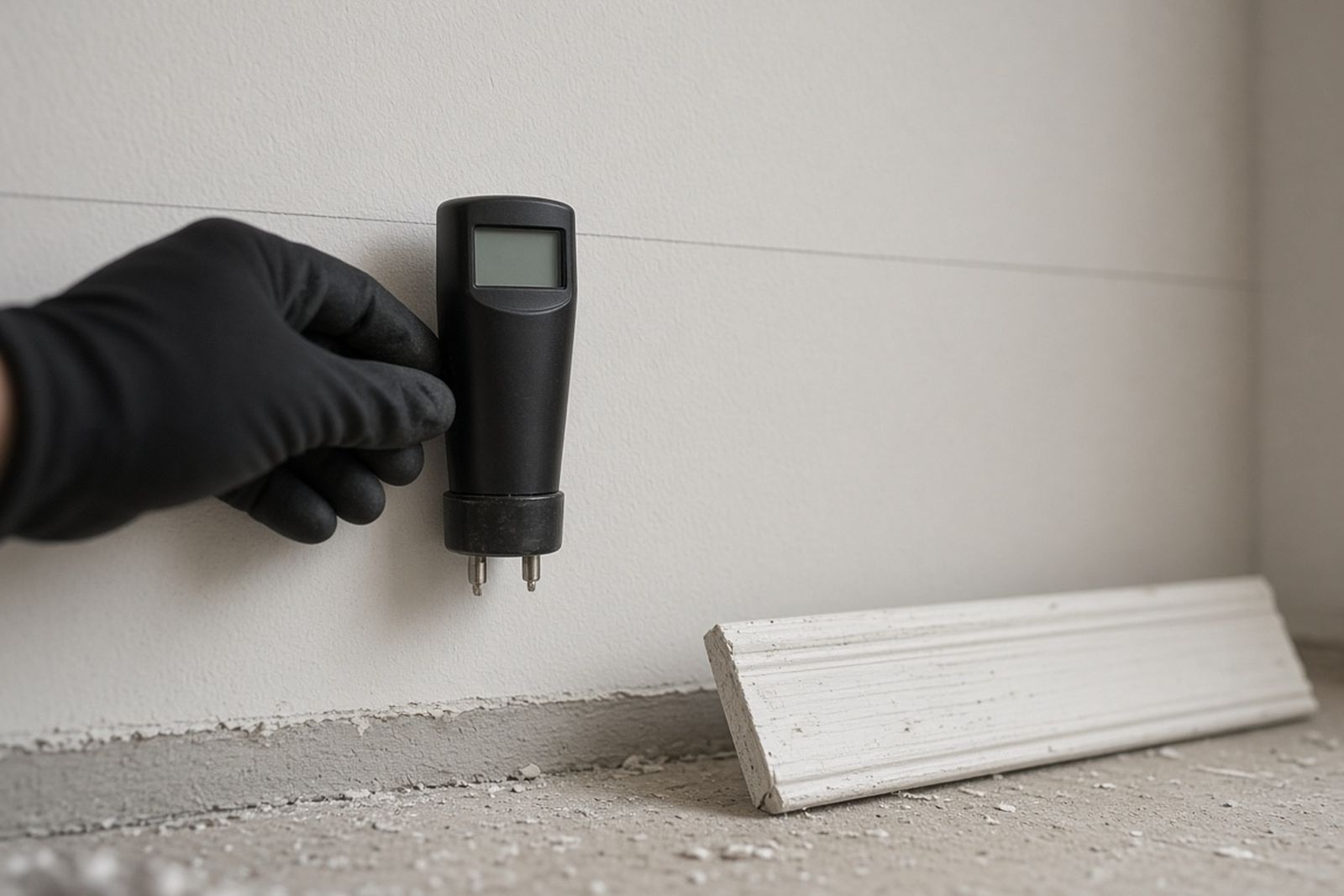
The provider then walks the space, photographs it, and checks moisture levels in nearby materials. That inspection is what turns a guess into a real scope. It may reveal that urine traveled under a baseboard into the next room or that sewage wicked higher up the drywall than it appears.
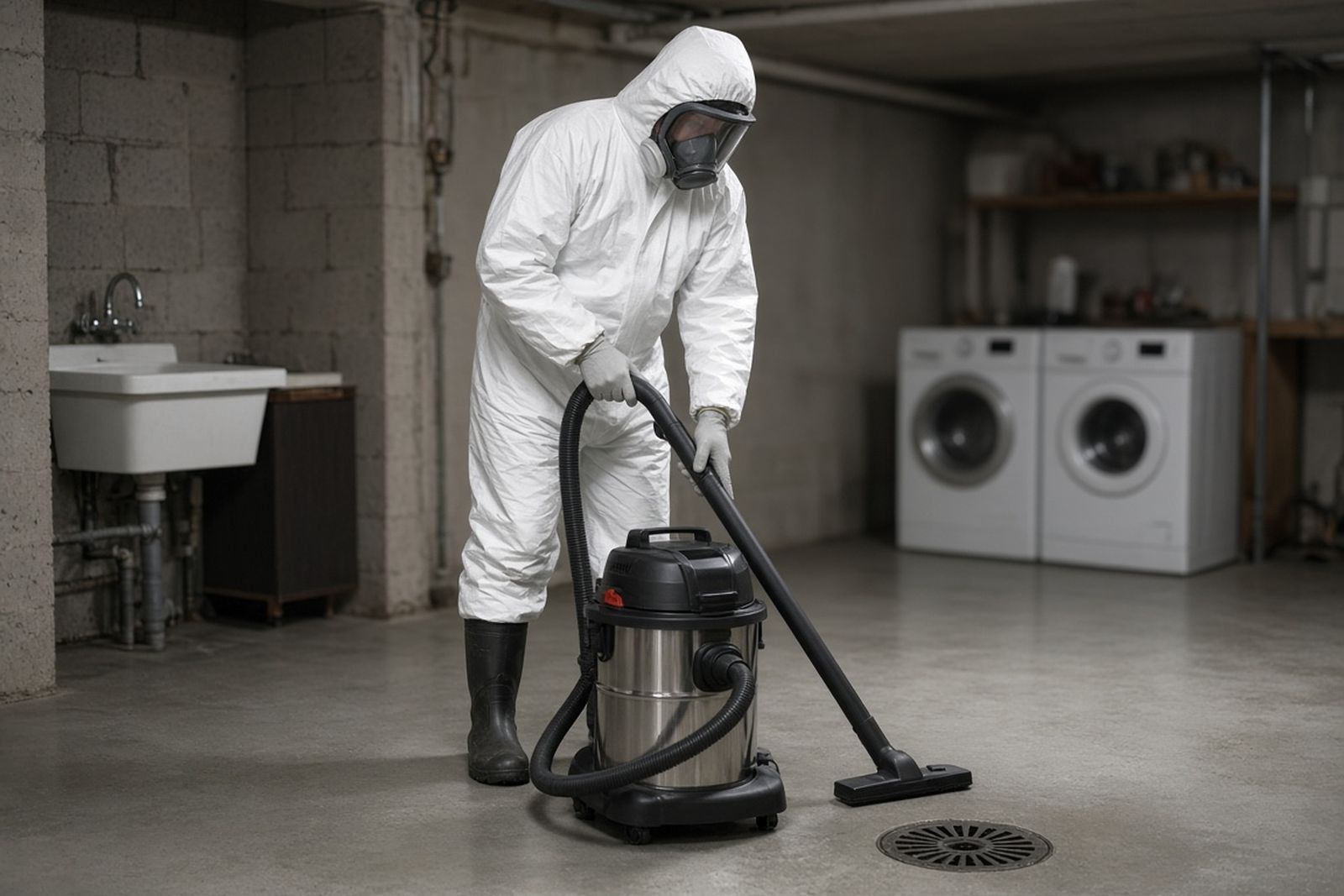
Setting up takes time too. Crews establish a clean area for equipment and a dirty area for removal, lay protective coverings along the path to the exit, and may set up air filtration. That preparation keeps contamination from spreading to the rest of your home during work.
If you have renters, older relatives, or young children in the home, this is also when you should decide where they will stay. Waiting until cleanup is underway to make that call often leads to rushed arrangements.
How long does a small, contained cleanup usually take?
A contained event on nonporous surfaces, such as vomit on a tile floor or a toilet overflow in a bathroom with sealed flooring, is usually the fastest kind of job. Bulk material is removed, the area is washed, disinfectant is applied, and fixtures, grout, and nearby touch points are treated.
The disinfectant itself sets a minimum. Each registered product lists a contact time for each organism. Those times differ from product to product and organism to organism, and whatever product is used, the surface must stay wet for the full period printed on the label.
Small jobs expand when the crew finds something unexpected. Fluid under a vanity base, a toilet flange that has been leaking into the subfloor, or a bath mat that pushed liquid into an adjoining carpet can each add removal and drying time.
Ask the crew to let you know before they leave whether anything was deferred, such as a vanity base they could not remove or a toilet that needs resetting by a plumber.
Sewage backups: often several days
Sewage is the category that most often stretches into days. It tends to cover large areas quickly, and it soaks into materials that cannot be disinfected in place. Carpet, pad, drywall below the waterline, insulation, and cabinetry bases often need to come out.
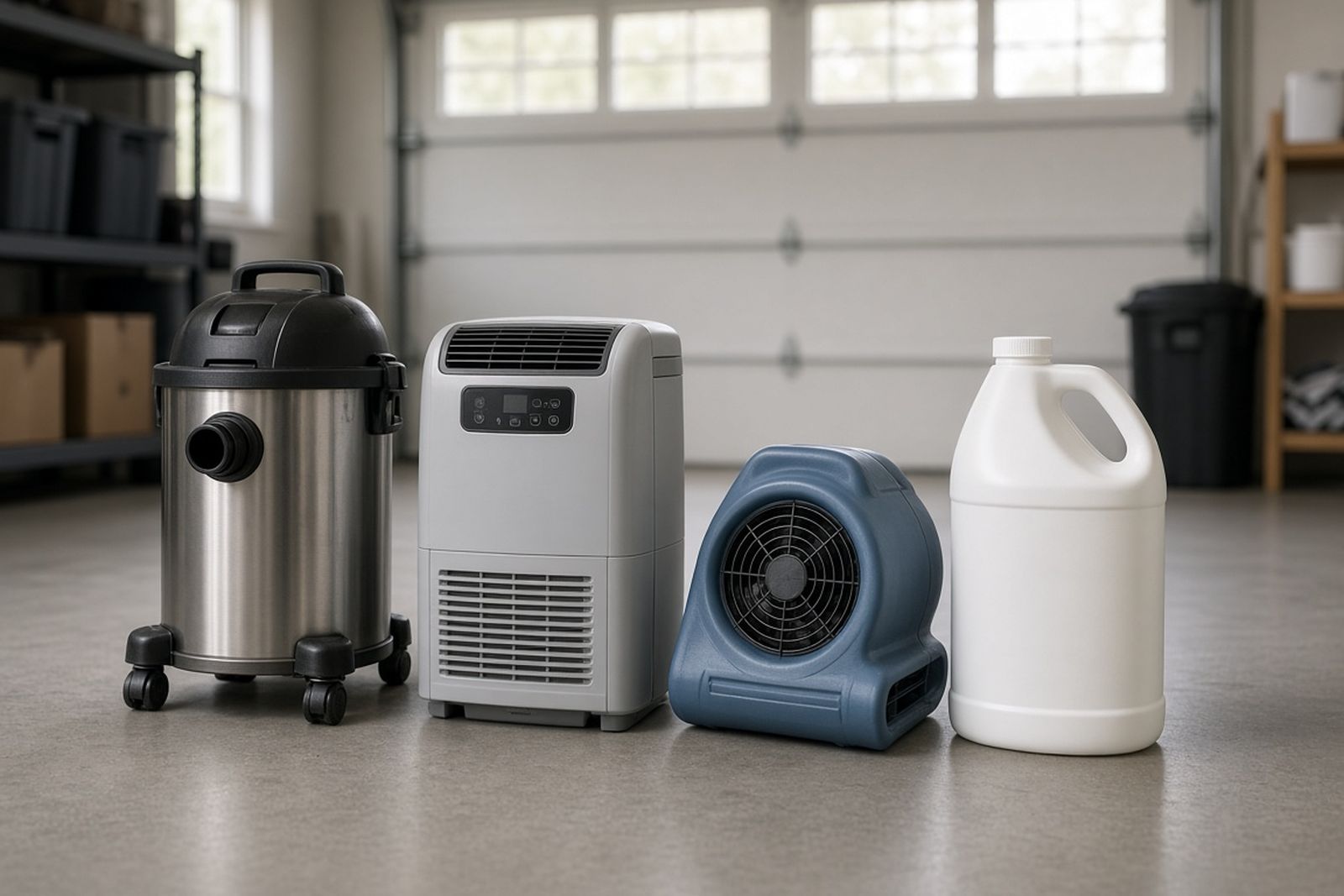
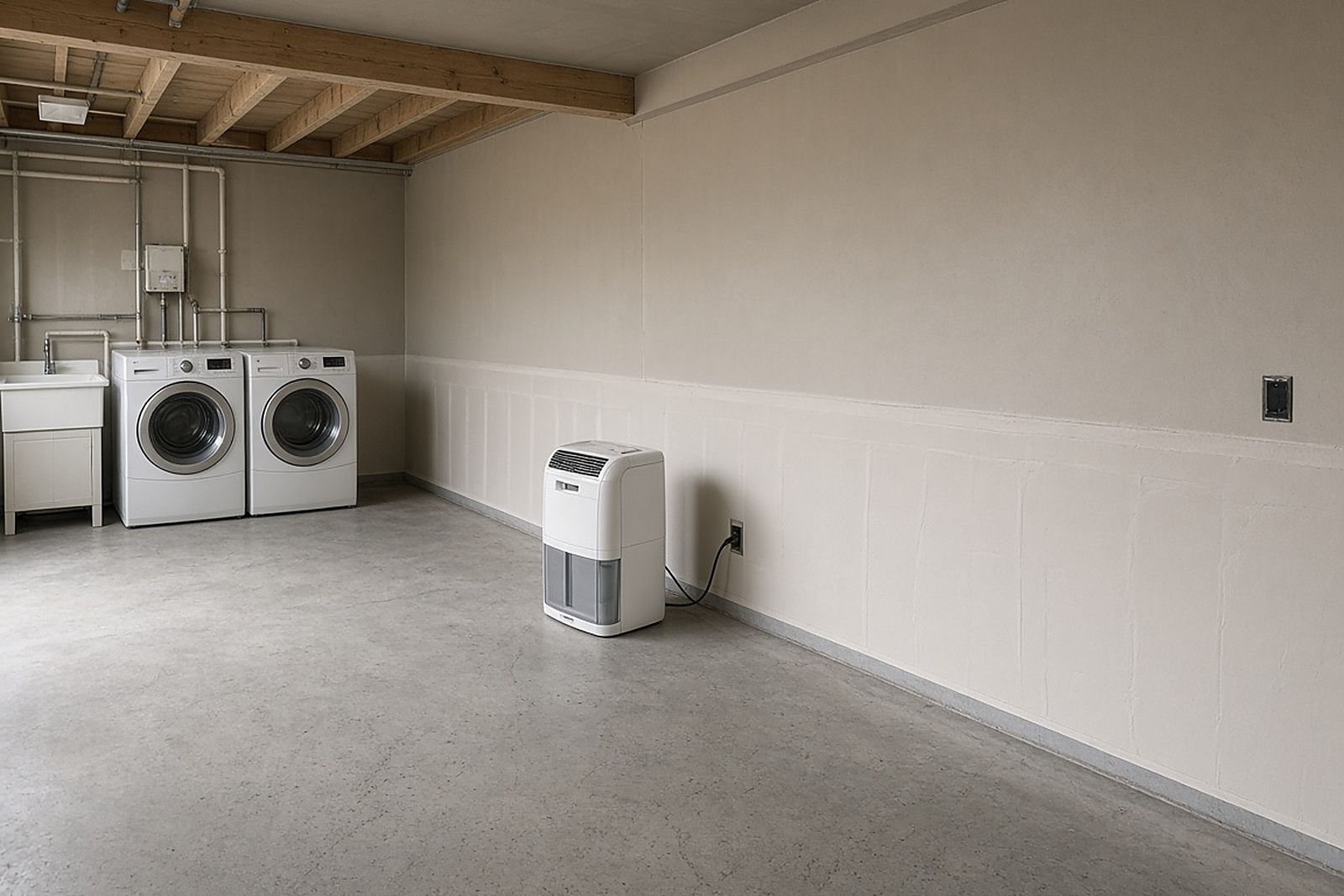
Removal is only the first part. Once materials are gone, the crew cleans and disinfects the exposed structure, including studs, subfloor, and concrete slab. Then the space has to dry. Wet framing and subfloor cannot be sealed or rebuilt until moisture readings return to acceptable levels for those materials, and that depends on humidity, temperature, and airflow.
Basements and crawlspaces add complications. They can be poorly ventilated and may hold hydrogen sulfide or other gases from decomposing waste. Crews may need to ventilate and monitor the air before extended work, which affects the pace.
Outdoor weather plays a role too. A humid summer week can slow drying compared with a dry, cool one, and heavy rain can push groundwater into a basement that was nearly dry.
Long-term urine contamination
Urine problems that build over months or years, whether from pets, a person with incontinence, or a hoarding situation, are often more time-consuming than a single large spill. The contamination is layered and spread across many small spots, and odor can linger in places that do not look stained.
Crews may use ultraviolet lights to map affected areas, then remove carpet and pad, clean and treat subfloor, and sometimes pull baseboards and lower drywall. Wood subfloor that has absorbed urine repeatedly may need enzyme treatment, sealing, or replacement.
Odor verification is the slow part. A space can seem fine on the day work ends and then release odor again when heat or humidity rises. Providers often schedule a follow-up check after the space has been closed up for a while.
If the person responsible for the contamination still lives in the home, a plan to prevent recurrence, such as medical support, waterproof flooring, or pet training, keeps the work from having to be repeated.
A common sequence for a finished-basement backup
When sewage floods a finished basement, the work tends to follow a recognizable order. A plumber clears the main line first. As soon as the line is flowing, a remediation crew inspects the space and maps the contamination, which may reach the carpet, the lower portion of drywall in more than one room, and the base of any built-in furniture.
The first working day usually goes to removal: carpet and pad come out, drywall is cut above the high-water line, and unsalvageable built-in pieces are bagged. This is also when the household sorts personal items with the crew and chooses which ones to try to save. The next stage is cleaning and disinfecting the slab, studs, and remaining surfaces with a registered product left on for its required dwell time, followed by setting up drying equipment.
Over the following days, the crew returns to take moisture readings. When the framing and slab are dry, they complete a final inspection and provide a written report. Only then can the rebuilding contractor start, which is a separate timeline.
Throughout the process, plan on using another bathroom and staying off the basement stairs, which crews commonly close off with plastic sheeting.
Delays you can help prevent
Some delays are outside anyone's control, like waiting for a structure to dry. Others can be avoided with a little preparation.
- Stopping water flow and keeping others from using connected drains
- Making a decision early on which belongings you want to try to save
- Clearing access to the affected area, such as moving cars from a garage entry
- Giving the crew information about pets, medical conditions, or fragile residents
- Contacting your insurer promptly if you plan to file a claim, and asking what documentation it needs
- Keeping a phone number handy for decisions if you will not be on site
Why does DIY cleanup often take longer than people expect?
Homeowners who clean up on their own often underestimate the work. After Hurricane Harvey, Li and colleagues reported in 2020 that 85% of residents in their respiratory protection training program had not finished cleanup when interviewed, a reminder that removal and drying can drag on for weeks when people are doing it alongside work and family demands.
Removal is heavy and messy, drying equipment is not something most homes have, and it is hard to know when a structure is dry enough to close up. Rushing that last step can trap moisture and odor inside new walls.
If you do handle a small incident yourself, give yourself more time than you think you need, and do not rebuild until you are confident the area is clean and dry.
When is the space truly safe to use again?
A room is ready when it is clean, disinfected, dry, and free of lingering odor, not simply when the crew packs up. Ask the provider to walk you through the space and explain what they did in each area, including the product used and its contact time.
If someone in the home has been sick, keep in mind that the illness can continue to spread through people, not just surfaces. CDC noted in 2024 that norovirus can remain in a recovered person's stool for two weeks or more, and it advises waiting at least 48 hours after symptoms stop before preparing food for others.
If you rent the space out, or are unsure whether a sewage release needs to be reported, your local health department and sewer utility can tell you what they require before anyone moves back in.