Short answer
Get people and pets away from the waste, stop adding water to the affected drain line, and close off the area. Do not vacuum or run fans over sewage. Wash hands thoroughly after any contact, photograph from a distance, and call a remediation provider and your carrier. If there is a strong sewer gas smell in an enclosed space, leave and call your gas utility or 911.
The first few minutes: people, then water
Start with people, not property. Move children, older adults, anyone who is ill, and pets away from the affected area and, if the contamination is large, out of that part of the house. Close the door to the room if there is one.
If sewage is coming up through a floor drain, tub, or toilet, stop using water anywhere in the home that drains to the same line. That means no flushing, no showers, no dishwasher, and no laundry until a plumber has looked at it. Every gallon you send down can come back up somewhere else.
If the contamination came from a person who is ill or injured, focus on their care first. Waste on a floor can wait a few minutes; a person who needs help cannot.
If you have a sump pump or backflow valve, check whether it is running or tripped, but only if you can reach it without stepping into standing sewage. A pump that has lost power may explain the backup, and a plumber will want to know. Resist the urge to reset breakers in a wet basement; electrical panels and standing water are a dangerous combination, and a utility or electrician can make that call.
When it is an emergency for someone other than a cleanup company
Most sewage and bodily fluid situations are urgent but not life-threatening. A few conditions change that, and you should know them before you go looking for the source of a smell.
Sewage and decomposing waste can release hydrogen sulfide, the gas with a rotten-egg smell. NIOSH lists hydrogen sulfide among the gases that can be immediately dangerous to life or health, and at high concentrations it can cause rapid unconsciousness. Dangerous levels are uncommon in a typical home, but they can build in pits, sumps, and crawlspaces with poor ventilation.
If you notice a strong sulfur or rotten-egg smell in an enclosed space, feel dizzy, or have trouble breathing, get out and call 911 or your gas utility. Do not go into a sewage pit, septic tank, or flooded crawlspace to investigate. Leave that to people with gas monitors and training.
Cleanup instincts that make a sewage mess worse
Several common instincts make a contamination problem larger or harder to clean. It helps to know them in advance so you are not tempted in the moment.
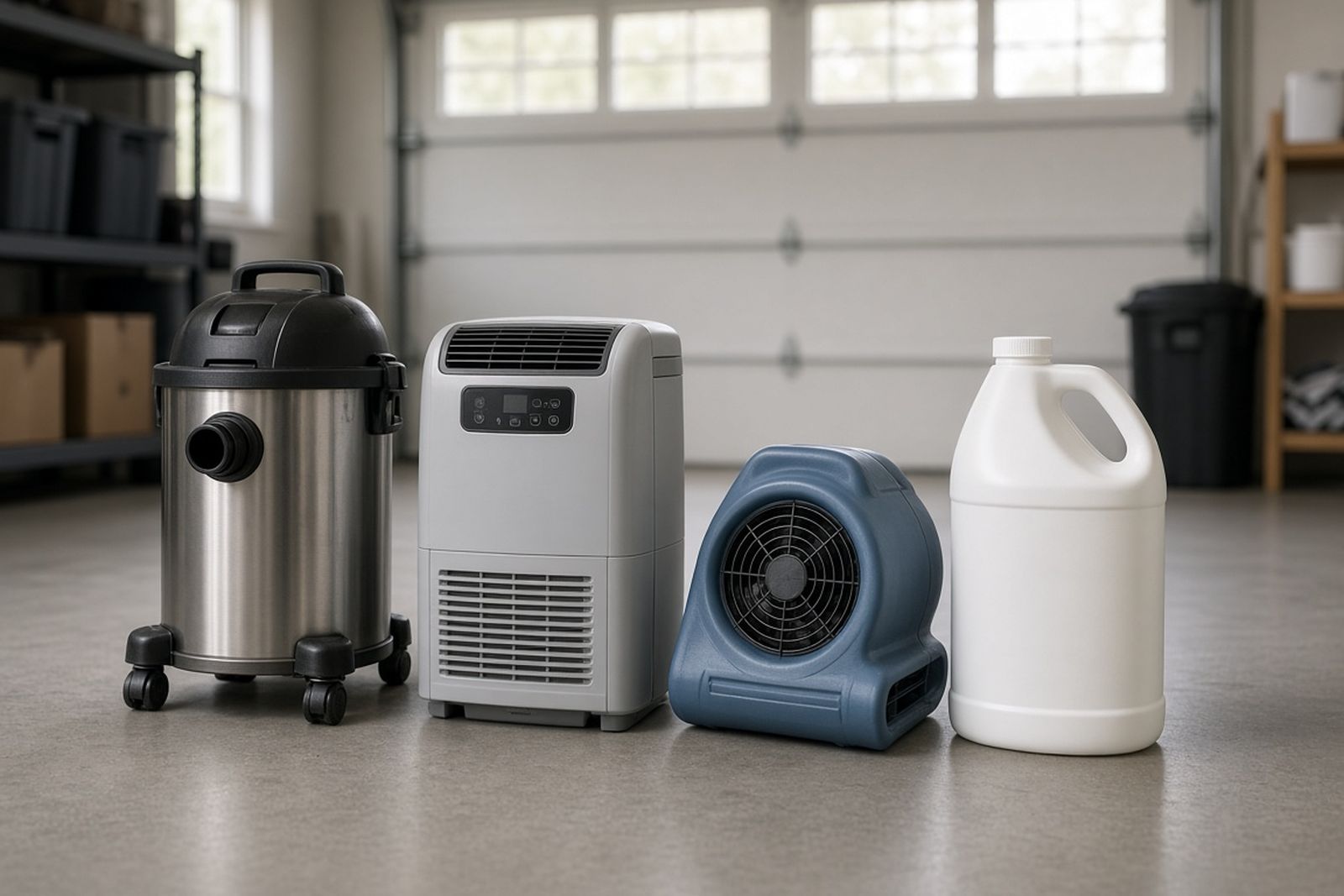
Household equipment that touches sewage usually has to be discarded afterward, and it can blow contaminated droplets and odor into other rooms.
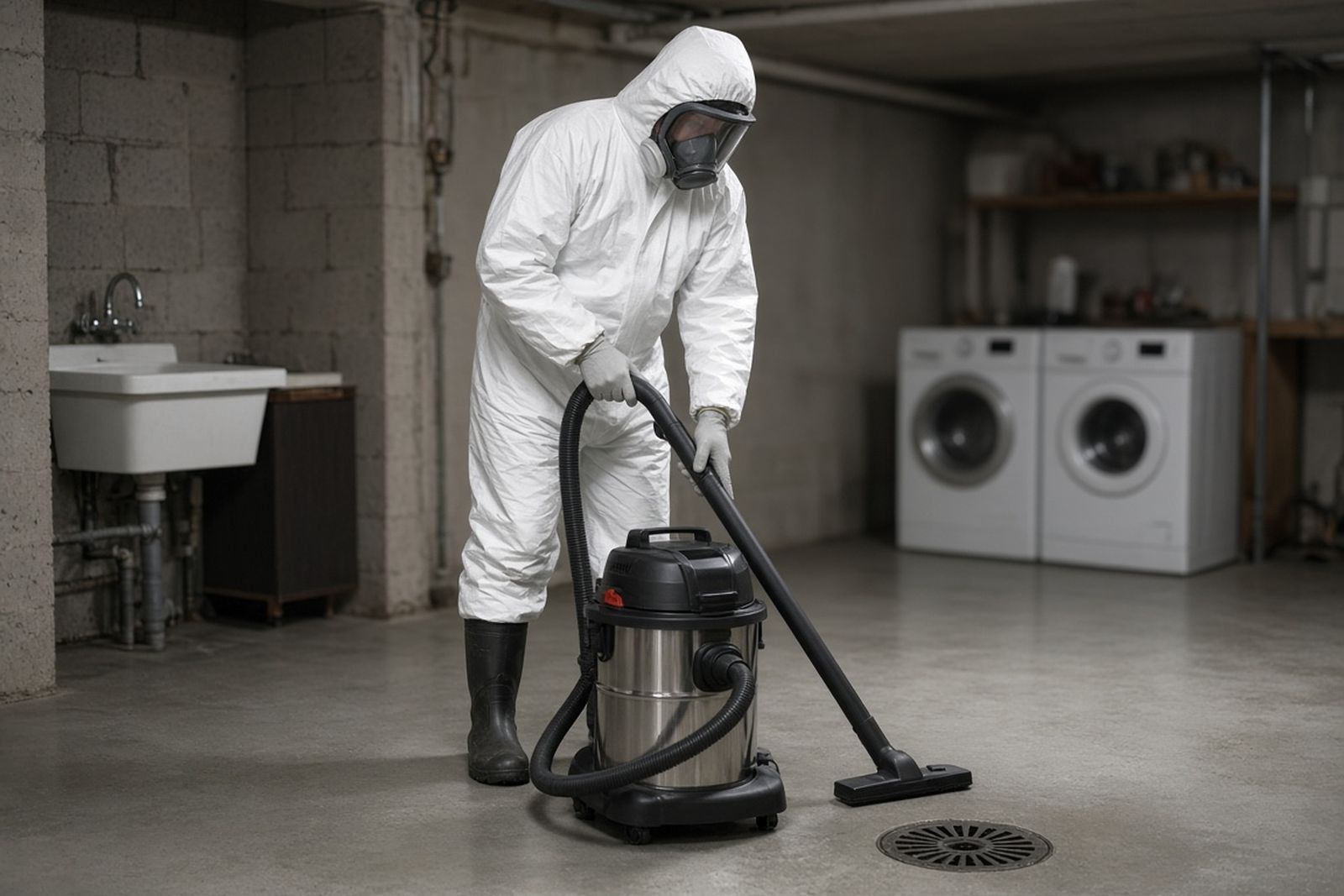
- Do not vacuum wet waste or run a carpet shampooer over it
- Do not point fans or turn on central air in a way that pulls air from the affected room into the rest of the house
- Do not mix bleach with ammonia-based or acidic cleaners, since that can release harmful gases
- Do not scrub soaked carpet with household products, which can push waste deeper into the pad and subfloor
- Do not walk through the area and then through the rest of the house in the same shoes
- Do not throw away items you may need to document for an insurance claim before photographing them
If you must go near it
Sometimes you need to step near the contamination, for example to shut off a valve or retrieve medication. If so, keep contact as brief as possible and protect your hands, feet, and face.
Wear waterproof gloves, and rubber boots or disposable shoe covers if you have them. Avoid touching your face. When you leave the area, take off gloves by turning them inside out, bag them, and put footwear in a spot you can clean later.
Then wash your hands thoroughly with soap and water, even if you wore gloves. Hand sanitizer is not a substitute when your hands may have touched visible soil.
Can you clean up a small accident yourself?
Often, yes. A single vomiting episode or a small bathroom accident on a hard, sealed surface is something many households handle on their own with gloves, paper towels, a disposable bag, and a registered disinfectant used exactly as the label directs.
For a small hard-surface spot, work from the outside edge toward the center so you do not spread it, lift solids with disposable towels, clean the area with soap and water, and then apply the disinfectant and leave it wet for the full time printed on the label. Bag everything you used, tie it closed, and wash your hands afterward.
The situation changes when fluid has soaked into carpet, pad, or subfloor; when it came from a sewer or drain line; when the area is larger than a small spot; when it has been there for days; or when someone in the home is medically fragile. In those cases, the risk of leaving contamination behind, or of spreading it, rises quickly.
If you are unsure, it is reasonable to call a provider and describe the situation. A good one will tell you honestly if the job is small enough for you to handle.
Document before help arrives
A few minutes of documentation now can make a large difference later with an insurance carrier, a landlord, or a tenant. Take photos and short videos from doorways rather than walking through the contamination.
Capture the source if you can see it safely, such as a floor drain, toilet, or cleanout. Photograph the edges of the affected area, any visible waterline on walls, and belongings that were touched. Write down the time you noticed the problem, what you did in response, and who you called.
If you are a tenant, notify your landlord or property manager in writing, even if you also call. A dated text or email creates a record of when they were informed.
Who should you call, and in what order?
The order depends on the source. If sewage is actively flowing, a plumber or your municipal sewer department comes first, since nothing else matters until the flow stops. Many cities have an after-hours line for main line problems.
Next, call a remediation provider who handles sewage and bodily fluid work, and describe the situation clearly: the source, the rooms involved, the flooring types, and anyone in the home with health concerns. Then notify your insurance carrier and ask whether you may authorize emergency mitigation.
If the situation involves a death in the home, contact local authorities first. Wait until they confirm the area is released before arranging cleanup.
A calm first hour, sketched out
The sketch below is illustrative, but it reflects the order that works. A parent wakes in the middle of the night to find sewage seeping from a basement floor drain where the kids' playroom is. The parent closes the basement door, tells everyone not to flush or run water, and puts the family dog in a bedroom upstairs.
The parent smells a mild sewer odor but no strong rotten-egg smell and feels fine. They photograph the basement from the stairs, write down the time, and call the city's after-hours sewer line, which schedules a crew to check the main.
They then call a remediation provider, who asks about flooring and belongings and schedules a morning walkthrough. The parent leaves a message with the insurance carrier, washes their hands, and goes back upstairs to wait for daylight.
Nothing about that hour required the parent to touch the sewage. That is what a good first response looks like.
What will the provider need from you when they arrive?
When the crew arrives, they will want a short, accurate summary. Tell them what happened, when you first noticed it, whether water was used afterward, and whether anyone in the home has been ill.
Point out anything you already moved or discarded and share your photos. Let them know about pets, medical equipment, or valuables in or near the area.
It also helps to have practical details ready: where the main water shutoff is, whether there is a cleanout in the yard or basement, where the crew can park, and which entrance they should use so they are not carrying contaminated material through your living room. If you rent, have your landlord's contact information handy so the provider can coordinate access for any areas you cannot unlock yourself.
Then let them take it from there. Your role shifts from responder to decision maker: reviewing the written scope, asking questions, and approving the work.