Short answer
No single law governs sewage or bodily fluid cleanup. Federal OSHA rules protect workers, and EPA oversees sewer systems and disinfectant labels. States add housing habitability laws, plumbing codes, contractor licensing, and food and childcare sanitation rules. Local health departments, housing inspectors, sewer utilities, and waste haulers fill in the details. Which rules apply depends on whether you are a homeowner, landlord, employer, or business.
A patchwork, not a manual
When sewage comes up through a floor drain or a family member's illness leaves a bedroom contaminated, people understandably look for a clear set of instructions. What they find instead is a scattered collection of rules, each written for a different purpose.
Worker safety laws protect employees who do the cleanup. Housing codes protect tenants. Plumbing codes govern the pipes. Food safety codes cover restaurants and cafeterias. Waste rules decide where soaked carpet and drywall can go. None of them was written as a sewage cleanup manual.
The fastest way through the patchwork is to start with your role. A homeowner cleaning their own house, a landlord responding to a tenant's call, a daycare director, and a restaurant manager each face a different set of rules for what looks like the same mess.
Who cleans vs who pays
It also helps to separate two questions that often get tangled together. The first is who must do the cleanup and how. The second is who pays for it. Rules and contracts answer the first; insurance policies, leases, and sometimes utility claims processes answer the second. Keeping them apart makes each easier to research.
Federal rules that might apply
Federal law touches sewage and bodily fluid cleanup in a few specific ways. For most homeowners, none of them imposes direct obligations on the cleanup itself.
If you are a homeowner cleaning your own property, federal rules mostly matter indirectly, through the disinfectant labels you follow and the sewer system your home connects to.
- OSHA standards, including PPE, respiratory protection, hazard communication, and bloodborne pathogens where blood is present, for employers whose workers do the cleanup
- Federal pesticide law, under which EPA registers disinfectants and label directions become binding on users
- The Clean Water Act, under which EPA and states regulate municipal sewer systems and overflows
- Federal food safety guidance, such as the FDA Food Code, which many states adopt for restaurants and food service
How large a role do sewer systems and overflows play?
Many residential backups start outside the house, in a municipal main or a shared line. EPA estimates there are at least 23,000 to 75,000 sanitary sewer overflows per year in the US, not counting sewage backups into buildings, according to the agency's 2026 overview.
Utilities that operate public sewers have permit obligations under the Clean Water Act and state law, and some have programs for reporting and responding to backups. Whether a utility is responsible for damage in your home depends on local rules, the cause, and where the blockage was, which is often in the lateral line that the property owner maintains.
If sewage backs up and you suspect a public main, contact the utility promptly and ask them to inspect. Write down the date, time, and the name of the person you spoke with. That record helps if questions of responsibility or insurance come up later.
Some cities offer backwater valve rebate programs or require backflow prevention in basements prone to backups. If your home has flooded with sewage more than once, ask your utility or building department whether such a program exists and whether installing a valve would need a permit.
Housing codes, landlords, and tenants
In rental housing, the most important rules often come from state landlord-tenant law and local housing or property maintenance codes. Most states recognize a duty to keep rental units habitable, and working plumbing and sanitary conditions are usually part of that duty.
That generally means the landlord is responsible for fixing the plumbing problem and addressing contamination that makes a unit unsafe or unsanitary, although tenants can be responsible when they caused the damage. Codes and case law differ on details such as how quickly repairs must be made, whether a tenant can withhold rent or repair and deduct, and what notice is required.
Local code enforcement offices can inspect a unit if a tenant believes a landlord is not addressing a sewage problem. Landlords benefit from documenting their response carefully, including when they were notified, who they sent, what was removed, and when the unit was confirmed clean and dry.
Condominiums and homeowners associations add another layer. The association's governing documents usually spell out which pipes are common elements and which belong to individual owners, and that division can decide who handles the cleanup when sewage from one unit reaches another.
Businesses, food service, and childcare
Businesses face more specific rules. Restaurants and food service operations in states that follow the FDA Food Code are generally expected to have written procedures for responding to vomiting and diarrheal events, including how to clean, which disinfectants to use, and how to protect employees and food.
Childcare programs, schools, and long-term care facilities are usually regulated by state licensing agencies with their own sanitation standards. Those standards may cover diapering areas, handling of soiled items, and cleanup after illness. Licensing inspectors may ask to see written procedures and staff training records.
Businesses with employees who clean up must also follow OSHA or state plan requirements for protective equipment and chemical safety.
Do contractors need a license for sewage or bodily fluid cleanup?
Licensing varies widely. Some states require contractors who do certain kinds of remediation, such as mold, to hold a specific license. Others regulate only general contracting or home improvement work, and some have no specific requirement for sewage cleanup at all.
Rebuilding after the cleanup may need building permits. Replacing drywall, subfloor, or electrical components often requires permits and inspections under local building codes, and plumbing repairs generally must be done by a licensed plumber.
Before hiring, ask the company which licenses they hold and check with your state contractor licensing board. Ask whether the rebuild portion will be permitted and who will pull the permits.
Be cautious with any company that claims a special certification makes it the only legal choice for sewage cleanup. Industry certifications can reflect useful training, but they are not the same as a government license. Ask which agency issued a credential and check it yourself.
Disposal of contaminated materials
Soaked carpet, pad, drywall, insulation, and furniture from a sewage cleanup usually end up as solid waste. In most places, they can go to a municipal landfill once properly bagged, but local rules and hauler requirements differ.
Some landfills or haulers require contaminated materials to be double-bagged or wrapped, or restrict how much can be placed at the curb. Waste with visible blood from a care setting may need different handling under state medical waste rules. Sharps found in the waste should go into a puncture-resistant container according to local guidance.
Never wash sewage or cleanup water into a storm drain, yard, or waterway. Storm drains often flow directly to local streams without treatment. Call your local solid waste agency or hauler if you are unsure.
A tenant and landlord work through the rules: an illustration
The following illustration is invented to show how the pieces connect. A tenant in a ground-floor apartment wakes to find sewage coming out of the bathtub drain. The tenant calls the landlord, who sends a plumber. The plumber finds a blockage in the building's main line and clears it, but the bathroom and hallway carpet are soaked.
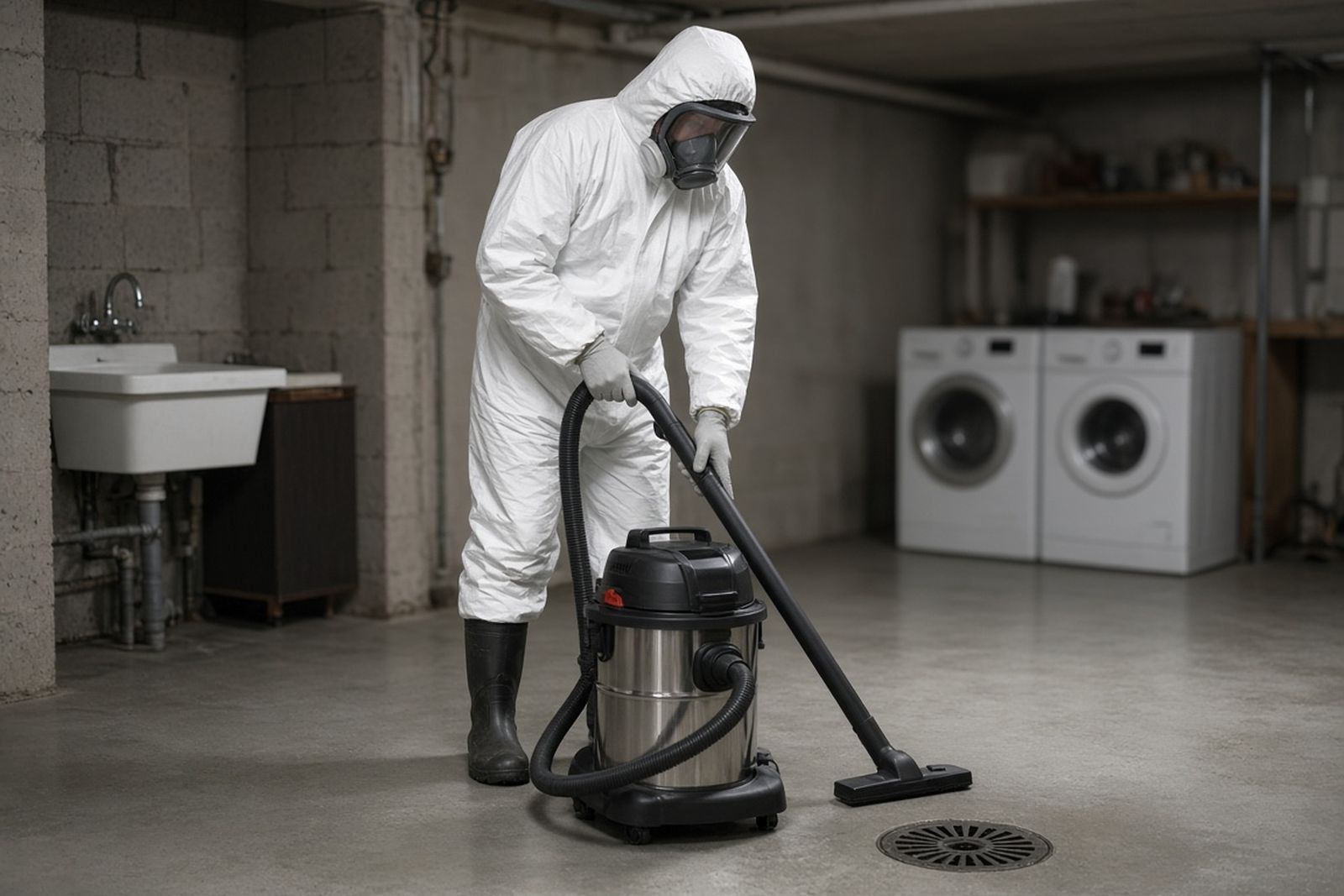
The landlord checks the local property maintenance code and confirms that sanitary conditions are the landlord's responsibility. The landlord hires a remediation company, which removes the carpet and pad, cleans and disinfects the bathroom and subfloor, dries the area with equipment, and documents the work. Waste goes to the landfill under the hauler's bagging requirements.
The tenant stays with family for a few days. The landlord puts the timeline in writing, shares the remediation report when the unit is ready, and asks the plumber for a written note describing the blockage for the insurance claim.
Because the landlord acted quickly and kept records, the tenant never needs to contact code enforcement, and both sides have documentation if questions arise later.
Working out which rules apply to you
Start with your role, then work outward. Homeowners can focus on safe cleanup practices, product labels, permits for rebuilding, and waste disposal. Landlords should add housing codes and landlord-tenant law. Employers should add OSHA or state plan requirements. Businesses in food service, childcare, or healthcare should add their licensing and sanitation codes.
Rules vary by state and county; verify with the local authority. Your local health department, housing code office, sewer utility, contractor licensing board, and solid waste agency can each answer the part of the question they oversee.
- Homeowner: product labels, permits for rebuild, waste disposal rules
- Landlord: add habitability duties and local property maintenance codes
- Employer: add OSHA or state plan worker protection
- Food service: add state food code procedures for vomit and diarrheal events
- Childcare or care facility: add state licensing sanitation standards