Short answer
Feces and bodily fluid cleanups often carry emotional weight: embarrassment, disgust, caregiver exhaustion, grief over a loved one's decline, or stress after a flood or sewage backup. Those reactions are normal. Practical support includes handing the physical work to others, talking with a doctor or counselor, contacting caregiver and aging services, and calling or texting 988 if you or someone you know is in crisis.
Why a waste or fluid cleanup feels so heavy
Most people expect a sewage backup or an accident on the carpet to be a practical problem. Many are surprised by how much it affects them emotionally. Disgust is a strong, automatic reaction, and dealing with human waste in the place where you eat and sleep can leave you feeling unsettled for days.
The situation behind the mess often matters more than the mess itself. A basement flood may mean losing irreplaceable belongings. Repeated accidents may be a sign that a parent's health is declining. A rental unit left in poor condition may point to someone who was struggling alone. Cleaning up can bring those realities into sharp focus.
Whatever you are feeling, whether it is embarrassment, anger, sadness, numbness, or relief that something is finally being addressed, it is a normal response to a hard situation. You do not need to feel a certain way to deserve support.
How can caregivers cope when incontinence becomes part of daily life?
Caring for a spouse, parent, or adult child with incontinence is physically demanding and emotionally complicated. You may be managing accidents several times a day while also handling medications, appointments, and your own job. It is common to feel guilty for being frustrated, or to feel you have lost the relationship you once had with the person.
Protecting the person's dignity helps both of you. Speak matter-of-factly, avoid scolding, and focus on comfort and safety. Many caregivers find it easier to treat cleanup as part of care, like changing a bandage, rather than something shameful.
Reach out for help before you reach your limit. Your loved one's doctor can check for treatable causes of incontinence and refer you to continence specialists. Local Area Agencies on Aging, disease-specific organizations, and hospital social workers can point you to respite care, home health aides, adult day programs, and supply assistance.
- Ask the doctor whether incontinence has a treatable cause.
- Ask about home health or aide services that could share the physical work.
- Look into respite care so you can rest regularly.
- Join a caregiver support group, in person or online.
- Tell a friend or family member honestly how much you are carrying.
After a sewage backup or flood
A sewage backup can feel like a violation of your home. The smell, the damaged belongings, the strangers tearing out walls, and the uncertainty about cost and insurance all add up. When a backup is part of a wider flood, the stress can be much larger.
Research on flood survivors shows how common those effects are. In a 2013 population-based survey after a flood in El Paso, Collins and colleagues found 18% reported at least one mental-health problem after the flood. Sleep trouble, irritability, and worry that it will happen again are common.
Give yourself some grace. It is reasonable to feel shaken for a while after your home has been disrupted. If the feelings are getting worse rather than better after a few weeks, or they interfere with work, sleep, or relationships, talk with a doctor or counselor.
Children notice more than adults expect. If kids in the home saw the flooding or the damage, explain in simple terms what happened, what is being done to fix it, and where they will sleep in the meantime. Keeping familiar routines, such as bedtime stories or school drop-off, helps them feel secure while the house is disrupted.
Handling shame when you or a family member caused the mess
Some cleanups involve a situation the household would rather keep private: an illness, a mental health crisis, substance use, or a long period when someone could not care for their home. The person involved may feel deep shame, and family members may feel embarrassed to let anyone see the space.
Professional cleanup providers see these situations regularly. A good provider treats the home and the people in it with respect and discretion. You can ask them to use unmarked vehicles, to avoid discussing the job with neighbors, and to explain what they are doing without judgment.
If the person involved is struggling with their mental health, the cleanup can be an opportunity to connect them with care. Approach the conversation with compassion rather than blame. Focus on how they are doing, not on the condition of the home.
Landlords and property managers face their own version of this. Entering a unit left in poor condition can bring up frustration, but the tenant may have been dealing with a serious illness or crisis. Keeping comments factual and respectful, and pointing a former tenant toward community services if appropriate, reflects well on everyone.
Should you do the cleanup yourself if it is overwhelming?
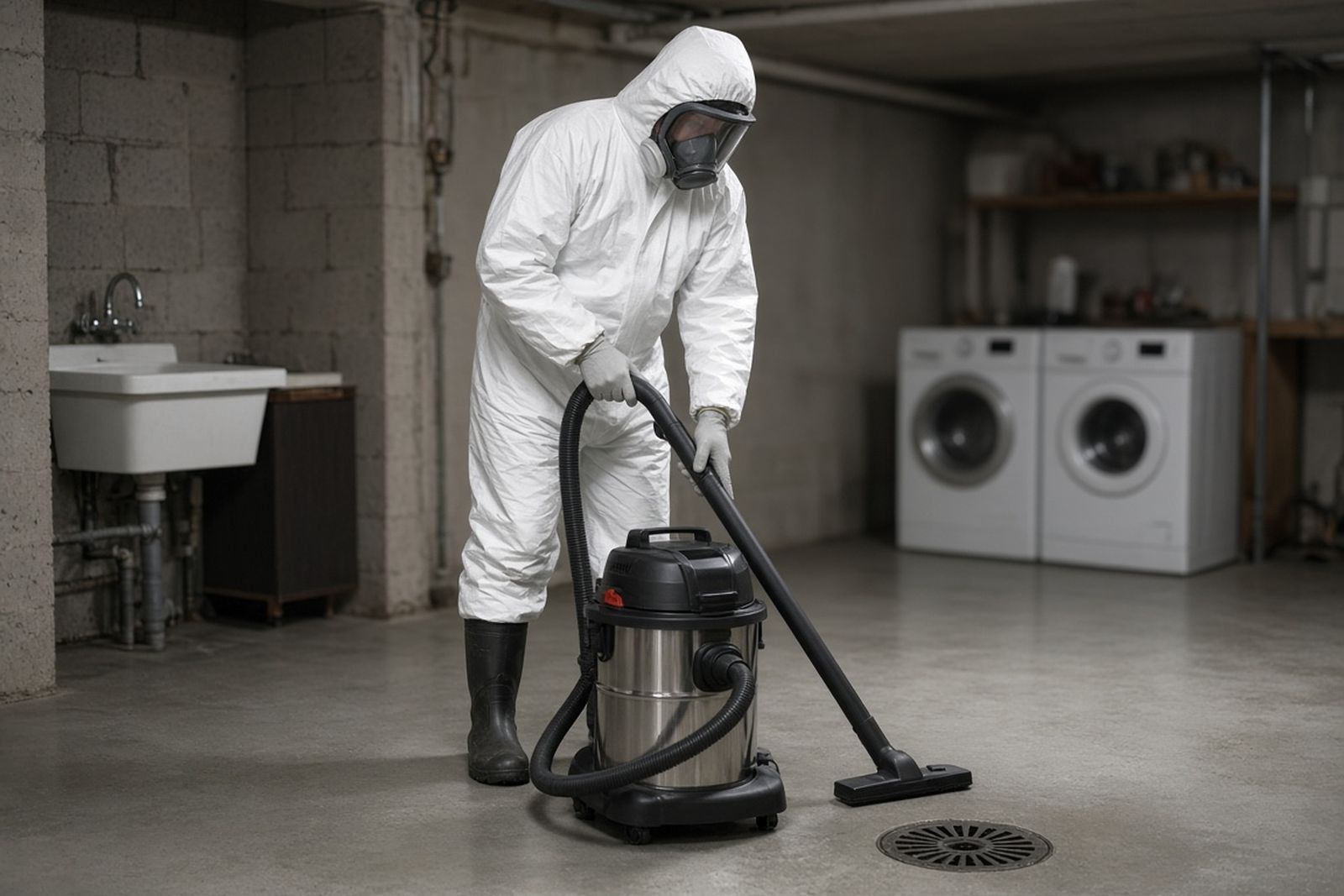
There is no prize for doing the hardest part yourself. If cleaning a waste-contaminated room would leave you distressed, physically unwell, or unable to sleep, handing it off is a reasonable choice, not a failure.
Stepping back is also a safety decision. Human waste carries germs that cause gastrointestinal illness, and sewage can release irritating gases in enclosed spaces. People who are exhausted and upset are more likely to skip gloves, rush, or mix chemicals. Letting trained people handle it protects your mental and physical health at the same time.
If money is a barrier, ask your insurer whether any part of the cleanup is covered, check with local aging or disability services, and ask the provider whether they can phase the work or focus on the most urgent areas first.
The people who do this work for a living
Maintenance staff, janitors, caregivers in facilities, and cleanup technicians handle waste regularly. Repeated exposure to unpleasant scenes, especially those involving neglect, illness, or death, can take a toll over time.
Employers can help by rotating difficult assignments, giving time to decompress after hard jobs, offering access to an employee assistance program, and making it normal to talk about stress. Workers should watch for signs such as dreading shifts, trouble sleeping, irritability, or relying on alcohol to unwind, and reach out early.
Supervisors can also make a difference by checking in after a particularly difficult call, such as a home where a person was found after a long illness or a scene involving a child. A short, private conversation that asks how the worker is doing, without pressure to talk, signals that stress is expected and help is available.
Where to find support right now
If you or someone you know is in crisis or thinking about suicide, call or text 988 to reach the 988 Suicide and Crisis Lifeline, available 24 hours a day. You can also chat at 988lifeline.org. When a life is at immediate risk, dial 911 right away.
For support that is not an emergency, several paths are available. Your health plan or your local Area Agency on Aging can tell you which of these are available near you.
- Your own doctor, who can screen for depression or anxiety and refer you to care
- A licensed counselor or therapist, including those who offer telehealth sessions
- Your employer's employee assistance program, often free and confidential
- Local Area Agencies on Aging for caregivers of older adults
- Disease-specific organizations that run caregiver helplines and support groups
- Disaster distress and community recovery programs after floods
Taking care of yourself during and after the cleanup
Small steps help. Stay somewhere else during the worst of the work if you can. Eat regular meals and try to keep a sleep routine. Limit the time you spend in the affected space, and give yourself something pleasant to return to afterward, even if it is just a walk or a phone call with a friend.
Let others help with practical tasks, such as dealing with the insurer, sorting belongings, or arranging temporary housing. Accepting help is a way of protecting your energy for the parts only you can do.
Finally, remember that the cleanup will end. The smell will fade, the room will be rebuilt, and the crisis will become something you got through. If that feels hard to believe right now, that is a good reason to talk with someone who can help you carry it.