Short answer
The biggest red flags when hiring a sewage or bodily fluid cleanup company are a firm price before anyone inspects, no plan to test hidden layers like subfloor and drywall, unnamed disinfectants, refusal to put the scope in writing, pressure to sign immediately, promises about insurance payment, and no clear answer about where contaminated materials will go. Any one of these deserves a follow-up question.
Why red flags matter so much with sewage and human waste
Waste contamination is unusual because the most important part of the job is usually invisible. Fluid wicks sideways under vinyl plank, soaks into the tack strip beneath carpet, and climbs a few inches up drywall before anyone notices a stain. A company can make a room look and smell better in an afternoon while leaving the real problem sealed underneath.
That gap between appearance and reality is exactly where weak providers operate. You may not be able to judge the quality of the work when the crew leaves, but you can judge how a company talks, plans, and documents before it starts.
The warning signs below are drawn from the questions homeowners, landlords, and caregivers tend to regret not asking. None of them proves a company is dishonest. Each one is a reason to slow down and ask for more detail.
A firm price over the phone
A rough range over the phone can be helpful, especially if you are trying to decide whether to call your insurer. A firm, final number before anyone has seen the space is different. Without an inspection, nobody knows whether the backup reached the subfloor, whether baseboards need to come off, or whether the problem extends into a crawlspace or the unit below.
Low phone quotes often grow once the crew is on site, because the original number only covered surface cleaning. Other times the number stays low and the hidden contamination simply stays behind.
A trustworthy provider will usually explain what could make the price go up or down and offer to walk through the space before committing. If a company insists on a flat rate without asking how long the fluid sat, what flooring is involved, or whether anyone in the home was ill, treat that confidence with caution.
No mention of checking under the floor or behind walls
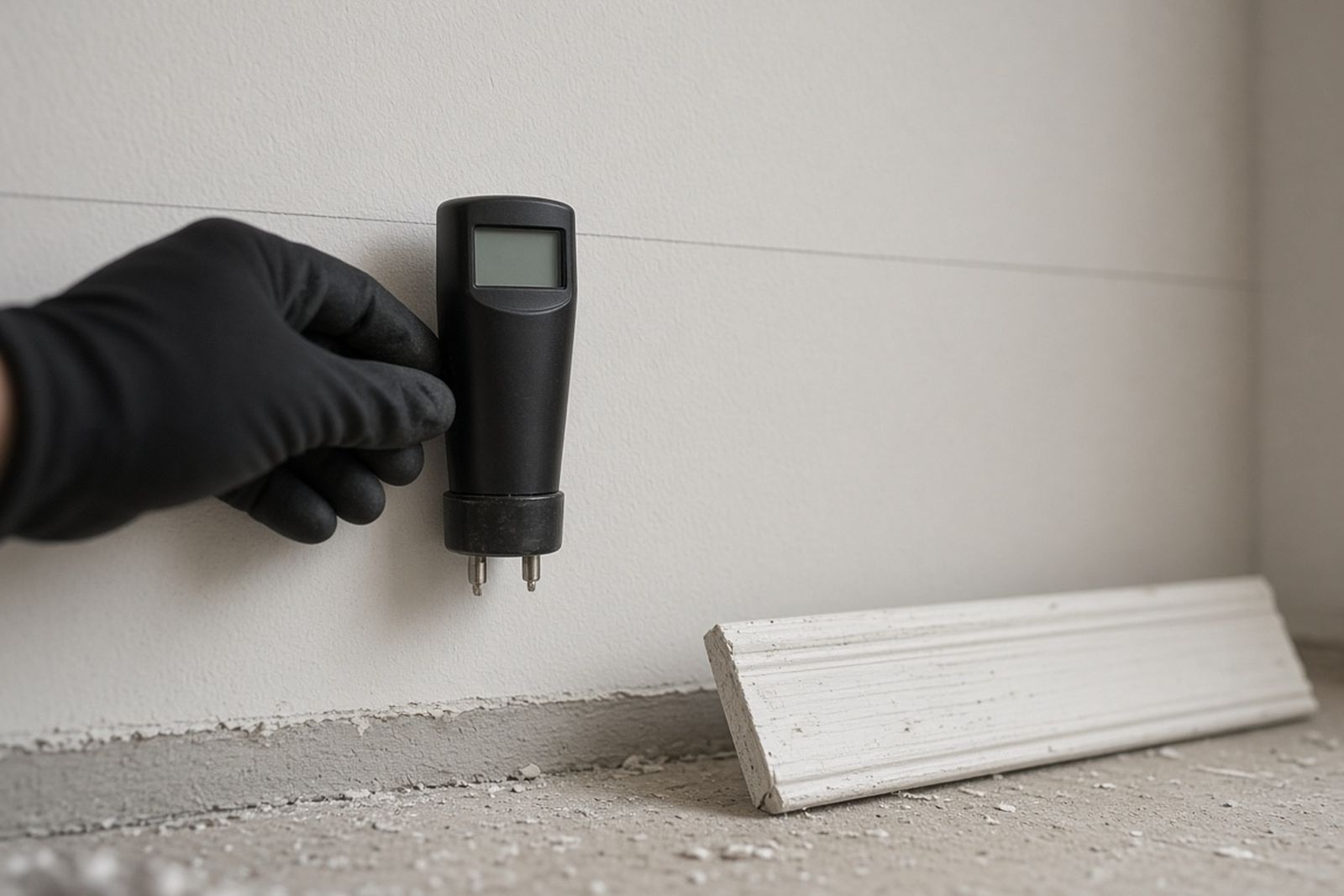
This may be the most telling red flag of all. Sewage and urine do not stay on top of surfaces. A qualified crew should talk about moisture readings, pulling back carpet at the edges, removing a section of baseboard, and checking adjacent rooms, closets, and the ceiling below if the event happened upstairs.
If the plan is to shampoo carpet, spray a deodorizer, and leave, ask directly what happens to the pad and subfloor. Carpet pad that absorbed sewage generally cannot be restored. Drywall and particleboard behave similarly. A company that treats every porous material as cleanable either does not understand the risk or is not planning to address it.
The opposite extreme also deserves a question. A crew that wants to strip an entire floor without taking readings or explaining the boundary may be padding the scope. You want reasoning in both directions.
Should you worry if they cannot name the disinfectant?
Yes. Every legitimate disinfectant sold in the United States carries an EPA registration number and a label listing the organisms it has been tested against and the contact time needed. When a provider says only that they use hospital-grade chemicals or a special enzyme blend, you have nothing to check.
This matters more when someone in the home was sick. EPA maintains lists of products with specific claims, such as List G for products effective against norovirus, and contact times differ from product to product. That is why the product name matters: a spray that needs ten minutes of wet contact will not work if it is wiped off after one.
Enzyme and odor products have a place in this work, but they are not substitutes for a registered disinfectant. If those are the only chemicals a company mentions, ask what they will use to actually disinfect.
Pressure tactics and insurance promises
A sewage backup or a discovered waste problem creates urgency, and some companies lean on it. It is reasonable for a provider to explain that moisture spreads and that waiting has consequences. It is not reasonable to insist you sign a contract before they leave the driveway.
Watch for these patterns, which tend to show up together:
Only your insurer can decide whether a loss is covered. Coverage for sewage and drain backup often depends on endorsements, exclusions, and the specific cause of the event, and those details vary by policy. A remediation company can document damage thoroughly, and that documentation can help your claim, but it cannot bind the carrier.
When a provider says, in effect, do not worry, insurance always covers this, you may end up personally responsible for an invoice you assumed was handled. Ask instead how the company supports claims: whether they provide itemized estimates, moisture logs, photos, and a list of removed materials.
If you are a tenant, the same caution applies to anyone who tells you the landlord must pay. Responsibility depends on the lease, the cause, and local law. A local housing agency or tenant advocacy group can explain how those apply before you assume who owes what.
- A discount that disappears if you do not sign today
- Guarantees that your insurance will pay the full bill
- Requests to sign an assignment of benefits without time to read it
- Large cash deposits before any work or written scope
- Reluctance to let you get a second estimate
- Scare language about health risks without any specific plan to address them
What a missing waste plan tells you
Contaminated carpet, pad, drywall, and cleaning materials have to go somewhere. A provider should be able to tell you how materials are bagged or wrapped, how they leave the property without dripping through the rest of the house, and where they end up.
If the answer is that they will toss everything in your curbside bin or a neighbor's dumpster, that is a problem for you, your neighbors, and your waste hauler. Local rules for household waste from a sewage event can differ from rules for other bodily fluid waste, and a competent company knows which apply in your county.
Ask for a disposal record in the final paperwork. It is a small request that separates organized companies from improvised ones.
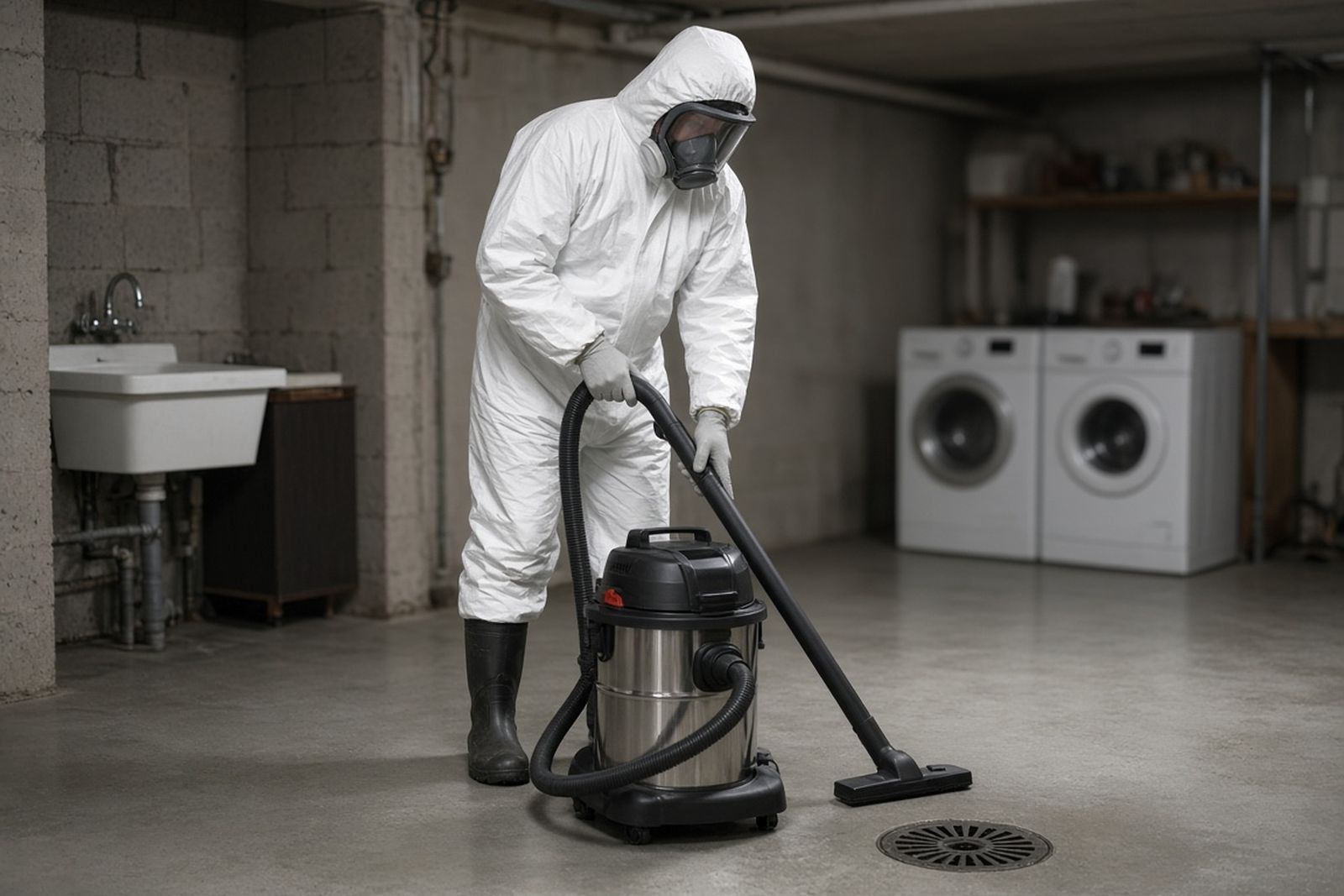
A related warning sign is a crew that shows up in street clothes and plans to walk contaminated debris straight through your kitchen. Human waste work calls for disposable suits, gloves, eye protection, and respiratory protection matched to the conditions, along with a designated spot to remove that gear. If a company brushes off questions about protection, it is unlikely to take care with the path contaminated materials travel through your home. Ask how they will protect clean rooms, stairs, and entryways while debris is being removed, and whether they lay down floor protection along that route.
How red flags sound on a real call
Red flags tend to cluster in the first few minutes of a call. A salesperson who quotes a flat price immediately, says the crew will steam clean the carpet and mop the bathroom, and adds that your insurance will definitely pay has shown three of them at once: a firm price without inspection, no plan for hidden layers, and an insurance promise nobody can make. If you ask whether they will check under vinyl flooring and hear that it is usually not necessary, that confirms the pattern.
A stronger call sounds different. The provider asks how many days the fluid sat, whether the room or unit below has any ceiling stains, and whether the vinyl is glued down or floating. Then they schedule a walkthrough with a moisture meter before quoting.
The second kind of estimate may well be higher, because it includes lifting flooring, removing soaked pad, and checking the ceiling below. For a landlord who will later have to show a unit is habitable, or a homeowner who wants the odor gone for good, that detail is worth more than the savings.
Green flags to look for instead
Red flags are easier to spot when you know what good looks like. A reliable provider in this field tends to ask more questions than it answers at first, because it is trying to understand how far the contamination went.
You should expect a written scope that lists rooms, materials to be removed, materials to be cleaned, the disinfectant and its contact time, protective equipment, containment steps, and how changes will be approved. You should hear about technician training and protective gear without having to drag it out of anyone. And you should be offered documentation at the end, including photos, removed-material lists, and disposal records.
Finally, a good company will tell you what it does not do. Some remediation crews do not rebuild, and some do not handle plumbing repairs. Clear boundaries are a sign of professionalism, not a lack of service. If a provider leaves you feeling informed rather than rushed, you are probably talking to the right people.