Short answer
Cleaning physically removes feces, urine, and the organic film they leave behind; disinfection uses a registered chemical to inactivate the germs that remain. With human waste you need both, in that order, because organic matter blocks disinfectants from reaching microbes. Porous materials that absorbed waste usually cannot be cleaned or disinfected reliably and are removed instead. Drying and odor control come afterward.
Two different jobs
People often use the two words interchangeably, but they describe different jobs. Cleaning is the physical removal of dirt, waste, and residue from a surface. It relies on detergent, water, scrubbing, and rinsing. When you wipe up a spill and wash the floor, you are cleaning.
Disinfecting is the use of a chemical to inactivate bacteria and viruses on a surface. It relies on a registered product applied according to its label, which includes staying wet on the surface for a specific amount of time. When you apply that product and leave it in place, you are disinfecting.
A surface can look spotless and still carry germs if it was cleaned but not disinfected. A surface can also be sprayed with disinfectant and remain contaminated if the waste was never removed first. Human waste cleanup requires both steps done well.
Why feces and urine make cleaning so important
Human waste is dense with microorganisms. According to CDC in 2024, a single gram of human feces can contain one trillion germs. Even a thin smear left on a floor or toilet base can carry an enormous number of organisms.
Waste also leaves behind organic material, such as proteins, fats, and fibers, that coats surfaces. That film can shield microbes from contact with a disinfectant and, for some products, react with the active ingredient and reduce its strength. Spraying disinfectant directly onto dried waste is a little like painting over dirt: the surface changes color, but what is underneath stays put.
That is why professionals start by removing gross contamination, then washing surfaces with detergent and water, then rinsing, before any disinfectant goes on. The goal is to leave nothing between the chemical and the microbes it needs to reach.
Textured surfaces make the problem harder. Grout lines, the base of a toilet, rough concrete, and embossed vinyl hold waste in tiny recesses that a quick wipe glides over. A stiff brush, repeated passes, and fresh cleaning solution are often needed to lift residue out of those spaces before disinfection has a fair chance.
What happens to materials that cannot be cleaned?
Some materials can be cleaned and disinfected reliably; others cannot. Hard, nonporous surfaces such as sealed tile, porcelain, stainless steel, and glass usually respond well to cleaning and disinfection. Porous and semi-porous materials behave differently.
Carpet pad, upholstery foam, mattresses, unsealed wood, particleboard, and drywall absorb fluid deep below the surface. You cannot scrub the interior of a carpet pad, and a disinfectant will not reliably reach every fiber. For that reason, professionals usually remove porous materials that absorbed sewage or urine rather than attempting to clean them.
The decision is not always obvious. Some finished hardwood floors can be cleaned if waste did not penetrate the seams; others need boards removed. Concrete is porous but can often be cleaned and disinfected, sometimes with sealing afterward. A qualified provider will explain the reasoning for each material rather than applying a single rule.
Contact time, sanitizers, and other product labels
Look on any registered disinfectant label and you will find a stated contact time. That is the length of time the surface must stay visibly wet for the product to achieve the kill claims on the label. If the surface dries early or is wiped off too soon, the disinfectant has not had time to work.
Contact times vary widely depending on the product and the organism. Some take less than a minute; others take several minutes. Organisms commonly found in human waste, such as norovirus and C. difficile, often require specific products and longer contact times than everyday bacteria.
Public health guidance reflects this. For surfaces contaminated by norovirus, CDC recommended in 2024 a chlorine bleach solution of 1,000 to 5,000 ppm (5 to 25 tablespoons of household bleach per gallon of water). The strength matters, but so does keeping the solution in place long enough and applying it to a surface that has already been cleaned.
Not quite. Sanitizing generally means reducing bacteria on a surface to levels considered safe by public health standards, often for food-contact surfaces. Disinfecting generally means inactivating a broader range of organisms, including viruses, as specified on the product label.
For human waste, you usually want a disinfectant, not only a sanitizer. The organisms of concern include viruses and bacteria that spread through fecal contamination, and the product label should list them.
Deodorizers and enzyme cleaners are another category entirely. They can break down odor-causing residues and are useful after disinfection, but they are not substitutes for it unless the product also carries a registered disinfectant claim.
Sterilization is a further step that you will rarely encounter in home cleanup. It refers to destroying all microbial life, including spores, and is typically reserved for medical instruments processed in controlled equipment. If a provider promises to sterilize a room or a basement, treat the claim with caution, because that is not what remediation of a living space involves.
The cleaning-then-disinfection sequence, step by step
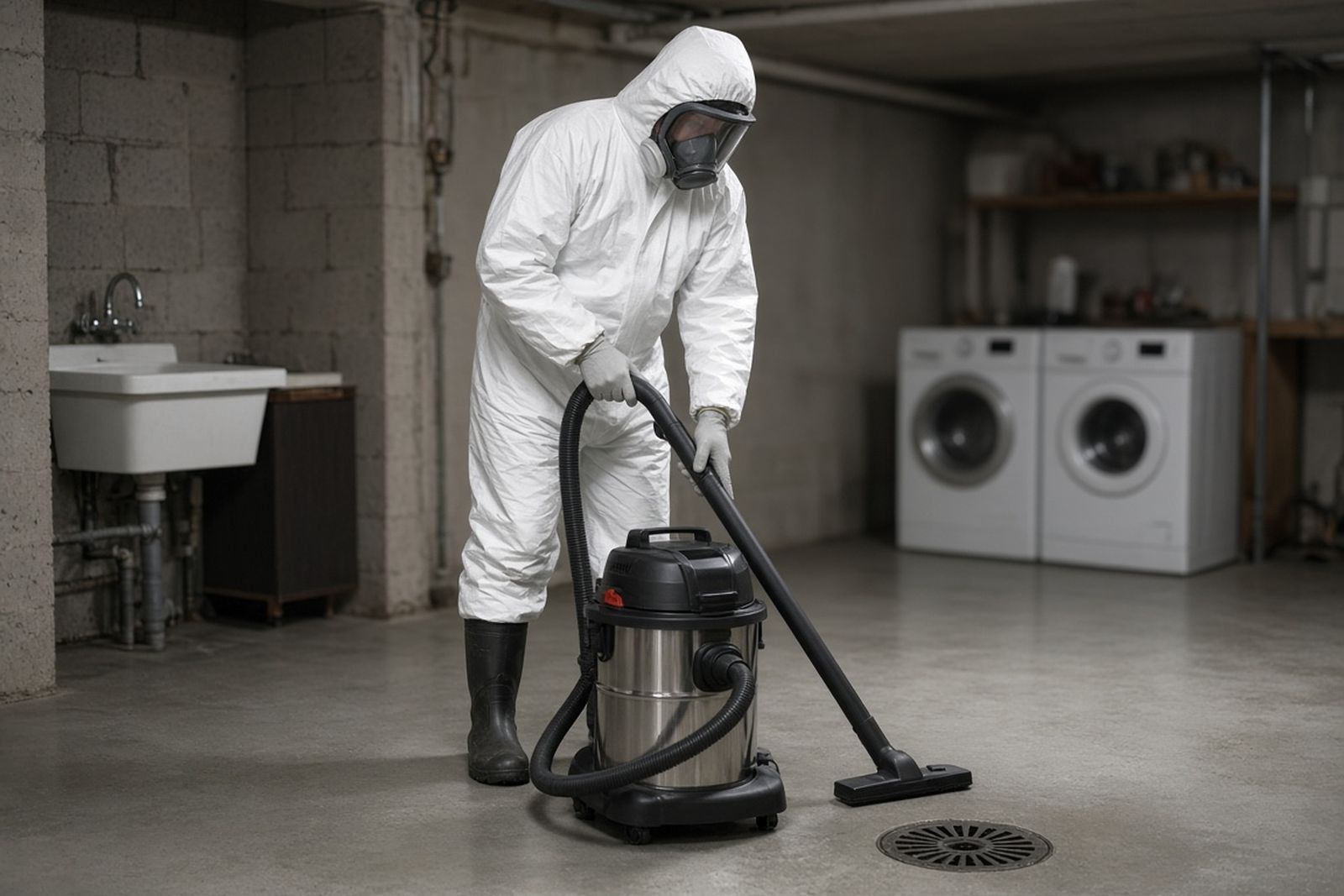
Professional crews adapt their process to each space, but the general sequence for a sewage or waste cleanup tends to follow the same logic.
Each step depends on the one before it, which is why skipping or reordering steps undermines the whole job.
- Set up containment and protect clean areas and walkways
- Remove standing fluid and gross waste
- Remove porous materials that absorbed contamination
- Clean remaining surfaces with detergent, water, and agitation
- Rinse to remove detergent residue and loosened soil
- Apply a registered disinfectant and keep surfaces wet for the labeled contact time
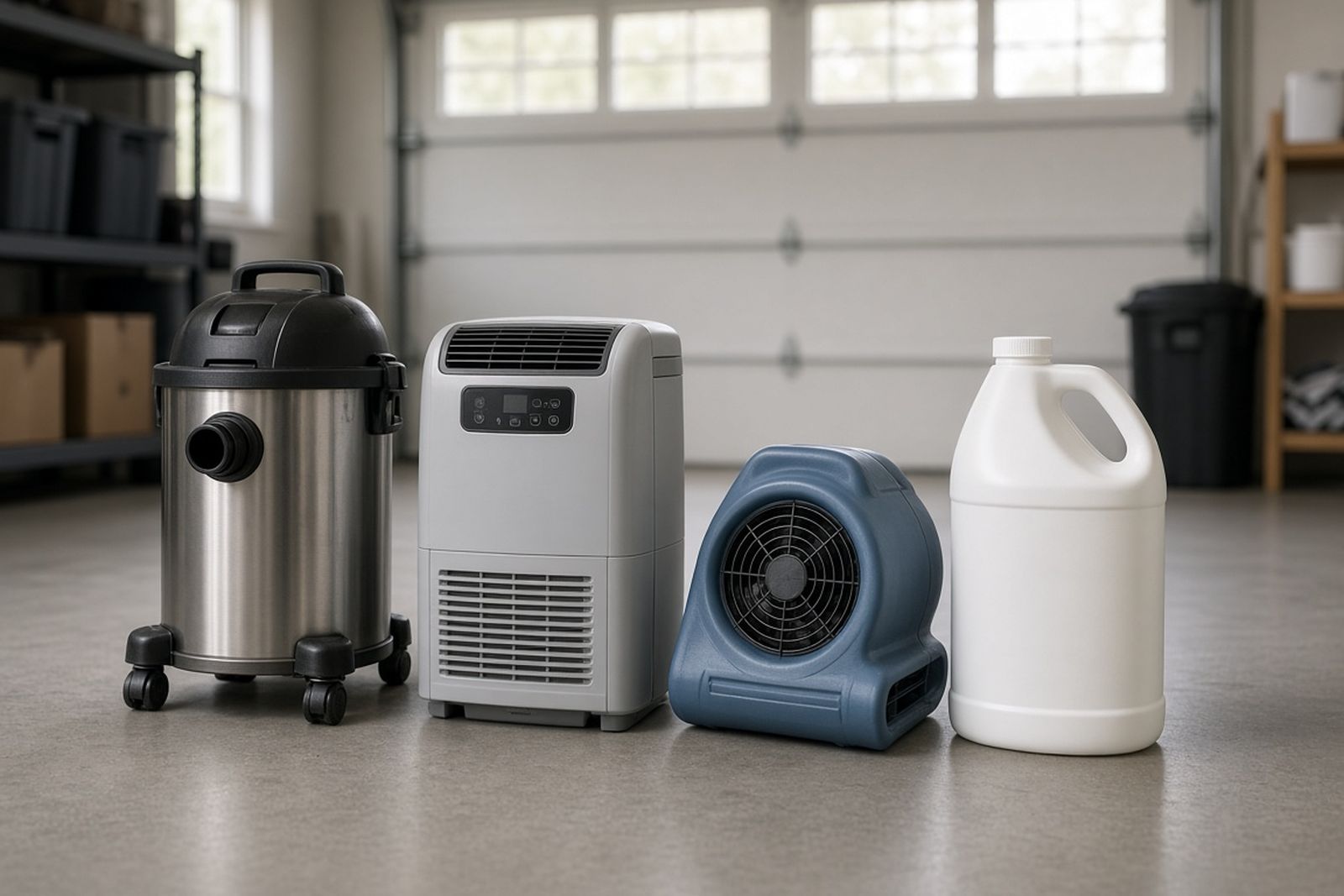
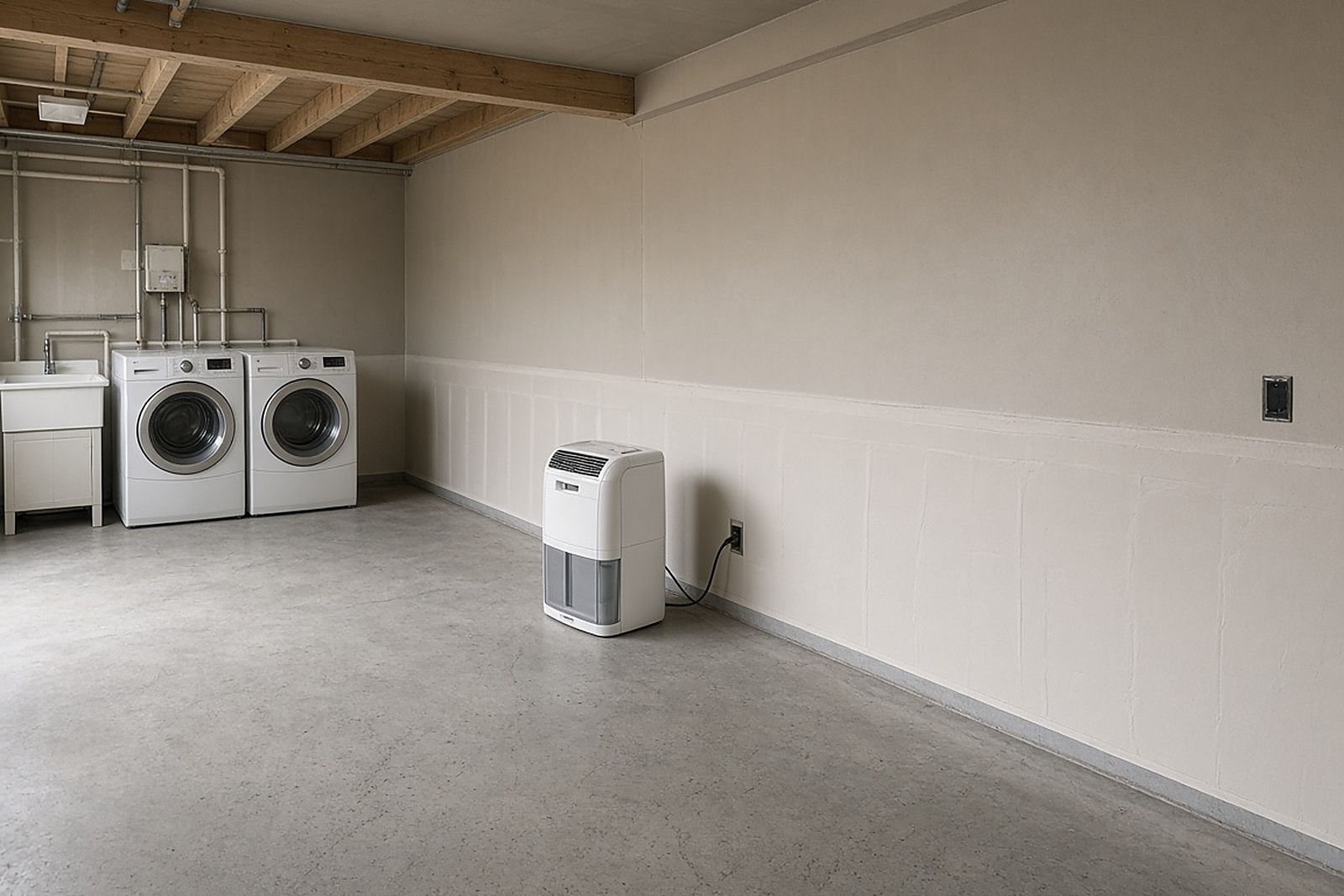
- Dry the space thoroughly, using dehumidifiers and air movers as needed
- Address remaining odor with appropriate products or equipment
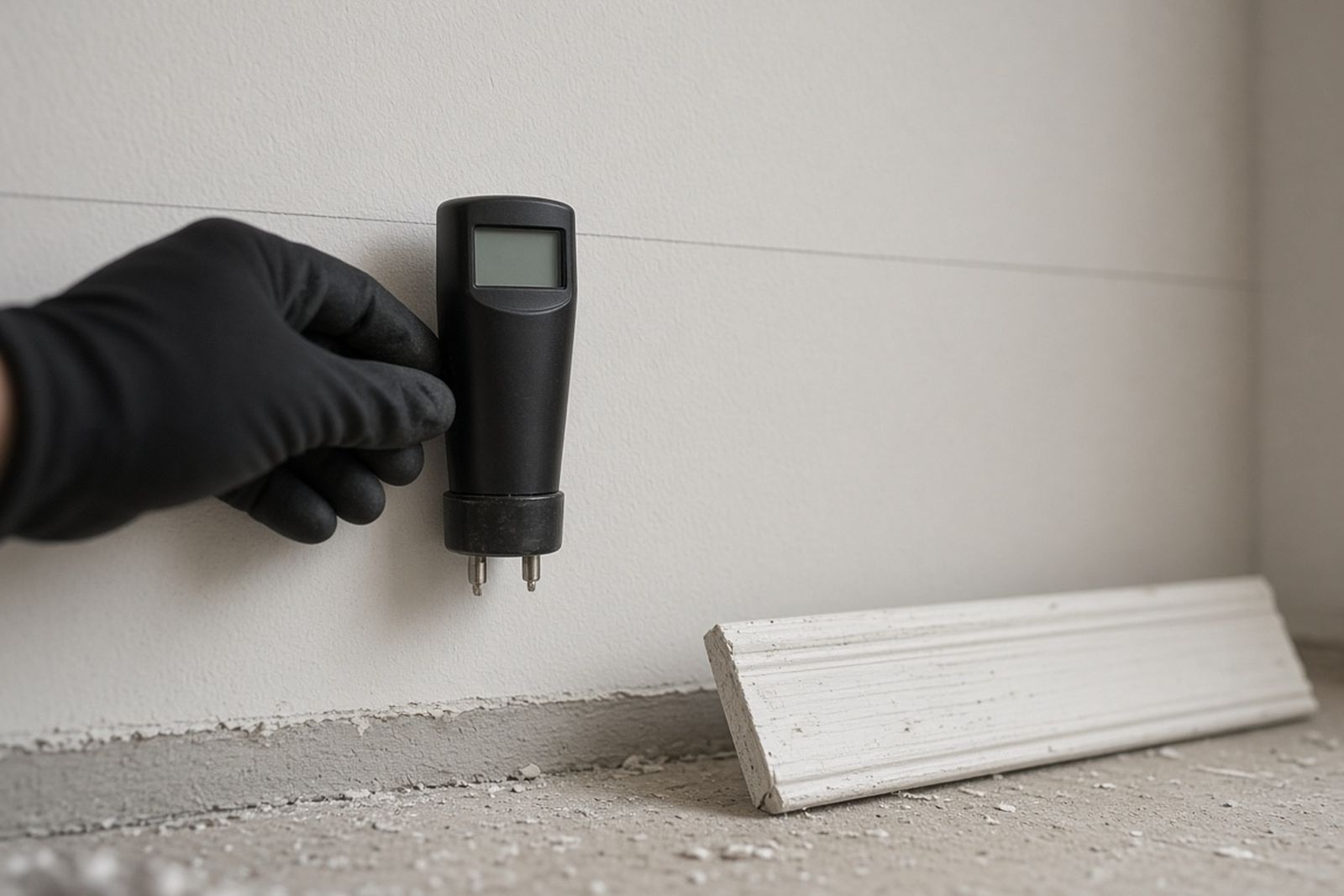
- Verify moisture levels and document the work
When disinfection comes first: a composite case
This composite reflects a common pattern rather than one specific job. A homeowner discovers that a toilet supply line and drain problem have caused waste to seep under a bathroom vanity and across a tile floor into an adjoining carpeted closet.
In this scenario, the homeowner's first instinct is to spray bleach everywhere, wait a few minutes, and mop. The tile looks clean. The carpet is sprayed and left to dry. A week later, the closet smells worse, and dark staining appears along the baseboard.
When a professional crew arrives, they find that the grout lines still hold residue because the floor was never scrubbed, the carpet pad is saturated, and fluid wicked into the bottom of the drywall. They remove the carpet, pad, and lower drywall, scrub and rinse the tile and grout, apply a registered disinfectant for its full contact time, and dry the wall cavity before any repairs.
The crew also explains why the order matters. Scrubbing and rinsing the tile first removes the film that was protecting germs in the grout, so the disinfectant can reach them. Removing the carpet and pad eliminates material that would have kept releasing odor and contamination no matter how much product was applied.
The homeowner's bleach was not useless, but it was applied before cleaning and to materials that could not be disinfected. The result was a space that looked better for a few days without actually being safe.
Checking a provider, and handling a small spill yourself
You do not need to watch every minute of the work, but you can ask questions that reveal whether a provider understands the difference.
Ask how they will clean surfaces before disinfecting, which detergent they use, and whether they rinse. Ask which disinfectant they will use, its EPA registration number, and its contact time for the organisms of concern. Ask how they will keep large surfaces wet long enough. Ask which materials they plan to remove and why.
A provider who talks only about spraying, fogging, or deodorizing may be skipping the cleaning step. One who can describe the sequence clearly, and who documents the products and contact times used, is more likely to leave you with a space that is genuinely clean and disinfected.
Small, contained accidents on hard surfaces, such as a toilet overflow onto tile that is caught immediately, can often be handled by a careful household. Wear disposable gloves and eye protection, remove the waste with disposable towels, clean the surface with detergent and water, rinse, then apply a disinfectant according to its label and let it stay wet for the full contact time.
Never mix bleach with ammonia or with other cleaners, because the combination can release harmful gases. Ventilate the room, bag used materials, and wash your hands thoroughly afterward.
Larger events, spills that reach carpet or drywall, sewage backups, and situations involving someone with a known infection are better handled by professionals. If you are unsure how to dispose of contaminated materials, your local solid waste agency can tell you, and owners of rental or commercial property can ask the local health department whether specific requirements apply.