Feces & Bodily Fluid Cleanup: Education
Science and technology used in some feces & bodily fluid cleanup scopes, with explicit limits for ATP, disinfectants, enzymes, fogging, air equipment, and moisture tools.
The education articles explain the biology and chemistry behind waste and fluid cleanup. They describe why gut germs, the ones spread through contact with feces, live on surfaces and in damp materials. They show how urine crystals stick to fibers and wood. They explain why some illnesses in a home call for products that kill spores. Other posts compare cleaning and disinfecting. They explain when enzyme products help and when they are just marketing. They also look at tools such as moisture meters, heat cameras, and UV lights. They cover quick swab tests that show leftover organic residue (they do not detect germs). Each post covers what the tool can and cannot show about a soiled floor.
Get an email reply about feces & bodily fluid cleanup
Send a short message to the follow-up inbox. A coordinator can reply by email. This form does not send emergency help; call 911 first if anyone is in danger.
This background helps you judge a proposal on its merits. Say a plan lists an enzyme cleaner, a registered disinfectant, and a product that kills spores. That may be just right, or it may be padding. It depends on who lives in the home and what the mess touched. When you understand what each step does, you can ask why it is included and whether your case calls for it. The same knowledge protects you from the opposite mistake. That is when a company leaves out a step because it thinks you will not notice. For example, once you know a moisture meter reading describes the floor under the stain, you can ask to see readings past the visible edge.
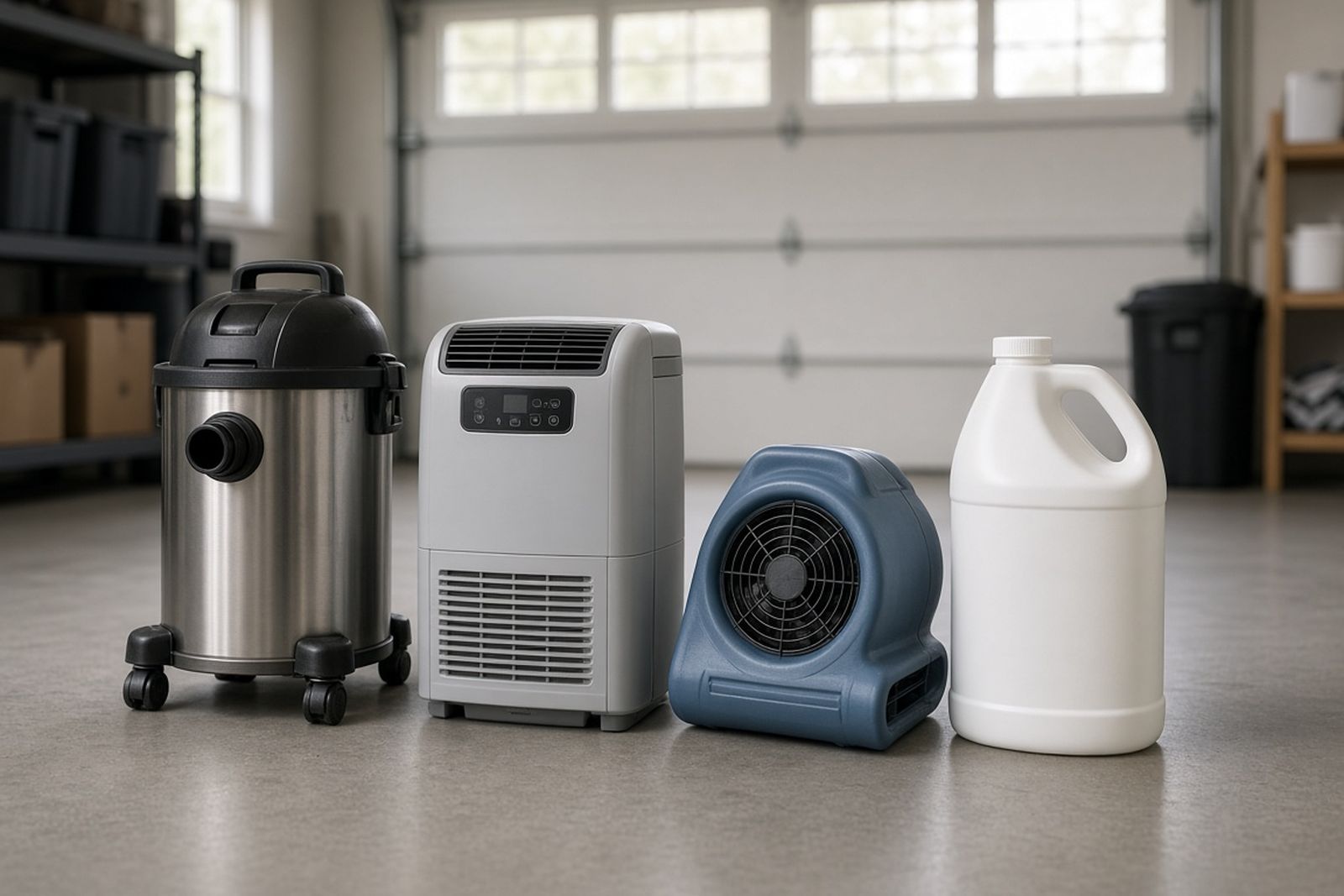
The Science Behind Feces & Bodily Fluid Cleanup
How pathogens in stool, urine, and vomit survive on floors and fabrics, why sewage gases matter, and what makes a disinfection step work or fail at home.
Human waste and bodily fluids carry bacteria, viruses, and parasites that can survive for days to months on household surfaces. Effective cleanup follows chemistry and biology: remove the organic material, choose a disinfectant whose label covers the likely organisms, keep it wet for the full contact time, and remove porous materials that fluid has soaked into. Gases from sewage and old urine add a separate breathing hazard.
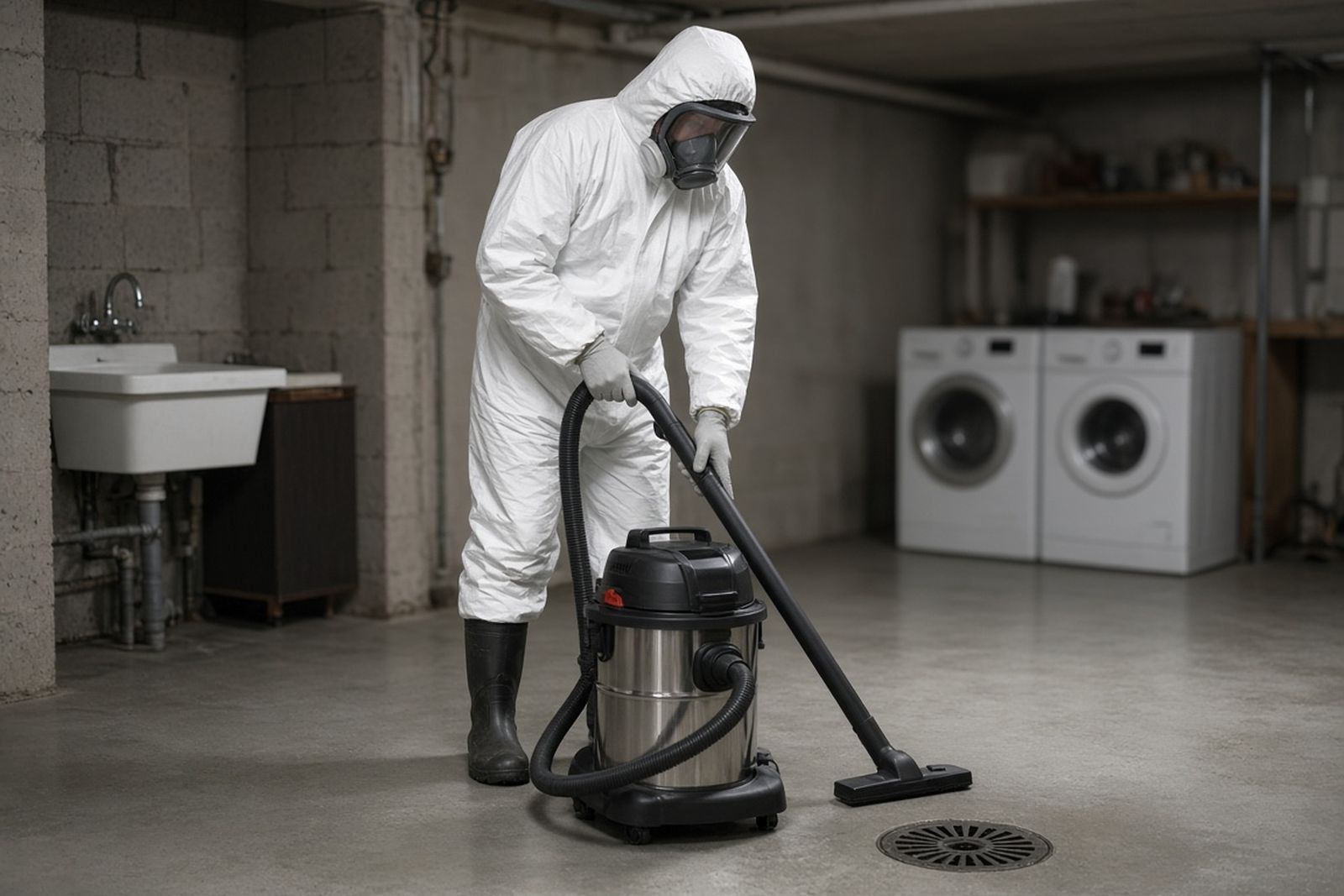
How to Evaluate Equipment Proposed for Feces & Bodily Fluid Cleanup
Air scrubbers, moisture meters, ozone machines, and UV lights often appear on sewage and urine cleanup estimates. Here is how to tell which ones you need.
To evaluate equipment proposed for feces and bodily fluid cleanup, ask what each item does, whether it fits the contamination in your home, and how its use will be documented. Registered disinfectants, proper respirators, moisture meters, HEPA air filtration, and drying equipment are common for sewage and urine work. Ozone and fogging devices need extra scrutiny, and no machine replaces physical removal and cleaning.
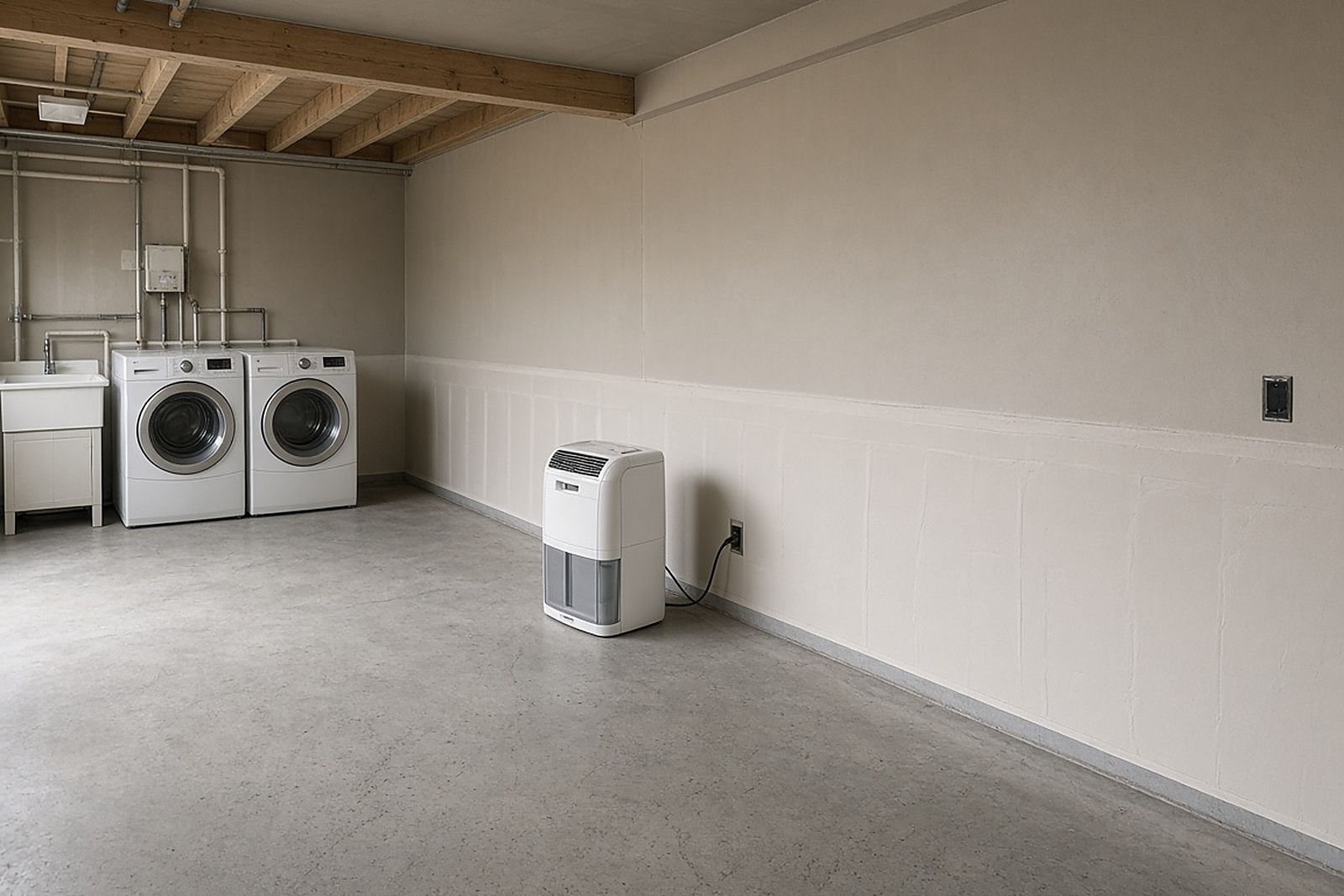
The Difference Between Cleaning and Disinfection in Feces & Bodily Fluid Cleanup
Why sewage and human waste must be physically removed before any disinfectant can work, and how to tell whether a provider is doing both steps properly.
Cleaning physically removes feces, urine, and the organic film they leave behind; disinfection uses a registered chemical to inactivate the germs that remain. With human waste you need both, in that order, because organic matter blocks disinfectants from reaching microbes. Porous materials that absorbed waste usually cannot be cleaned or disinfected reliably and are removed instead. Drying and odor control come afterward.
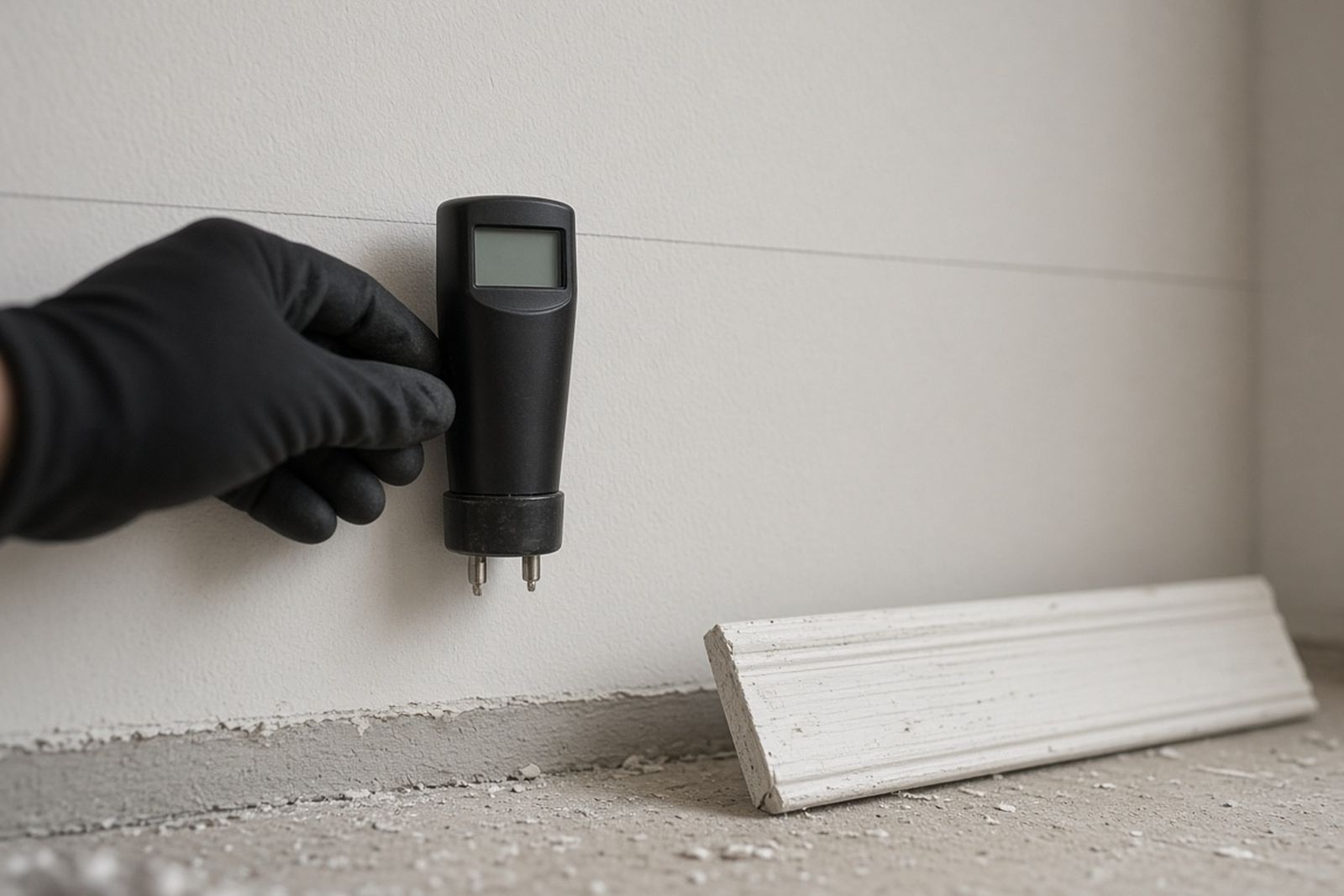
When ATP Testing Helps—and When It Does Not—in Feces & Bodily Fluid Cleanup
ATP swabs can show where organic residue from sewage or waste remains, but they cannot prove a room is free of norovirus or other germs. Learn how to read them.
ATP testing measures leftover organic material on a surface, which makes it a useful check that feces, urine, or sewage residue was actually removed from hard surfaces. It does not identify specific pathogens, does not work well on porous or wet materials, and can be skewed by some disinfectants. Use it as one piece of a verification plan, alongside visual inspection, odor checks, and moisture readings.
How to Evaluate Technology Used in Feces & Bodily Fluid Cleanup
Moisture meters, thermal cameras, UV lights, ozone, and air scrubbers show up in waste cleanup quotes. Learn which tools earn their place and which to question.
To evaluate technology in feces or bodily fluid cleanup, ask what problem each tool solves, what evidence supports it, and what it cannot do. Moisture meters, thermal imaging, and gas monitors help find hidden contamination and hazards. Air scrubbers control dust and odor during removal. UV-C, ozone, and foggers have narrow uses and never replace physical removal, cleaning, and correctly applied disinfectant.
When Enzymes or Microbial Products Fit Feces & Bodily Fluid Cleanup
Enzyme and microbial cleaners break down urine and waste residue that causes odor, but they do not disinfect. Learn when they fit a cleanup and when they don't.
Enzyme and microbial products break down organic residue such as urine salts, proteins, and fats, which makes them useful for lingering odor in materials that stay in place after a feces or fluid event. They are not registered disinfectants and do not reliably kill pathogens. Use them after removal and cleaning, in the right order relative to disinfection, and never as a substitute for removing saturated porous materials.
Sourced figures on education
- 12,800 deaths
CDC estimated 223,900 hospitalized C. difficile cases, 12,800 deaths and $1 billion in attributable healthcare costs in 2017, rating the threat 'urgent'.
Read with care: Counts hospitalized cases only; community-associated cases are not declining.
Source: CDC (2019)United States, 2017 data
- 7 days
Hepatitis B virus remains infectious for at least 7 days on surfaces; in 2023 the US recorded 2,214 reported cases but an estimated 14,400 actual infections.
Read with care: Surface survival does not mean casual contact transmits infection.
Source: CDC (2025)United States
- 100 ppm
The NIOSH IDLH for hydrogen sulfide, the 'rotten egg' gas from sewage, is 100 ppm; 700–1,000 ppm causes rapid unconsciousness and death.
Read with care: Olfactory fatigue at 100 ppm means people stop smelling it as danger rises.
Source: NIOSH (CDC) (1994)US occupational exposure guidance
These figures are public research and agency data, not this network's own job records. Keep each number with its population, year and limits; none of them predicts cost, timing or outcome at a specific property.
What research has found
Findings from published studies of people and properties in situations like this one. They describe what researchers observed in a specific group; they are not predictions for your case.
Only one participant reported the complete PPE combination described in the report.
Limited healthcare access was associated with physical and mental-health difficulties.
Education: common questions
What does an enzyme cleaner actually do to urine?
Enzyme products contain proteins or bacteria that break down the organic matter in urine and other messes. They break it into smaller pieces that can be rinsed away. They work best when they stay wet long enough and have enough moisture to reach the residue. They are cleaners, not disinfectants. So you still need a registered disinfectant where germs are a concern.
Why would a company suggest a product that kills spores?
Some bacteria form spores that stand up to normal disinfectants. Someone in the home may have had diarrhea linked to bacteria that form spores. If so, a company may suggest a product whose label clearly says it kills spores. Ask what information led to the advice. Read the label's contact time.
Can a quick swab test prove a bathroom is free of germs?
No. A quick swab test shows leftover organic residue on a smooth surface and gives a comparison number. It does not detect germs. It cannot test inside soft materials or confirm that sewage is gone from a subfloor. It can help compare surfaces before and after cleaning, as long as the company explains how it will read the results.
What does water category mean in a sewage or waste cleanup?
Cleanup pros sort water damage into categories based on how dirty the water is. Clean supply water sits at one end. Sewage, or water that touched human waste, sits at the dirtiest end. The category guides which materials can be dried and kept and which must be removed. Ask your company which category they chose and why.
Why do urine stains sometimes come back after cleaning?
Urine leaves salts and residue deep in carpet backing, pad, and subfloor. Surface cleaning may lift the visible stain. But moisture from humid air or later cleaning can pull residue back up toward the surface. That is why stains and odors can come back weeks later. Treating or removing the deeper layers usually solves the problem better than cleaning the surface again and again.
What is the difference between a sanitizer and a disinfectant?
A sanitizer lowers the number of germs. A disinfectant's label says it kills certain germs on hard surfaces when used as directed. For waste cleanup, you usually want a disinfectant whose label lists the kinds of germs found in feces, urine, or vomit. Check the label instead of trusting the product name.
Why does the order of cleaning steps matter so much?
Each step prepares for the next. Removing solids and soaked materials first means the cleaner can reach remaining surfaces. Cleaning removes the film that would block the disinfectant. Disinfection works best on a clean surface. Drying last helps prevent mold and odor. Skipping or reordering steps can leave germs or odor behind even when every product used is a good one.
Related community polls
Every count is a real visitor vote; nothing is seeded or padded. One vote per poll per device, and you can change your answer.
When you discovered a sewage backup or waste problem at home, what did you do first?
How did you decide whether soaked carpet could be saved?
More on feces & bodily fluid cleanup
Feces & Bodily Fluid Cleanup services
See how pro cleanup of sewage, waste, and soaked materials really works in homes and rentals. Learn about moisture checks, removing materials, and records.
Costs explained
What drives the price, published cost ranges, and how to read a written quote line by line.
Insurance and payment
Which policies may respond, how to document a claim, and what to do if coverage is denied.
Planning tools
Use hands-on tools to see cost drivers, check a company, organize a claim, plan the first day, sort debris, and weigh doing it yourself.
Community polls
See how other homeowners, landlords, and caregivers handled sewage backups and waste messes. Compare their choices with the one in front of you.
Knowledge quiz
Test what you know before you call a company or start cleanup. Learn to spot hazards, keep a mess in one place, clean in the right order, and deal with waste.
Field guides
Step-by-step guides walk through common home situations. They explain what to expect, what to record, and which choices depend on local rules.