Short answer
Sewage and bodily fluid cleanup has shifted from surface scrubbing and heavy bleach toward a structured process: treating contaminated water as its own category, mapping moisture behind walls and under floors, removing porous materials, choosing disinfectants with specific organism claims, protecting workers from pathogens and gases, and documenting results for owners, insurers, and inspectors. The core goal is unchanged; the methods are far more deliberate.
The mop-and-bleach era
For a long time, cleaning up after a sewage backup or a soiled room was treated as a household chore or a janitorial job. People mopped floors, scrubbed with strong bleach, opened the windows, and waited for the smell to fade. Carpet was shampooed, sometimes more than once, and drywall stayed in place unless it visibly crumbled.
That approach made sense with the knowledge and tools people had. Bleach is a powerful disinfectant, and fresh air does help with odor. What was missing was an understanding of where contamination goes once it leaves the visible surface.
Many homeowners discovered the limits the hard way. Odors returned in humid weather, stains wicked back up through new carpet, and mold appeared behind baseboards months later. Those recurring problems pushed the industry to change.
The hidden costs of bleach-for-everything
Bleach also carried hidden costs. Mixed with ammonia-based cleaners or with the ammonia that builds up from decomposing urine, it can release irritating gases. Poured liberally onto carpet or wood, it bleached and weakened materials without reaching the contamination underneath. Its reputation as the answer to everything delayed the adoption of more careful methods for years.
Contaminated water becomes its own category
One of the most important shifts was the recognition that not all water damage is the same. Clean water from a supply line, gray water from an appliance, and black water from sewage or toilet overflow carry very different risks. The restoration industry developed categories to describe those differences, and they now shape how most professional crews approach a job.
Once sewage was treated as the most contaminated category, the logic of the work changed. Porous materials that absorbed it were generally removed rather than cleaned. Workers wore more protection. Containment became a standard step to stop contamination from spreading through the rest of a home.
That classification also made scopes easier to compare. When one estimate says a basement will be treated as a clean-water loss and another says it will be treated as a contaminated-water loss, you can see immediately why the plans and prices differ.
How did moisture mapping change what gets removed?
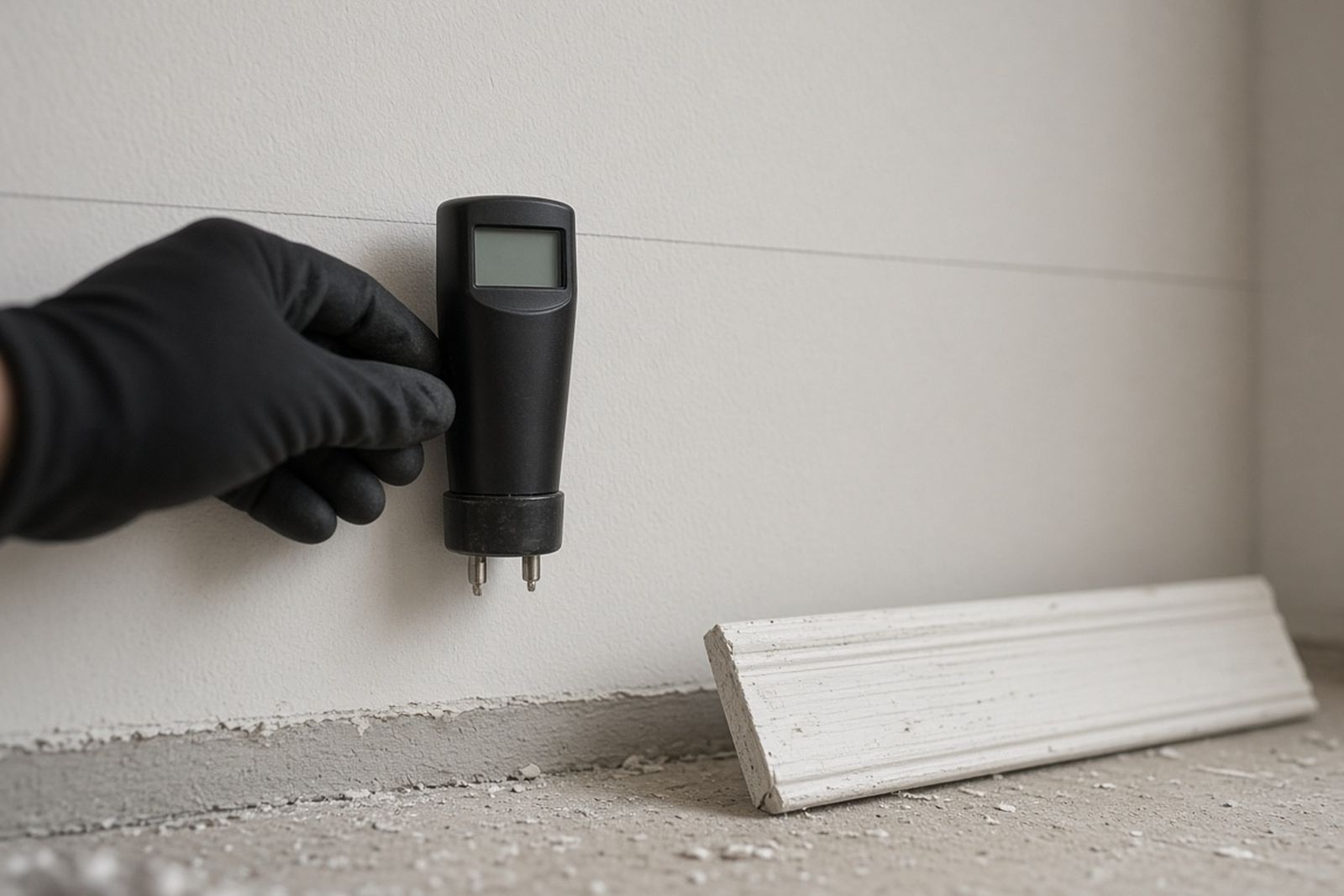
Early cleanup relied on what people could see and smell. Modern crews rely on instruments. Moisture meters, thermal imaging cameras, and hygrometers let technicians trace how far fluid traveled under flooring, inside wall cavities, and into subfloors.
This has changed decisions in both directions. Crews now find contamination that would have been missed, such as fluid that traveled under a hallway into a neighboring bedroom. They can also avoid removing materials that stayed dry, which keeps demolition proportional to the actual damage.
Documentation grew alongside the tools. Readings taken at the start, during drying, and at the end of the job create a record that shows when a space reached acceptable moisture levels. That record matters to insurers and to anyone who buys the property later.
Instruments also changed how crews talk with owners. A technician can now show you a reading on a meter or an image on a thermal camera that explains why a wall that looks fine has to be opened. That visual evidence turns a request to trust the crew into a decision you can understand for yourself.
More targeted disinfectant choices
Bleach is still widely used, but professionals now choose products based on the organisms likely to be present and the surfaces involved. Registered disinfectants carry labels listing the organisms they have been tested against and the contact times needed.
Public agencies have made that easier by publishing lists of products tested against specific threats. EPA's List K, for example, collects registered disinfectants proven to kill C. difficile spores, and each product on it carries its own required contact time.
Those lists reflect a broader change in thinking. The question is no longer only whether a chemical is strong, but whether it has a proven claim against the organism of concern and whether the crew can keep it wet on the surface long enough to work.
Why do professionals now combine cleaning methods?
Another shift is the understanding that no single step does everything. Physical cleaning removes soil and organic matter. Disinfection inactivates what remains. Drying prevents regrowth. Odor control addresses residues that cleaning and disinfection leave behind.
Infection prevention professionals have moved in the same direction. In a 2024 survey by Centeleghe and colleagues, 70.8% of healthcare professionals favoured combining methods for cleaning and disinfection. Home remediation has borrowed that logic: pre-cleaning, then disinfecting to label directions, then drying and verifying.
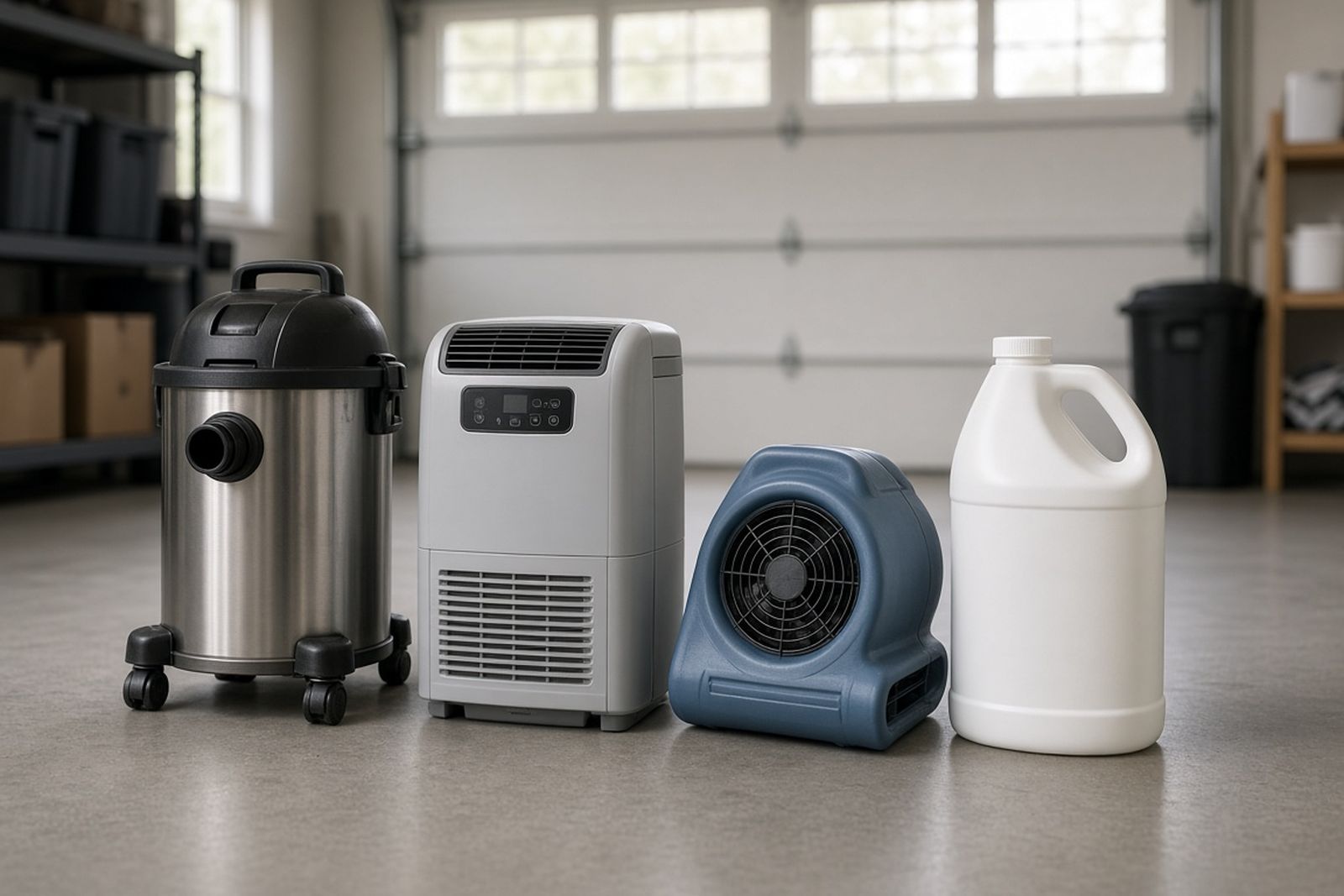
Newer tools such as electrostatic sprayers, air scrubbers with HEPA filtration, and hydroxyl or ozone generators for odor have added options. Used well, they supplement hands-on cleaning. Used as shortcuts, they recreate the old problem of treating only what is easy to reach.
How worker protection evolved
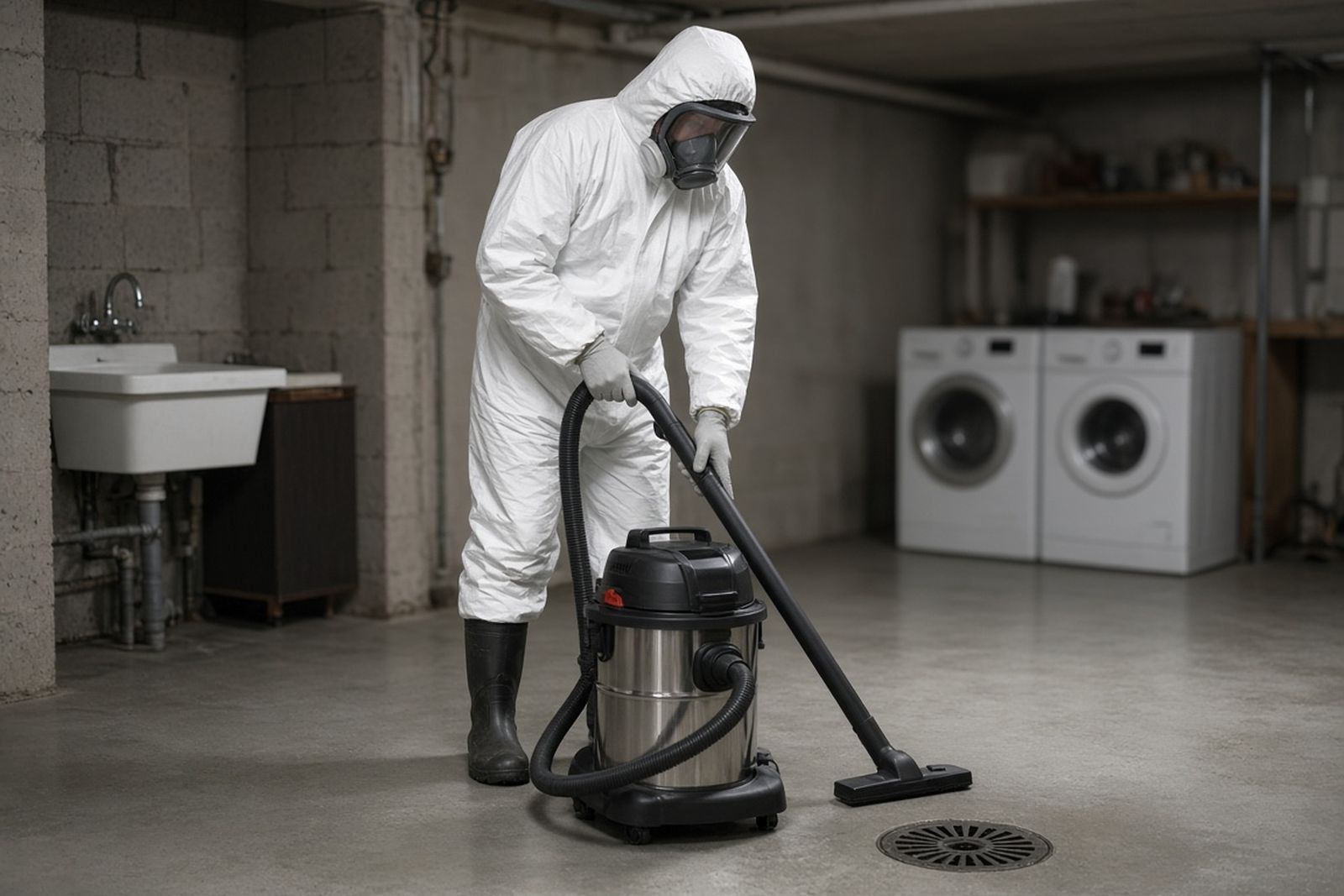
Older cleanup practices often involved rubber gloves and whatever clothing the worker was willing to throw away. Today, professional crews generally treat human waste as potentially infectious material and protect themselves accordingly.
Part of that change came from a better understanding of what sewage contains. Beyond bacteria and viruses, sewage and decomposing waste can release gases such as hydrogen sulfide and ammonia, which accumulate in low, poorly ventilated spaces. Crews now treat basements, crawlspaces, and small bathrooms as places where air quality needs attention, not just surfaces.
That protection typically includes the following, adjusted to the conditions on each job:
- Disposable coveralls and boot covers that are removed at the edge of the work area
- Nitrile or heavier gloves, often double-layered
- Eye and face protection against splashes during demolition
- Respirators selected for particles, odors, or gases present in basements and crawlspaces
- Training on bloodborne pathogens and on hazards such as hydrogen sulfide in enclosed spaces
- Vaccination programs, such as hepatitis B, offered to workers
Then vs now: one backup, two approaches
As a thought experiment, take a ranch house with a finished basement where a main drain backs up during a holiday weekend. Sewage covers the family room carpet and seeps under a wall into a storage room.
In an older approach, a cleaner might extract the standing water, shampoo the carpet with a strong disinfectant, wipe the lower walls, and set fans running. The storage room might not be checked at all because the carpet there looks dry.
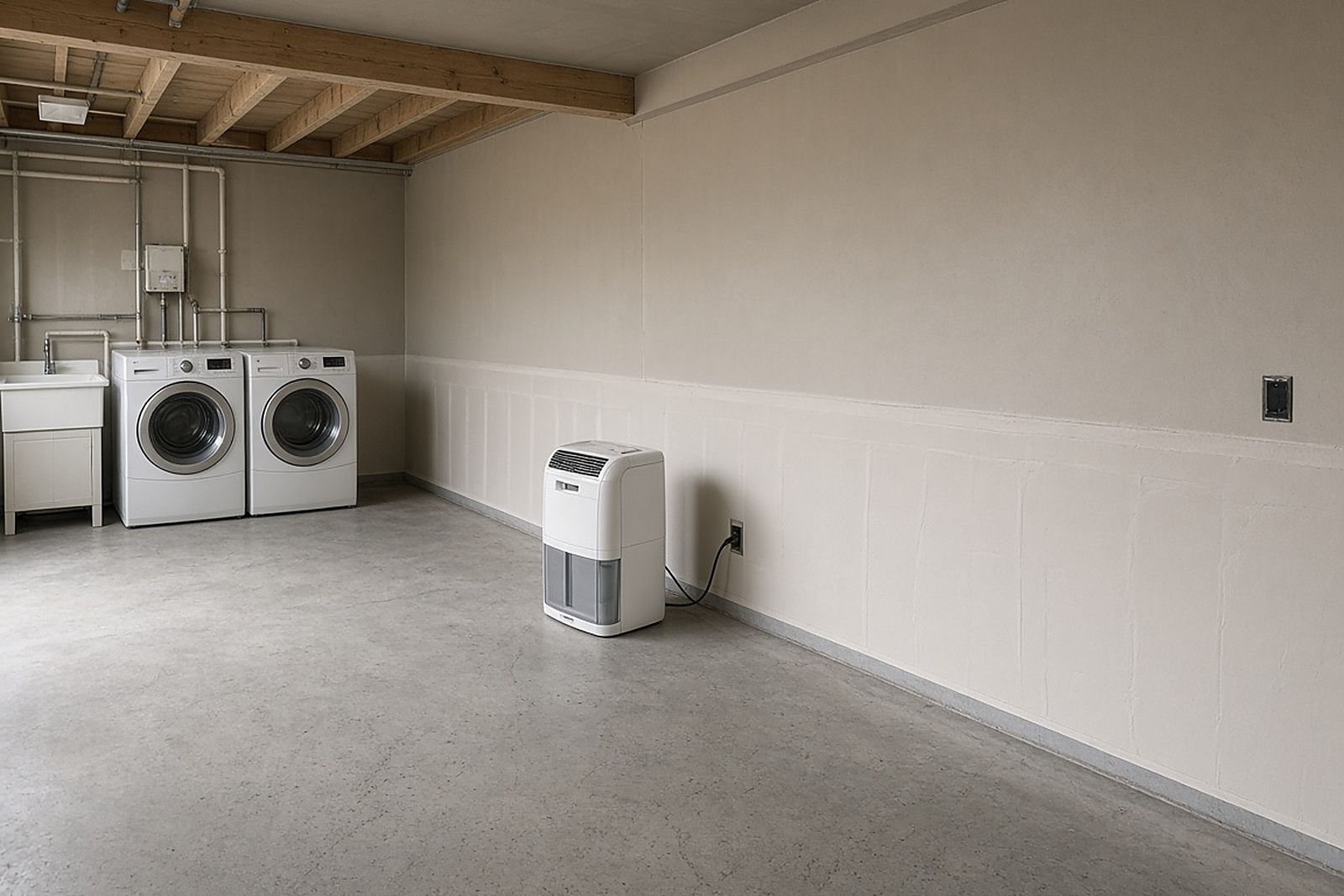
In a modern approach, the crew sets up containment and negative air, extracts the water, and uses a moisture meter to find that the storage room subfloor and the bottom of the shared wall are wet. They remove carpet, pad, and the lower section of drywall in both rooms, clean the concrete, apply a registered disinfectant for its full contact time, and dry the space with dehumidifiers until readings reach target levels.
The modern job takes longer and involves more demolition. It also leaves the family with a documented, dry, and disinfected basement rather than one that smells fine for a month and then starts to fail.
Documentation and what owners can expect
Perhaps the most practical change for property owners is the rise of documentation. Photos, moisture logs, disinfectant records, material removal lists, and disposal records are now common in professional work.
That shift was driven partly by insurance claims, which require evidence of what was damaged and why materials were removed. It was also driven by landlords, property managers, and real estate transactions, where a clear record answers questions from tenants, buyers, and inspectors.
Standardized reports also make it easier to spot poor work. When a completion report lists the rooms treated but no moisture readings or disinfectant details, the gaps are obvious. Owners who know what a complete report looks like are less likely to accept an invoice that says only cleaned and sanitized.
For owners, documentation offers something older methods rarely did: proof. Instead of wondering whether the job was done well, you can read what was found, what was removed, and how the space was verified.
What is likely to keep changing?
Several trends are likely to continue shaping this work. Disinfectant labels and approved-product lists are updated as new testing is completed. Moisture and imaging tools keep improving. More providers are adopting digital reporting that owners and insurers can review online.
Regulation also evolves. Waste disposal requirements, contractor licensing, and worker safety expectations can change at the state and local level. Before assuming that practices from a few years ago still meet current requirements, check with the state and local agencies that oversee waste, licensing, and worker safety where the work is done.
What has not changed is the underlying goal. Whether the tools are a mop and a bucket or a thermal camera and an air scrubber, the purpose is to make a home safe, dry, and livable again. The difference today is that professionals can show you how they did it.