Short answer
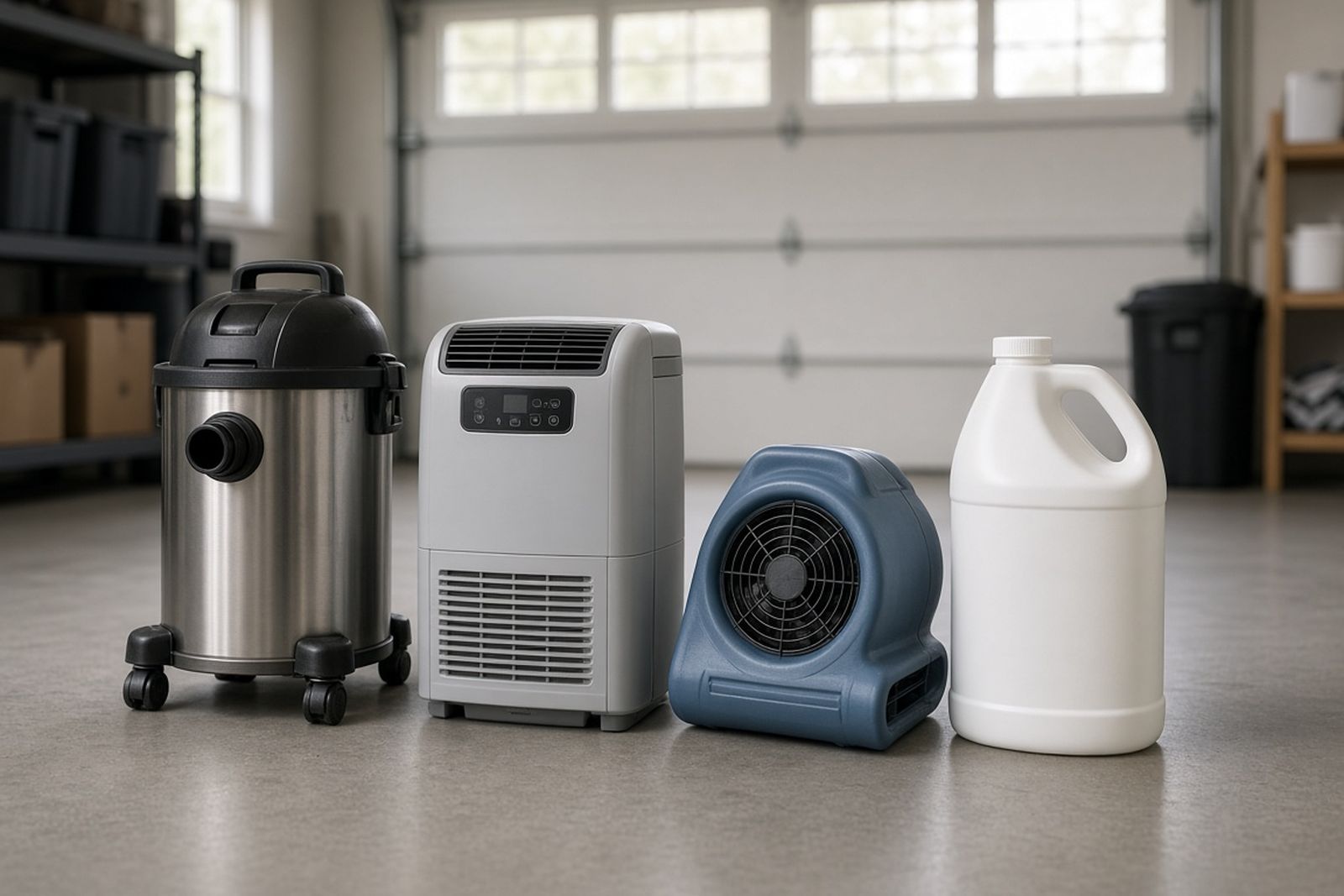
To evaluate technology in feces or bodily fluid cleanup, ask what problem each tool solves, what evidence supports it, and what it cannot do. Moisture meters, thermal imaging, and gas monitors help find hidden contamination and hazards. Air scrubbers control dust and odor during removal. UV-C, ozone, and foggers have narrow uses and never replace physical removal, cleaning, and correctly applied disinfectant.
Why evaluate the technology a crew brings?
Equipment is often the most visible part of a cleanup quote. A provider may list thermal imaging, hydroxyl generators, UV-C lights, electrostatic sprayers, and HEPA air scrubbers, each with a line item. Some of these tools genuinely improve the job. Others are useful only in narrow situations, and a few are sold with claims they cannot support.
For feces and bodily fluid work, the core of the job is simple to describe and hard to do well: find where contamination went, remove what cannot be cleaned, clean and disinfect what remains, dry it, and confirm the result. Good technology supports one of those steps. Technology that tries to skip a step should make you cautious.
You do not need to become an equipment expert. You only need to ask what each tool is for, how it fits into the plan, and what evidence the provider has that it helps.
Detection: finding where waste and fluids went
Liquids travel. Urine soaks through carpet into pad and subfloor. Sewage wicks up drywall and runs under walls. A stain on the surface rarely shows the full footprint. Detection tools help the crew remove enough without removing too much.
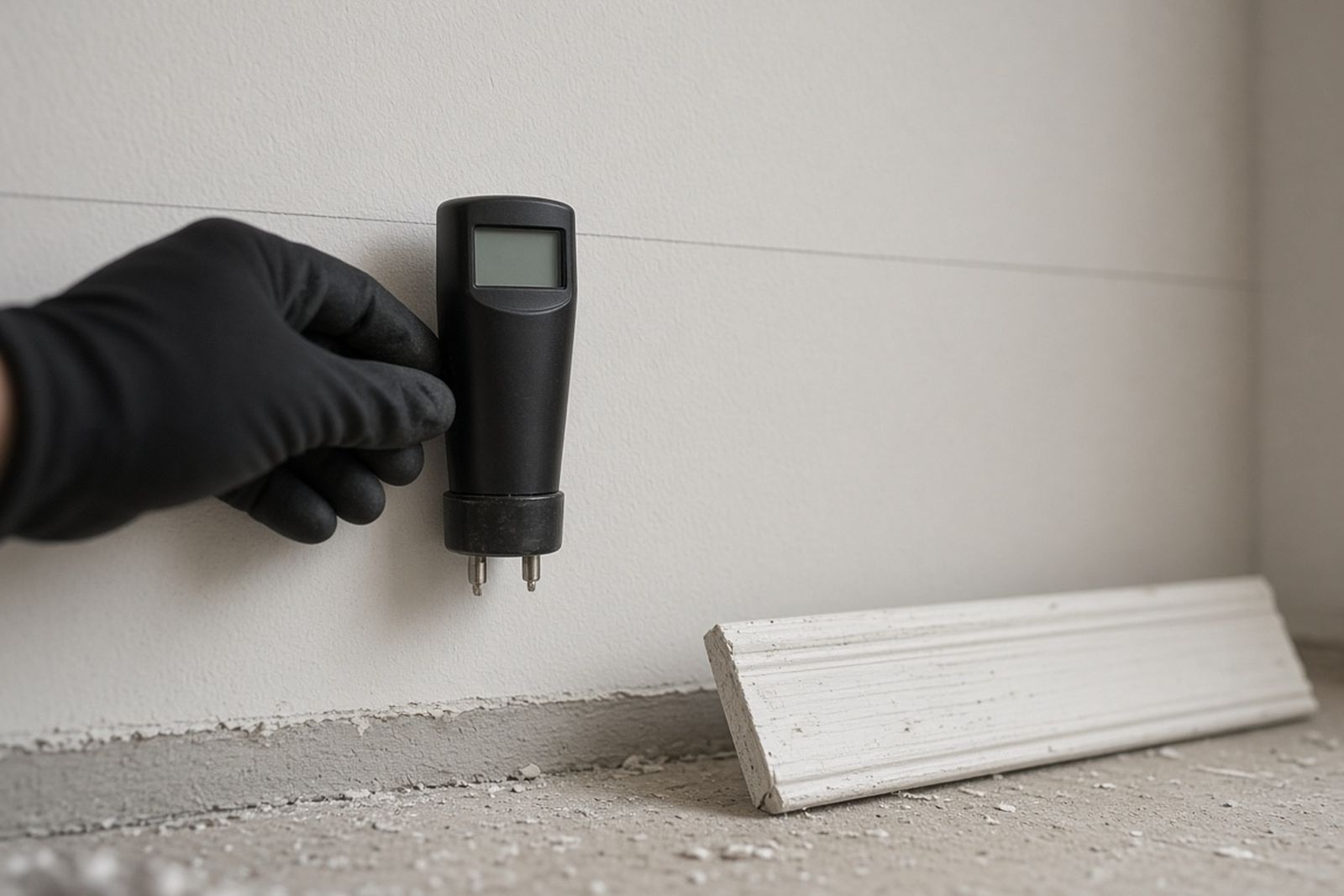
Moisture meters are the workhorses. Pin meters measure moisture in wood and drywall at the point of contact, while pinless meters scan a wider area without piercing it. A provider should use them to map wet areas and to confirm drying at the end.
Thermal imaging cameras show temperature differences on a surface. Because evaporating moisture cools materials, a thermal camera can reveal wet areas behind walls or under flooring. The image is a lead, not proof, and should be confirmed with a meter.
UV flashlights can make some dried urine deposits fluoresce, which helps locate old pet or human accidents on carpet and baseboards. They do not work on every surface or every deposit, and many other substances also glow, so treat what you see as a starting point for testing.
Sewer camera inspections belong in this group too, even though a plumber usually performs them. A camera run through the main line can show whether roots, a collapsed section, or a belly in the pipe caused the backup. Knowing the cause helps you decide whether the cleanup is the end of the story or the first of several repeat events.
- Ask the provider to show you moisture readings, not just thermal images.
- Ask how far beyond the visible stain they checked.
- Ask how they will confirm the area is dry before rebuilding.
Gas monitors
Sewage and decomposing waste can release gases that are hazardous in enclosed spaces. Ammonia comes from breaking-down urine and feces, and hydrogen sulfide produces the familiar rotten-egg smell of sewers. NIOSH's 1994 documentation sets the immediately dangerous to life or health level for ammonia at 300 ppm, while the OSHA permissible limit is 50 ppm averaged over a shift.
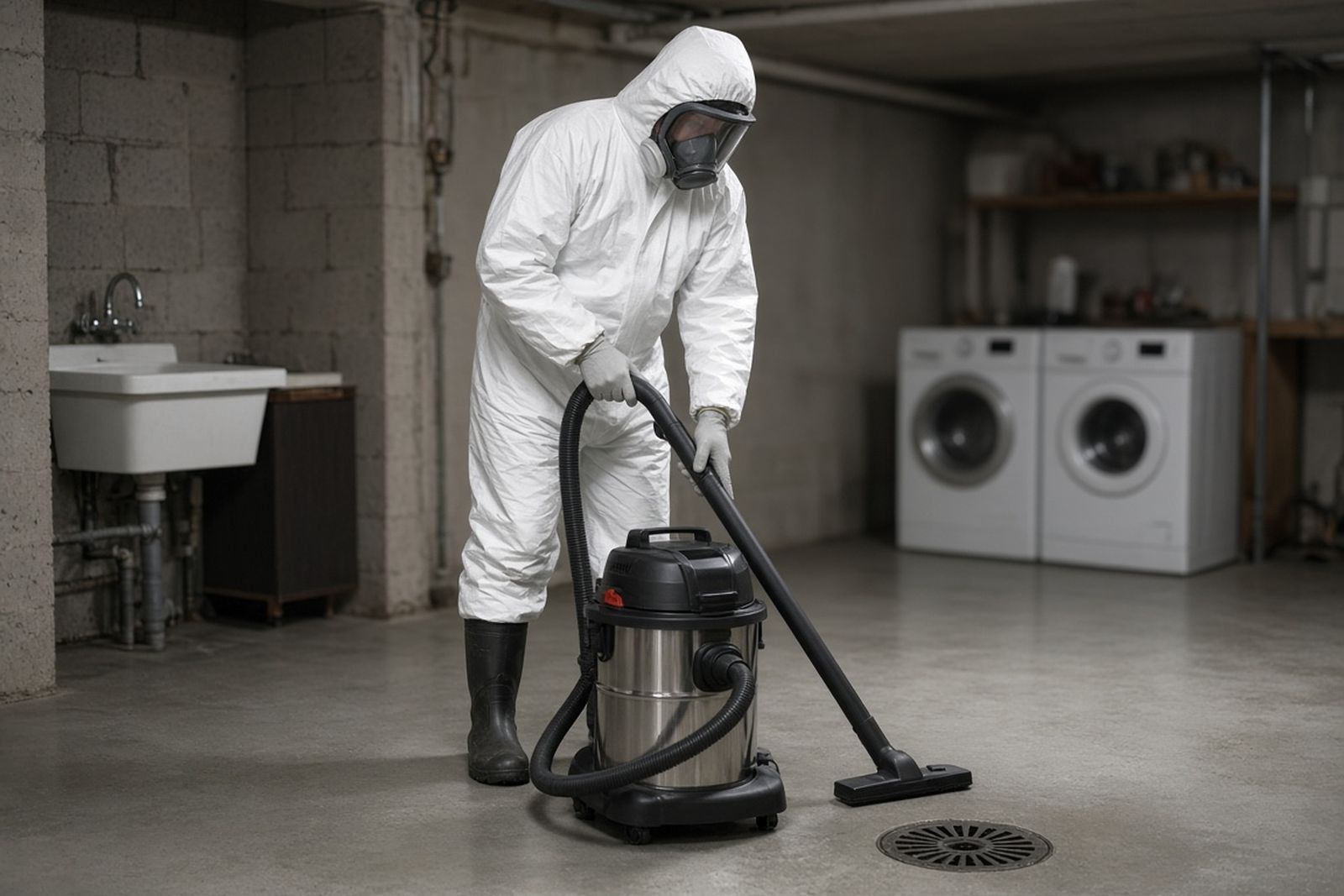
Portable multi-gas monitors measure these gases along with oxygen levels. They matter most in basements, crawlspaces, lift stations, and small rooms that have been closed up. A crew that plans to enter those spaces should be checking the air first.
This is one of the least glamorous tools in the kit and one of the most important. If a provider plans to work in a confined or poorly ventilated area, ask whether they monitor air before and during entry.
Air scrubbers and negative air machines
Removing sewage-soaked drywall and carpet stirs up dust and droplets. HEPA air scrubbers pull air through high-efficiency filters, capturing fine particles. When exhausted outside a sealed work area, they can also create negative pressure, which helps keep contaminated air from drifting into the rest of the house.
These machines are most useful during demolition and removal. They are less relevant for a small spill on a tile floor. Ask where the machine will be placed, whether it will exhaust outside, and how containment will be set up to make negative pressure meaningful.
Carbon filters, sometimes added to scrubbers, can reduce odor during the job, but they do not remove the source. Once contaminated materials are out and surfaces are clean, most sewage odor should fade on its own.
UV-C lights: a narrow role
UV-C devices use ultraviolet light to damage the genetic material of microorganisms on surfaces in their line of sight. They are common in hospitals as a supplement to manual cleaning. In feces and fluid work, their role is narrow.
The biggest limitation is soil and shadow. UV-C cannot penetrate residue, and it does not reach the undersides of fixtures, the inside of grout lines, or anything blocked from the light. A 2023 study by Knobling and colleagues found manual wiping met the study's disinfection-success criterion on 98.1% of surfaces versus 75.5% for UV-C, with UV-C used without prior cleaning.
If a provider proposes UV-C for your job, ask whether it will be used after manual cleaning and disinfection, which surfaces it will reach, and how long occupants must stay out, since UV-C light is harmful to eyes and skin.
There is also a practical point about homes. Hospital UV-C programs are built around rooms with hard, smooth surfaces and predictable layouts. A residential bathroom with a fabric shower curtain, a bath mat, and cluttered shelves presents far more shadows, and the same device will cover much less of it.
Are ozone generators and foggers worth it for sewage odor?
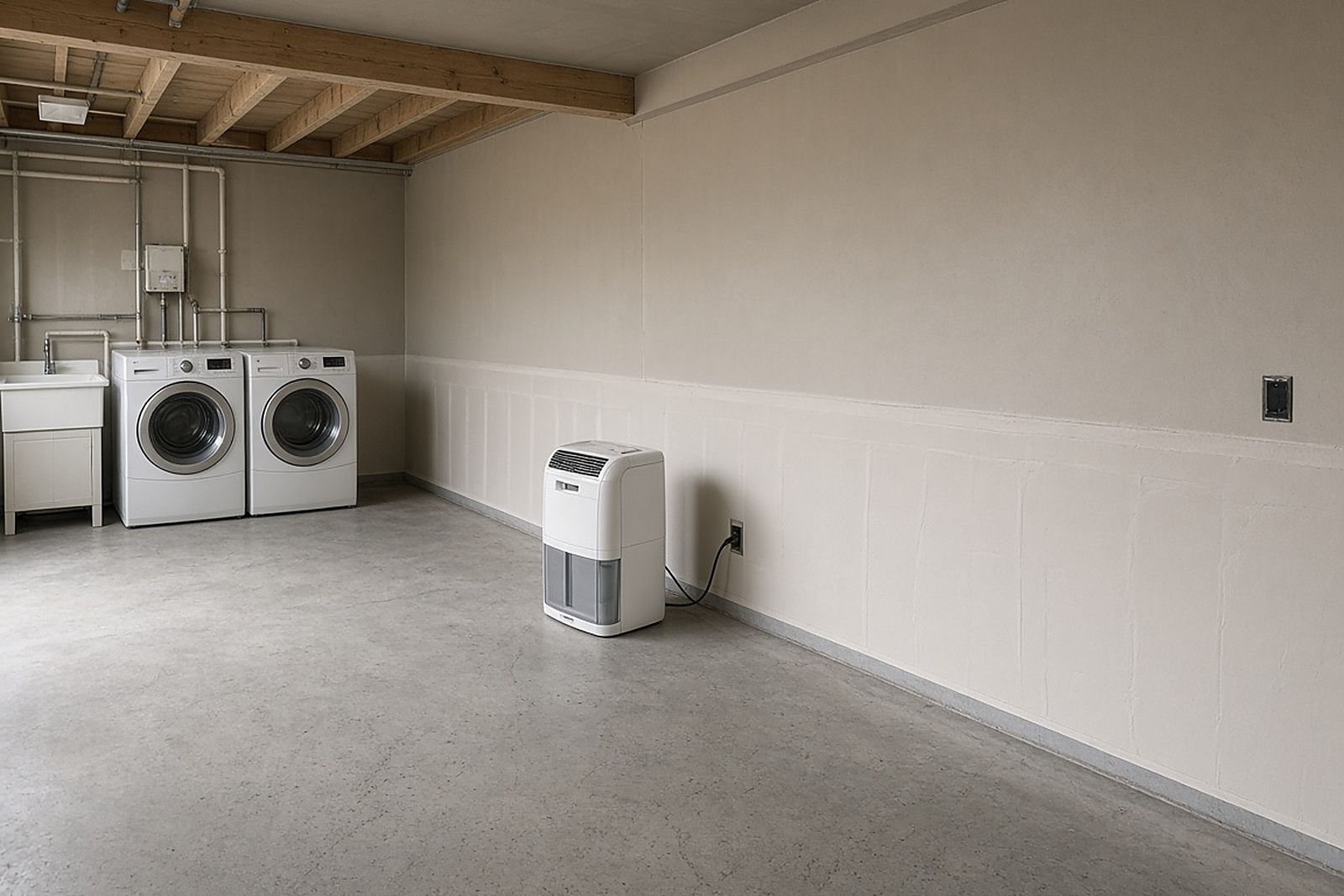
Ozone generators and some foggers are sold as odor solutions. Ozone is a reactive gas that can break down odor molecules, but it is also a lung irritant, can damage rubber and some fabrics, and requires the space to be empty of people, pets, and plants during treatment. It does nothing to remove the waste that causes the smell.
Hydroxyl generators are often marketed as a gentler alternative that can run with people present. Their effectiveness varies by device and conditions. Thermal or ULV foggers disperse deodorizers or disinfectants as fine droplets, which can reach cavities but also drift and settle widely.
The honest answer is that odor after a sewage event usually means contamination remains somewhere. Air treatment can help with residual smell once the source is gone, but if the odor returns after treatment, the fix is finding and removing what was missed, not running the machine longer.
Ask to see the product label for anything fogged. If the label does not list fogging or misting as an approved application method, the provider should not be using it that way, regardless of how effective the machine appears.
Questions for any tool, and where technology fits
A few questions work for almost any tool a provider proposes. You are not trying to catch anyone out, just to understand how the tool fits the plan and what it costs you in time, money, and exposure.
If a provider claims a particular technology is required by law or code, ask which rule and which agency, since equipment requirements are rarely written that way.
The best providers use technology to make their decisions more accurate and their work safer, not to replace the physical labor of removal and cleaning. Detection tools and gas monitors tend to earn their keep on nearly every significant job. Containment and air scrubbers are valuable during demolition. Disinfection and odor devices are supplements with specific, limited roles.
When you compare quotes, look past the equipment list and ask whether each tool serves a clear purpose in your home. A shorter list of well-used tools is often a better sign than a long list of impressive names.
Technology also changes quickly, and new devices appear with marketing claims that outpace independent testing. When a provider describes a tool as new or revolutionary, ask whether it has been evaluated in published studies or by an independent lab, and under what conditions. A tool tested in a clean laboratory chamber may perform very differently in a damp basement with residue on every surface.
- Which step of the job does this tool support: finding, removing, cleaning, disinfecting, drying, or verifying?
- What would happen if you did the job without it?
- Is any chemical used with this tool registered for that application method?
- How long must people and pets stay out while it runs?
- Can it damage materials, electronics, or belongings in the room?
- What evidence or readings will you show me that it worked?