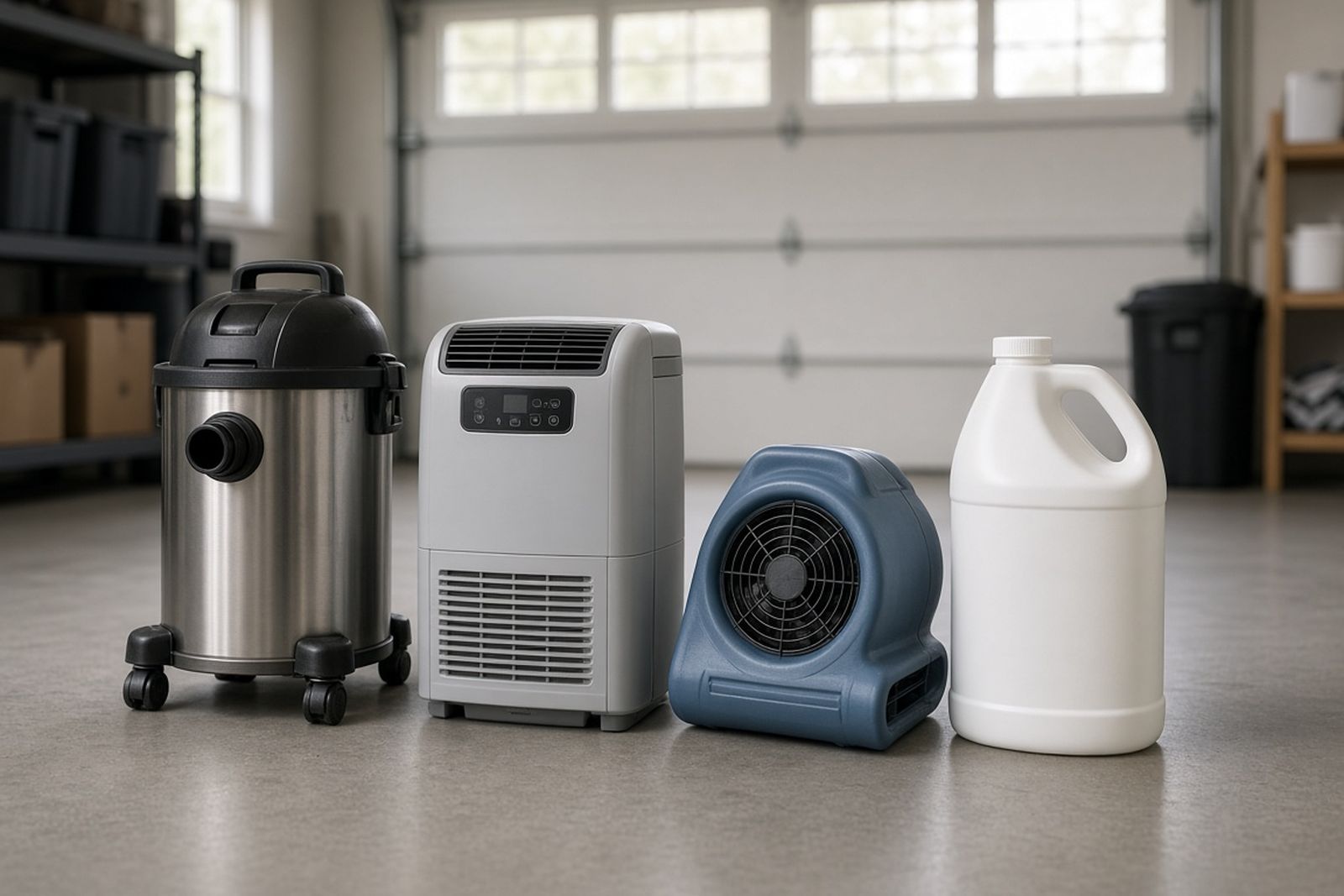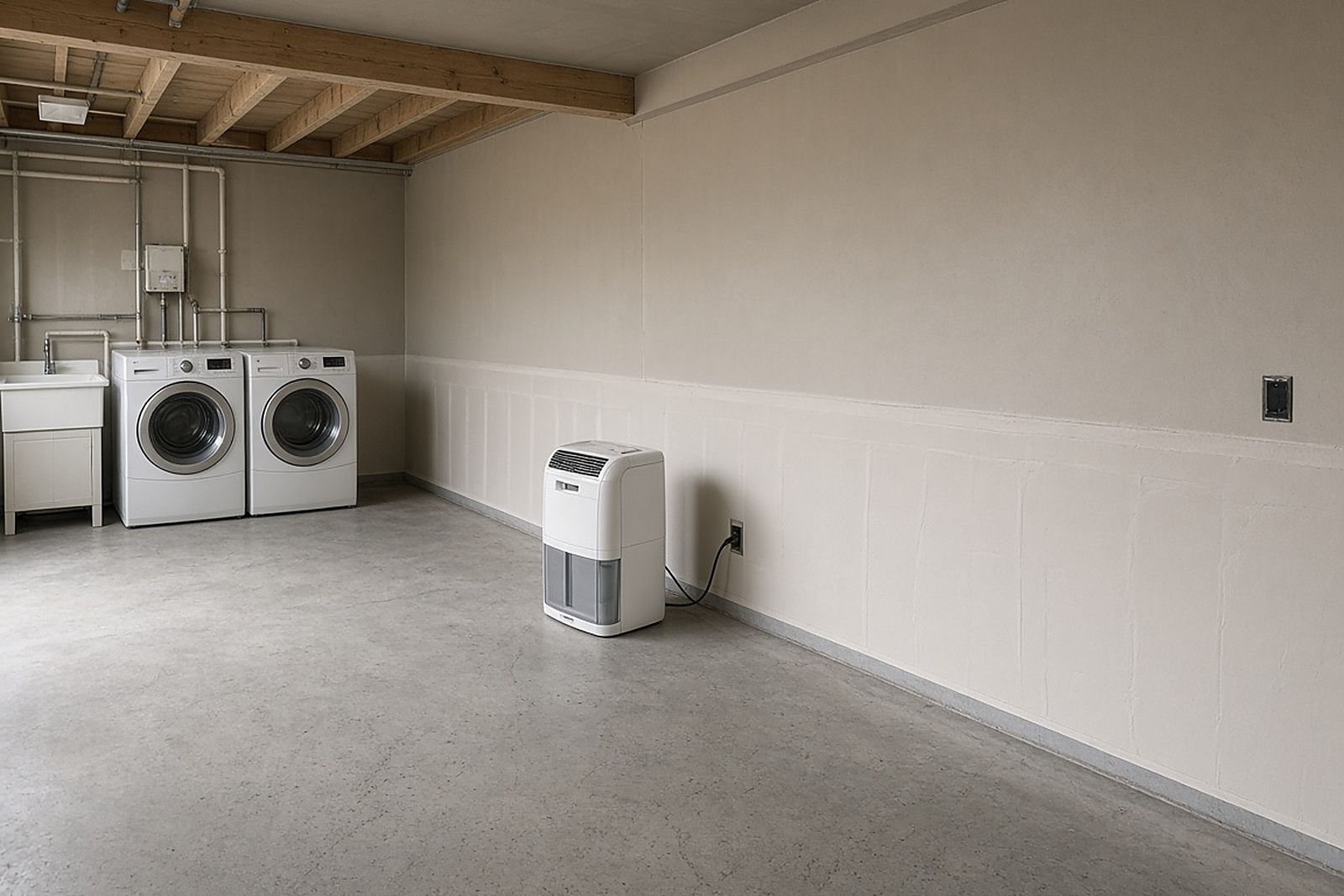
Short answer
Expect a walkthrough and written scope, then a crew in protective gear who contain the area, remove soaked porous materials, clean remaining surfaces, and apply a registered disinfectant for its full labeled contact time. Waste is bagged and disposed of under local rules. The job ends with odor and moisture checks, a photo record, and a clear statement of what was removed and what still needs rebuilding.
The first call and the walkthrough
The first conversation is usually short and practical. The provider will ask what happened, when it started, which rooms are involved, whether anyone in the home is ill or medically fragile, and whether water is still flowing. If the source is a drain or sewer line, they may suggest you avoid running water or flushing until a plumber clears it.
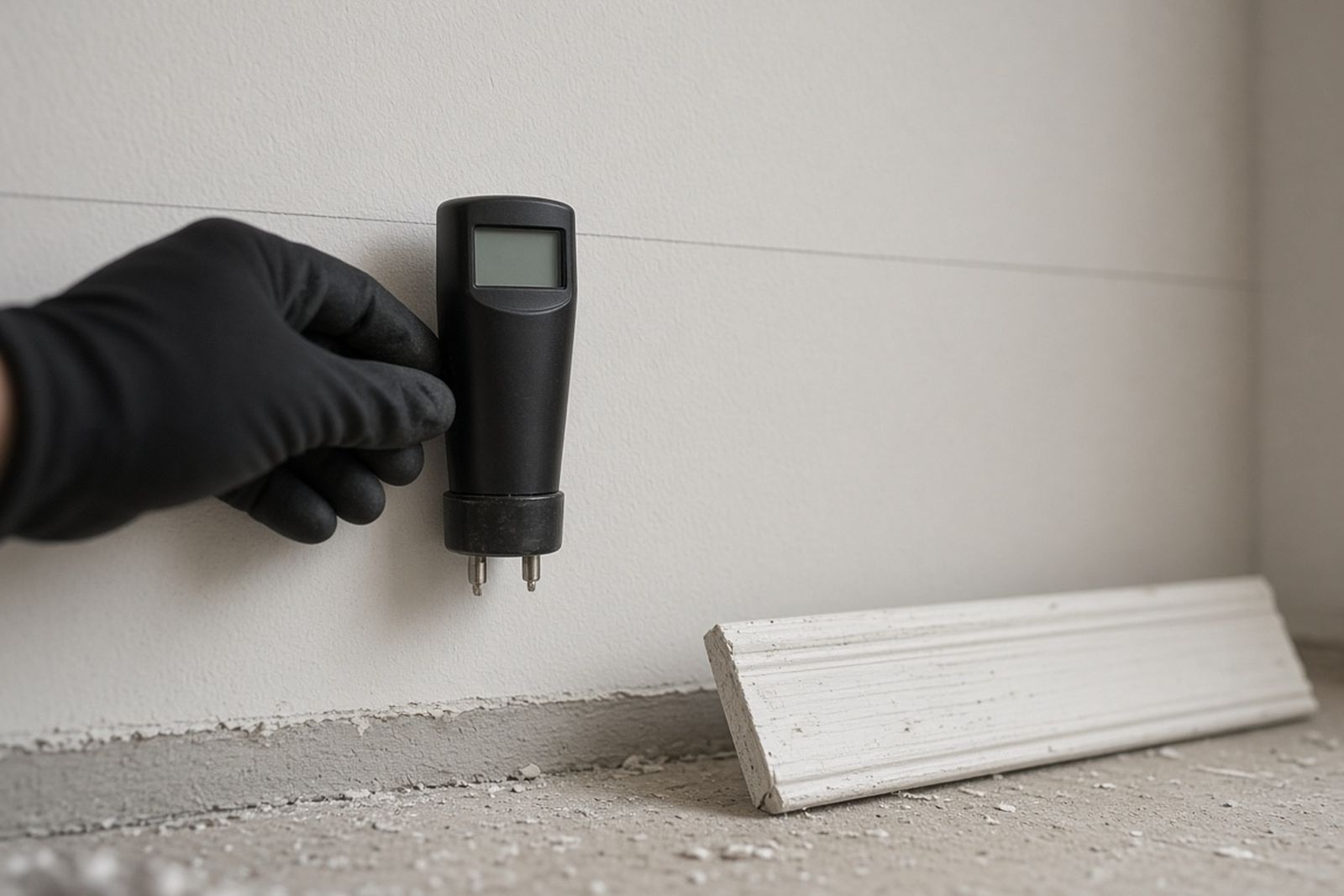
At the walkthrough, a technician looks beyond the obvious stain. Expect them to check the edges of carpet, lift a corner of vinyl if they can, test drywall with a moisture meter, and look at baseboards, cabinet bases, and any room that shares a wall or drain with the affected area. They may photograph each room before anything is touched.
You should leave the walkthrough with a written scope, or a clear promise of one, that names the type of contamination, the rooms involved, the materials likely to be removed, and the disinfectant the crew intends to use. If a provider wants to start before explaining any of that, slow down and ask questions first.
Staying home during the work, and what the crew will wear
It depends on the size of the job and who lives in the home. A small, contained bathroom incident may allow you to stay elsewhere in the house with the door closed. A basement sewage backup or a whole-floor urine problem in a home with young children, older adults, or someone with a weakened immune system is a different situation, and many providers will recommend staying away until work is complete.
Pets should be kept well away from the work zone and from any area where disinfectants are drying. Ask how long the crew expects to be on site, whether any areas will be unusable overnight, and whether the product they plan to use has ventilation or re-entry instructions on the label.
If you have to stay, ask the crew to show you where the clean and dirty zones are, and keep household traffic out of the dirty side.
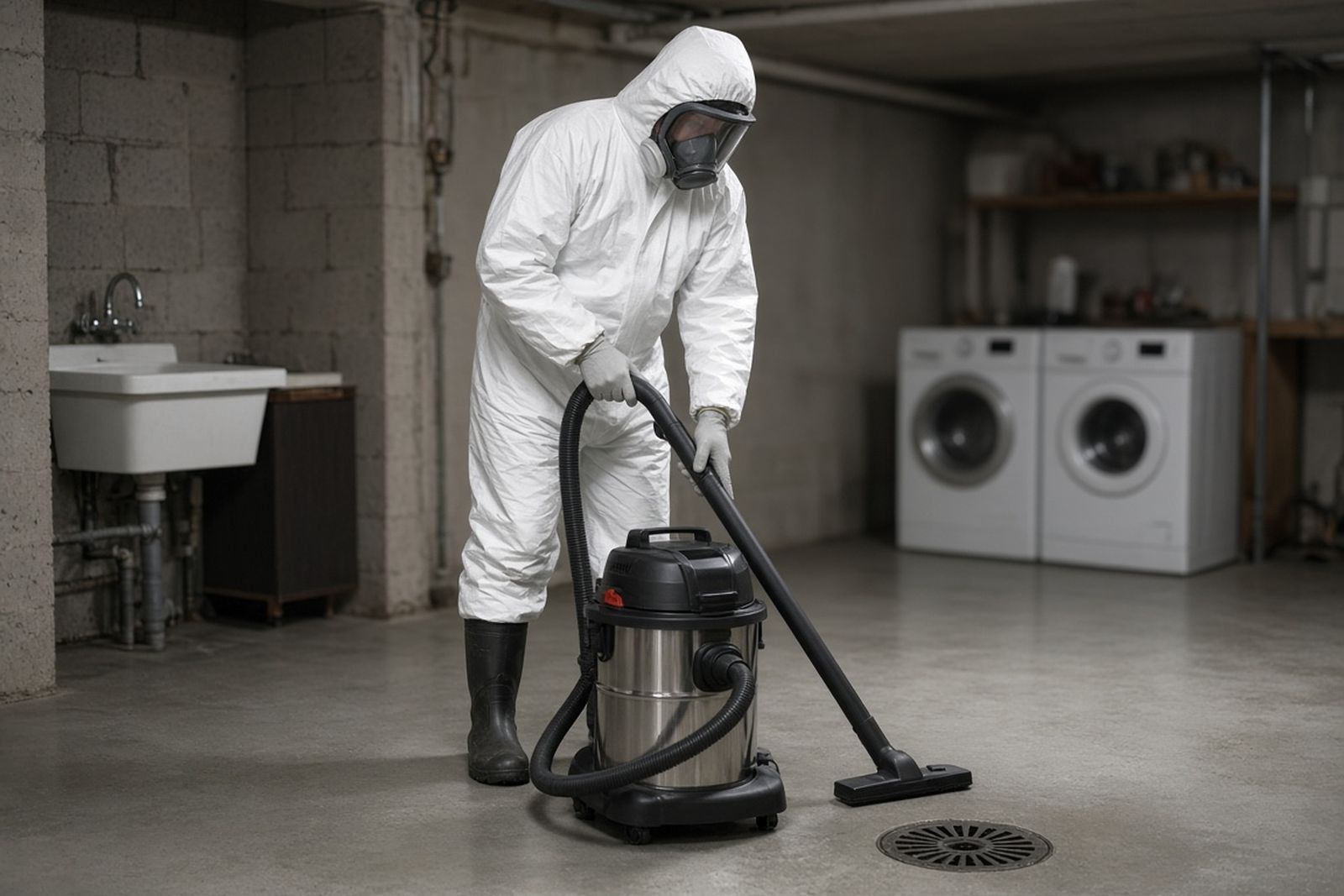
Seeing technicians arrive in disposable suits, gloves, boot covers, eye protection, and respirators can be unsettling. The gear is not a sign that your home is unusually dangerous. It reflects the fact that fecal matter and bodily fluids can carry pathogens, and the crew is about to handle materials soaked with them for hours.
Protective equipment also keeps contamination from traveling. Crews typically remove and bag outer layers at the edge of the work area so they do not track waste through your hallway or into their vehicle.
If odors are strong, especially from sewage, the crew may ventilate or use air filtration while they work. Decomposing waste can release gases, and experienced providers treat confined spaces such as crawlspaces with extra caution.
How are soaked materials removed and handled?
Removal usually comes before any serious cleaning. Carpet and pad that absorbed sewage or heavy urine are cut into manageable sections, rolled inward, and bagged. Drywall that wicked fluid is cut at a line above the highest staining. Swollen particleboard, upholstered items, and saturated cardboard are bagged or wrapped as well.
Expect the crew to keep a running list of what comes out, often with photographs. That list matters if you file an insurance claim, if you are a landlord documenting a unit, or if a family member later asks what happened to certain belongings.
Before removing personal items, a considerate provider will ask you which belongings you want to try to save. Some hard items, such as ceramic dishes or metal tools, may be cleaned and returned. Paper documents and photographs are harder, but you can ask whether they can be set aside for your review instead of discarded automatically.
Disinfection that actually works
Disinfectant does little on a surface still covered in organic soil, so the crew cleans first. That means scraping, scrubbing, and wiping until visible residue is gone, then applying a registered disinfectant and leaving it wet for the time printed on the label.
For norovirus, CDC advised in 2024 that a chlorine bleach solution of 1,000 to 5,000 ppm (5 to 25 tablespoons of household bleach per gallon of water) be used to disinfect surfaces. Many professional crews use registered commercial products instead, chosen for the organism, the surface, and how the material tolerates the chemical.
Persistence is the reason this step matters. A 2006 systematic review in BMC Infectious Diseases found that E. coli, Salmonella and Shigella can survive for months on dry surfaces, with Salmonella typhimurium documented at 10 days to 4.2 years. A surface that looks clean is not necessarily safe, which is why contact time is not optional.
The subfloor, joists, and hidden cavities
Once finish flooring is up, the crew inspects what is underneath. Plywood or OSB subfloor that shows staining, swelling, or a persistent odor may be cleaned and sealed, or removed and replaced, depending on how deep the contamination goes.
Wall cavities behind cut drywall are checked for wet insulation, which is usually removed. Floor joists in a crawlspace or basement ceiling may need cleaning and treatment if waste dripped through from above. Moisture readings are taken again after removal so the provider can confirm the structure is drying.
This is the stage when surprises most often appear. If the crew finds more contamination than the estimate anticipated, they should stop, show you, and put the added work in writing before continuing.
Two days in a rental, sketched
For a sense of pacing, here is an illustrative two-day job rather than a real one. A property manager receives a call from a tenant about sewage rising from a shower drain in a ground-floor unit. A plumber clears the line that afternoon, and a remediation provider arrives the next morning.
On day one, the crew photographs the unit, sets up a clean zone by the front door, and removes the bathroom vanity base, a strip of hallway carpet and pad, and the bottom portion of drywall along the hallway. Everything is bagged and logged. Hard surfaces in the bathroom are cleaned and disinfected.
On day two, the crew inspects the exposed subfloor, cleans and treats a small stained area, disinfects the hallway, runs drying equipment, and takes final moisture and odor readings. The property manager receives a report listing removed materials, the disinfectant used and its contact time, photos before and after, and a note that reconstruction is not included.
The tenant stays with family for two nights. The manager uses the report to schedule the rebuild and to answer the tenant's questions about safety.
Returning odor, and knowing the job is finished
A faint smell returning after the crew leaves is one of the most common follow-up calls in this line of work, especially with long-term urine problems. Warm weather, humidity, or turning the heat back on can release odor from a spot that was missed or from material that was treated rather than removed.
Do not cover it with air fresheners or scented sprays, because that makes it harder to find the source. Instead, note where the smell is strongest, when you notice it, and whether it changes with temperature. Share those details with the provider.
Ask at the start of the job whether the company will return to check a recurring odor, and whether a return visit is included or billed separately. A provider confident in their work will usually want to know if something was missed, since a lingering smell often points to a reservoir of contamination still hidden under flooring, in a wall cavity, or inside a piece of furniture that stayed in the room.
If the source turns out to be something outside the original scope, such as a second leaking drain, the provider should explain that clearly and in writing.
A finished job is one you can verify, not just one that smells better. Before the crew leaves, walk the space with the lead technician and ask them to show you each area on the scope.
Landlords should also confirm with the local housing code office whether any reoccupancy requirements apply. Before signing off, check the following:
- No visible residue on any remaining surface, including grout, baseboards, and corners
- Moisture readings at or approaching normal for the materials left in place
- No lingering sewage or ammonia odor after the space has been closed up for a while
- A written list of removed materials and where they were disposed
- The disinfectant's name, registration number, and the contact time used
- Before and after photographs for every room
- A clear note on what rebuild or replacement work remains