Short answer
To evaluate equipment proposed for feces and bodily fluid cleanup, ask what each item does, whether it fits the contamination in your home, and how its use will be documented. Registered disinfectants, proper respirators, moisture meters, HEPA air filtration, and drying equipment are common for sewage and urine work. Ozone and fogging devices need extra scrutiny, and no machine replaces physical removal and cleaning.
Why ask about equipment on your estimate?
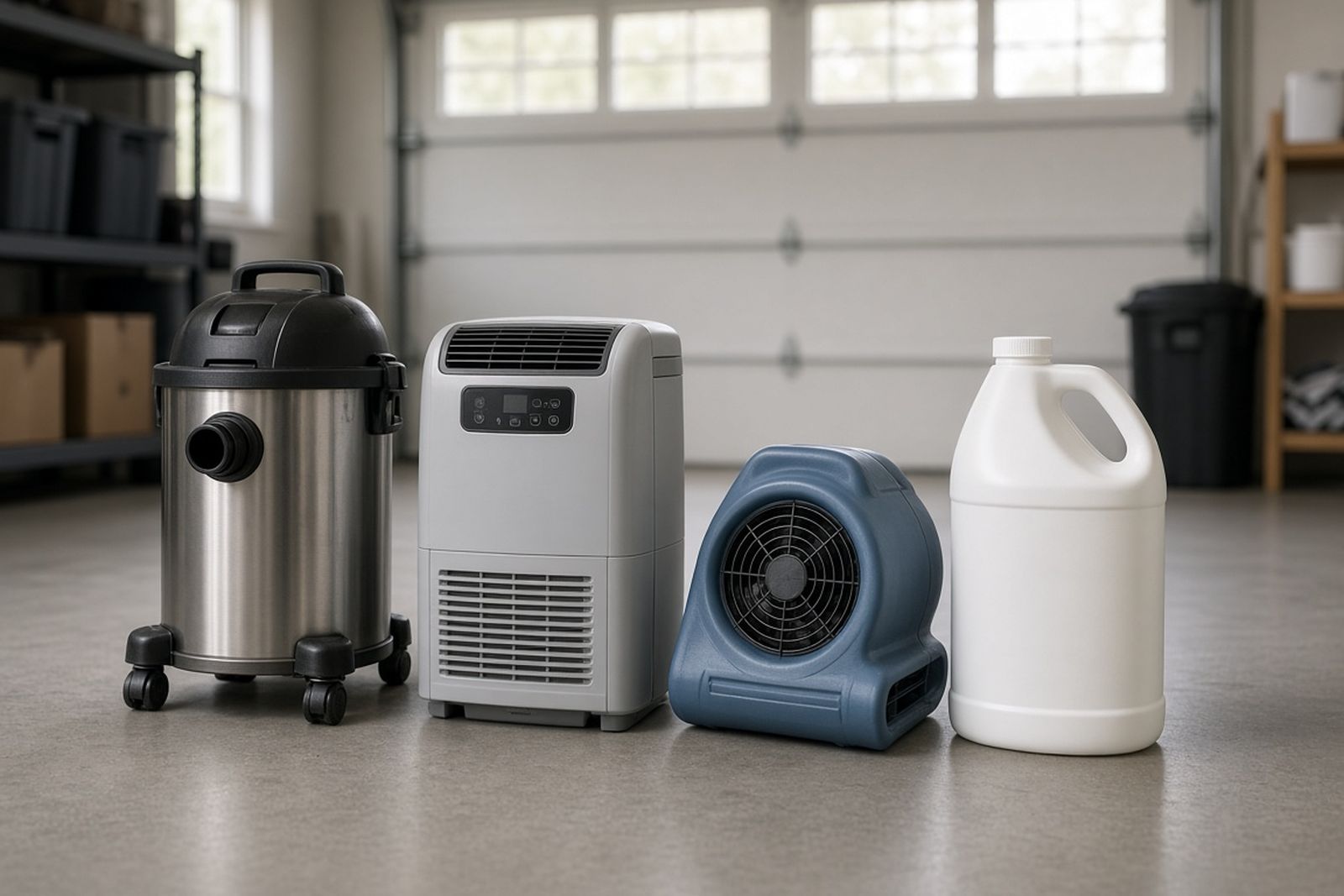
When a crew arrives to clean up sewage, urine, feces, or vomit, you may see a line of machines and supplies in your driveway. Your estimate may list air scrubbers, dehumidifiers, air movers, ozone generators, and several chemical products. Some of those items are essential. Others may be optional, and a few may be unnecessary for your situation.
Asking about equipment is not about second-guessing professionals. It is about understanding what you are paying for and making sure the tools match the actual problem. A small bathroom incident rarely needs the same setup as a basement sewage backup.
A good provider will be happy to explain each item. If a company cannot tell you why a machine is on the estimate or how long it will run, that is useful information too.
You can also ask whether each line is billed as a flat charge or by the day. Drying and air filtration equipment in particular can run for several days, so understanding how it is billed helps you avoid surprises at the end.
What the crew should be wearing
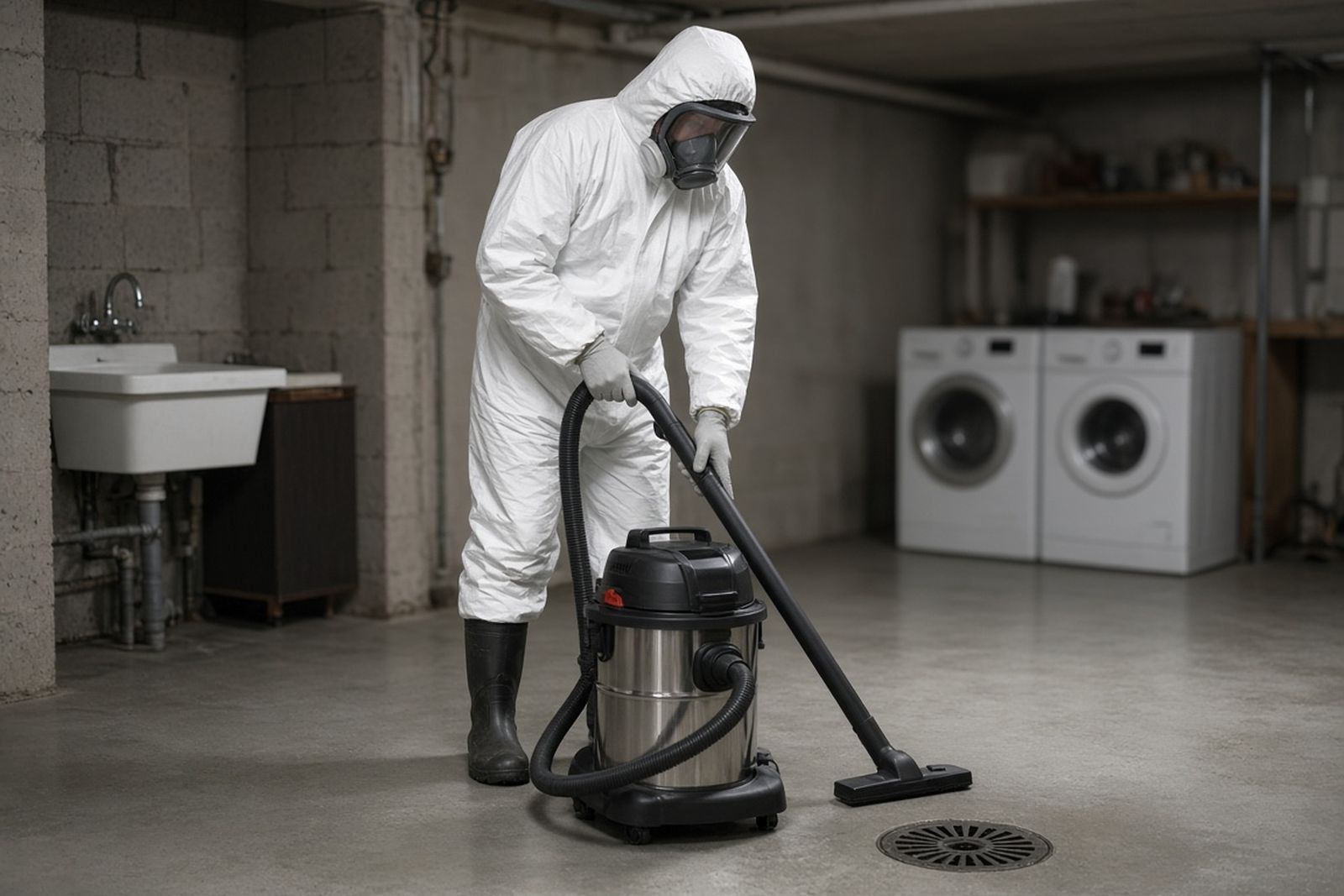
Protective equipment is the first thing to notice when a crew arrives. For waste and fluid cleanup, you can reasonably expect disposable gloves, often doubled, along with fluid-resistant coveralls, boot covers, and eye protection or face shields. For sewage, dried waste, or strong ammonia odors, respirators are common.
A respirator only works if it fits and the wearer knows how to use it, so asking whether the crew is fit-tested for the respirators they are wearing is a fair question.
Pay attention to how the crew handles its gear at the end of the day. Outer layers should come off at the edge of the work area and go straight into bags. Crews who walk through your home in soiled suits are spreading contamination rather than containing it.
If you plan to stay in the home during work, ask what protective equipment, if any, you should wear when you need to pass near the work area.
Which disinfectants should appear on the plan, and how do you check them?
The most important product on the plan is the disinfectant. Ask for its name and EPA registration number, and ask which organisms it is registered against. For stomach illness, a product with a norovirus claim is important. For a household where someone has had C. difficile, a sporicidal product is usually needed.
EPA publishes lists of registered products for specific organisms. EPA's List K of disinfectants proven to kill C. difficile spores includes about 110 products with required contact times of 1.5 to 10 minutes, according to EPA's 2026 listing. If the provider's product is not on the relevant list for your situation, ask why they chose it.
Enzyme and bio-enzymatic cleaners are often used for urine and organic residue. They break down proteins and odor compounds, but they are cleaners, not disinfectants. They should be part of the process, not the final step.
Also ask how products will be applied. Spraying, wiping, and mopping each have a place, but the method should match the label and the surface.
Moisture meters, UV lights, air scrubbers, and drying equipment
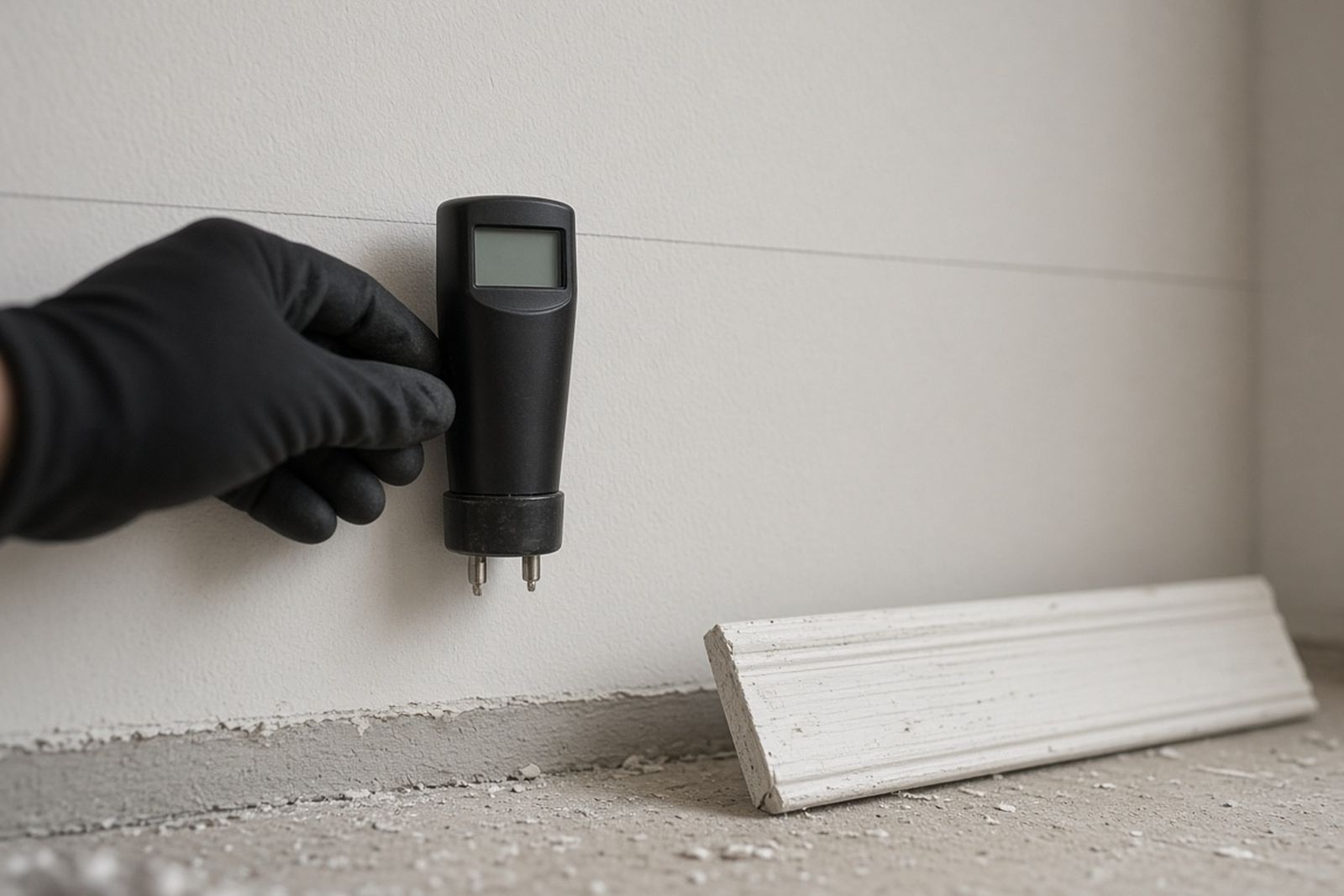
Moisture meters are among the most useful tools for sewage and urine cleanup. Pin-type meters measure moisture inside drywall, wood, and subfloor. Pinless meters scan surfaces without making holes. Thermal cameras can suggest where wet areas extend, although they need to be confirmed with a meter.
These tools help the crew decide how much material to remove and when the structure is dry enough to close up. Ask whether they will share readings with you at the beginning and end of the job.
Ultraviolet flashlights are common in urine work. Dried urine often glows under UV light, which helps crews map contamination on carpet, walls, and baseboards. The glow is a guide rather than a precise measurement, because other substances can glow too and some stains may not.
Together, these tools turn guesswork into a documented scope. A crew that skips them is more likely to leave hidden contamination behind.
HEPA air scrubbers pull air through high-efficiency filters and are often used to set up negative air pressure, which keeps airborne particles from drifting into the rest of the house during demolition. They are common for sewage jobs, larger removals, and work in homes with vulnerable occupants.
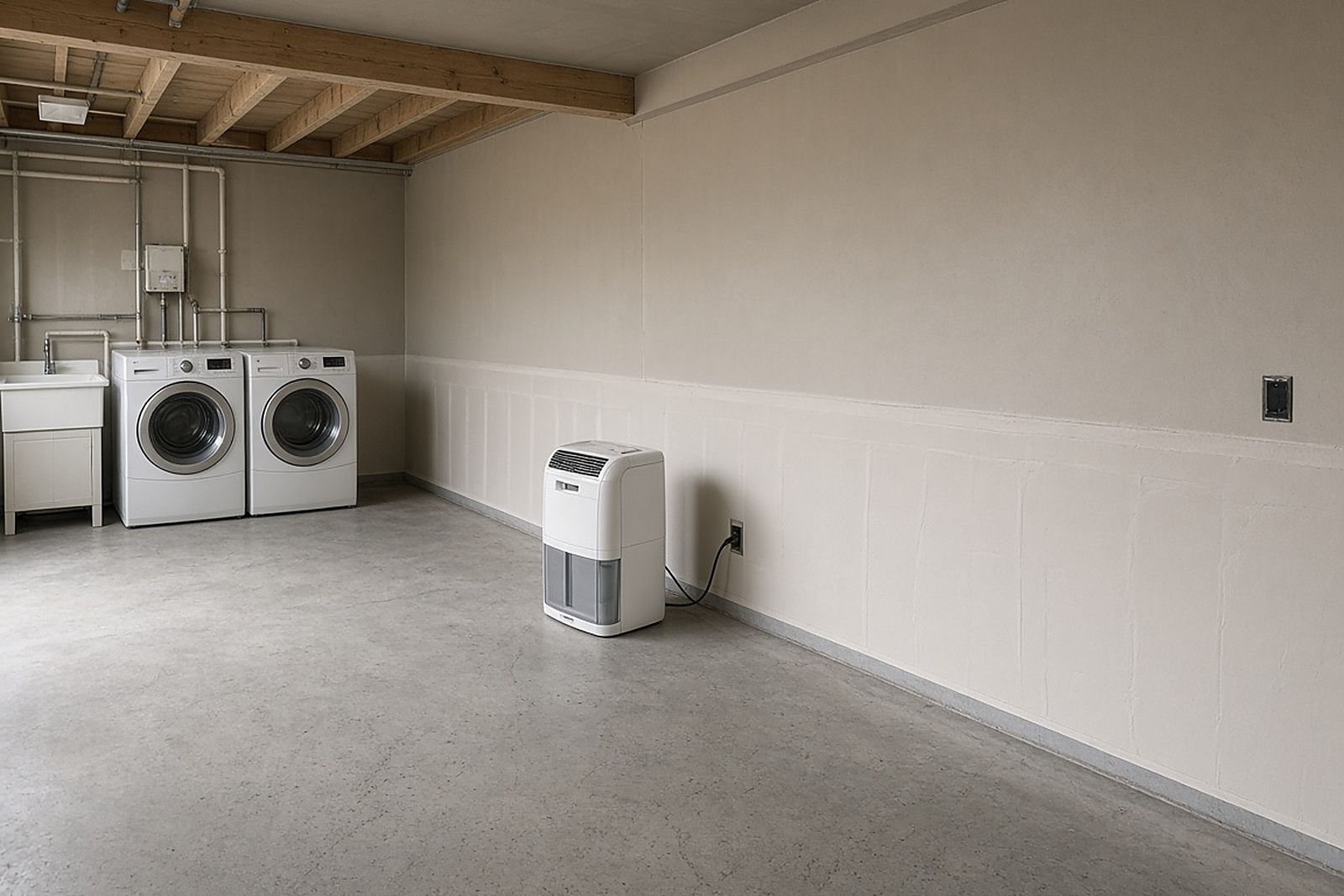
Air movers and dehumidifiers dry structural materials after wet items are removed. They are essential after sewage backups and large spills that soaked into subfloor or framing. For a small, contained incident on tile, they may not be needed at all.
Ask how many units are proposed, where they will go, and how long they will run. Ask what moisture readings the crew is aiming for and who will check them.
Keep in mind that drying equipment can be noisy and uses electricity. If you are staying in the home, ask whether it can run while you sleep and whether any circuits will need to be dedicated to it.
Ozone generators and foggers: extra scrutiny
Ozone generators and chemical foggers are often proposed for odor control, especially for long-term urine problems. They can help in some situations, but they deserve careful questions.
Ozone is a lung irritant. The home must be empty of people, pets, and plants during treatment, and there should be a clear waiting period before you return. Ozone can also degrade rubber, some plastics, and fabrics with repeated use. It does not remove the source of an odor; it only reacts with odor compounds in the air and on surfaces.
Foggers disperse a fine mist of disinfectant or deodorizer. The product has to be registered for that application method, and fogging does not replace cleaning. Evidence also favors direct contact: Knobling and colleagues reported in 2023 that manual wiping met their disinfection-success criterion on 98.1% of surfaces versus 75.5% for UV-C.
If a provider proposes one of these tools, ask why it is needed after removal and cleaning, how long the treatment will take, and when it will be safe to return.
Reading an estimate for a urine-damaged bedroom
Estimates for a bedroom with years of urine contamination from incontinence can run long. One might list carpet and pad removal, subfloor treatment, a bio-enzymatic cleaner, a registered disinfectant, two air scrubbers, three air movers, a dehumidifier, and an ozone treatment. The way to review a list like that is to ask the provider to walk you through each item.
Each line should connect to a finding. UV mapping that shows urine along the walls and under the bed explains the removal area. Moisture readings that show a damp corner of subfloor explain the air movers and dehumidifier. Air scrubbers protect the rest of the house during removal. An ozone treatment, if listed, should be explained as optional, to be used only if odor remains after the subfloor is sealed.
It is reasonable to approve the items tied to findings and hold an optional odor treatment until after a follow-up odor check. Either way, the final report should include UV photos, moisture readings, and the disinfectant's registration number.
Questions for any machine, and keeping the basics first
Use a simple checklist when you review an estimate. It keeps the conversation focused and helps you compare providers fairly.
Hand tools belong in the conversation too. Carpet knives, flooring scrapers, reciprocating saws for cutting drywall, heavy-duty contractor bags, and sealable waste containers are less impressive than a row of machines, but they do most of the actual work. A crew that arrives with the right hand tools and a sensible plan for bagging and hauling waste is usually a crew that will leave your home cleaner than it found it.
No machine replaces the basic steps of waste cleanup: removing contaminated materials, cleaning surfaces thoroughly, applying the right disinfectant for its full contact time, and drying the structure. Equipment makes those steps safer, faster, or better documented. It should not be used to skip them.
The best estimates are clear about which equipment is essential for your situation and which is optional. If a provider cannot explain the difference, consider getting a second opinion.
Ask, too, what will happen to rented equipment once it leaves your home. Machines that have run in a sewage-contaminated space should be cleaned and filters changed before the next job, and a careful provider will be able to tell you how they handle that.
If the property is a rental or is about to be sold, ask your local health department and solid waste agency about any requirements for reporting a sewage release or disposing of contaminated materials.
- What problem does this item solve in my home specifically?
- How long will it run, and how is it billed?
- Is anyone required to leave the home while it runs?
- What readings or results will show that it did its job?
- Are there materials or belongings it could damage?
- What happens if the problem is solved sooner than expected?