Short answer
ATP testing measures leftover organic material on a surface, which makes it a useful check that feces, urine, or sewage residue was actually removed from hard surfaces. It does not identify specific pathogens, does not work well on porous or wet materials, and can be skewed by some disinfectants. Use it as one piece of a verification plan, alongside visual inspection, odor checks, and moisture readings.
What an ATP test measures, and why it suits waste jobs
ATP stands for adenosine triphosphate, a molecule that living cells use to store and move energy. It is present in bacteria, but also in human cells, food residue, and many other organic materials. Feces, urine, vomit, and sewage are all rich in it.
A technician rubs a swab across a defined patch of surface, snaps it into a reagent, and places it in a handheld reader called a luminometer. The reagent reacts with any ATP on the swab and gives off light. The reader reports that light as a number, usually in relative light units, or RLU.
A higher reading means more organic residue remains. A lower reading suggests the surface is cleaner. That is all the number tells you. It does not say which organisms were present or whether any of them are alive and capable of causing illness.
The whole process takes well under a minute per swab, which is why hospitals and food plants adopted it for routine checks. In a home or small building, that speed means a technician can test several spots before and after work without adding much time to the visit.
Waste residue is organic by nature, so it lights up an ATP reader clearly. After a sewage backup, a toilet overflow, or a long-term incontinence problem, a thin film can remain on tile, sealed concrete, or a stainless steel fixture even when the surface looks clean. A swab can catch that film.
The stakes of missing it are real. Human waste is dense with microorganisms, so a residue you cannot see can still carry a meaningful load.
ATP readings also give you something concrete to compare. If a provider swabs a bathroom floor before cleaning, then again after cleaning, and then again after disinfection, you can see the drop. That sequence is more convincing than a technician saying the room looks fine.
Where ATP falls short, including norovirus and C. diff
ATP testing cannot confirm that norovirus or C. diff is gone, and this is the most important limit to understand. Norovirus is a virus that needs a host cell to replicate and carries very little ATP. C. difficile forms dormant spores with extremely low metabolic activity. Neither shows up well on a luminometer.
These are also among the organisms most likely to linger after a waste event. CDC's 2024 C. diff overview notes that its spores can survive for months or years on surfaces and in soil.
So a low ATP reading tells you the organic residue that could shield those organisms has been removed. It does not tell you the organisms themselves were killed. That part depends on using a disinfectant registered against them and keeping it wet for the labeled contact time. If a provider suggests a low ATP score proves a room is safe from a specific pathogen, ask them to explain how.
ATP testing is easy to over-trust. Several situations produce readings that look reassuring or alarming without reflecting the true condition of the surface.
- Porous materials such as carpet, drywall paper, raw wood, and grout do not swab evenly, so readings bounce around and rarely mean much.
- Wet surfaces dilute the sample. Swabbing before a surface is dry can undercount residue.
- Some disinfectants, including certain bleach and peroxide products, can interfere with the reagent and suppress readings for a period after application.
- Readings do not detect spores or viruses reliably, because those organisms carry little or no ATP of their own.
- Different brands of meter use different scales, so a number from one device cannot be compared with a number from another.
- Swabbing technique matters. A light, quick pass will pick up less than a firm pass across the full test area.
Where to take swabs in a home or building
Pick hard, nonporous surfaces that were in the contamination path and that people touch or walk on. The goal is to test the places where residue would matter most and where the reading is meaningful.
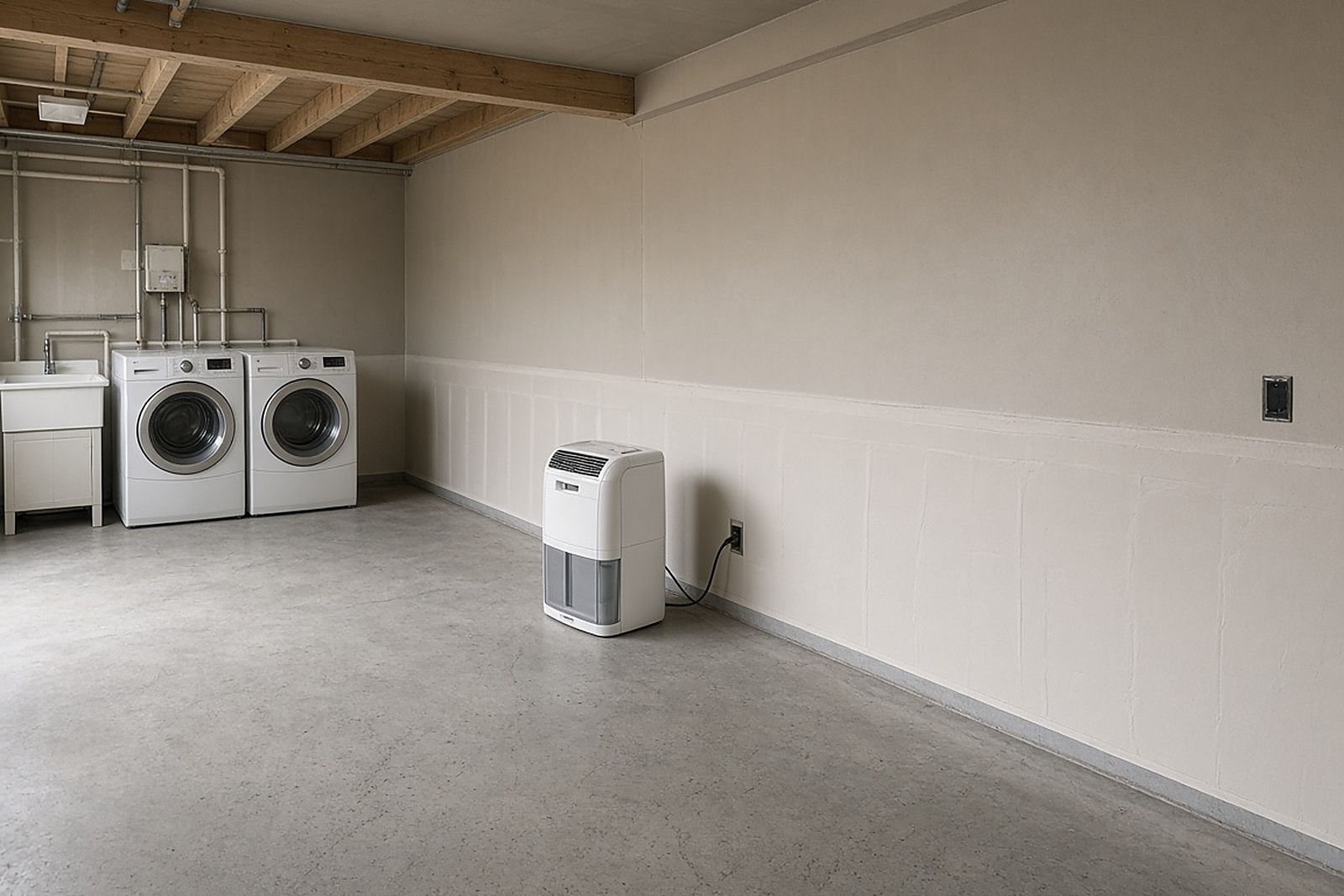
In a bathroom, that often means the floor near the toilet base, the flush handle, the faucet handles, and the lower edge of the tub or shower surround. In a basement after a backup, it might be the sealed floor near the drain, the washer and dryer fronts, and metal shelving legs. In a care setting, it could be bed rails, commode frames, and the floor where a bedside commode sits.
Ask the provider to test a clean control surface too, such as a countertop far from the incident. That gives you a sense of what normal looks like for that home on that meter.
Mark the swab spots with painter's tape or note them on a simple floor sketch. Retesting the same patch after each stage is what makes the comparison meaningful. A second swab taken a foot away from the first is really a new test, not a follow-up.
Skip surfaces that are going to be removed anyway. There is little point swabbing carpet or soaked drywall that the scope already lists for disposal. Save the swabs for what stays in the home.
Tracing a persistent bathroom odor with swabs
ATP swabs are especially useful when a bathroom keeps smelling after repeated incontinence episodes even though staff or family clean it daily. In a care home or a private house, that pattern suggests residue somewhere the daily routine does not reach.
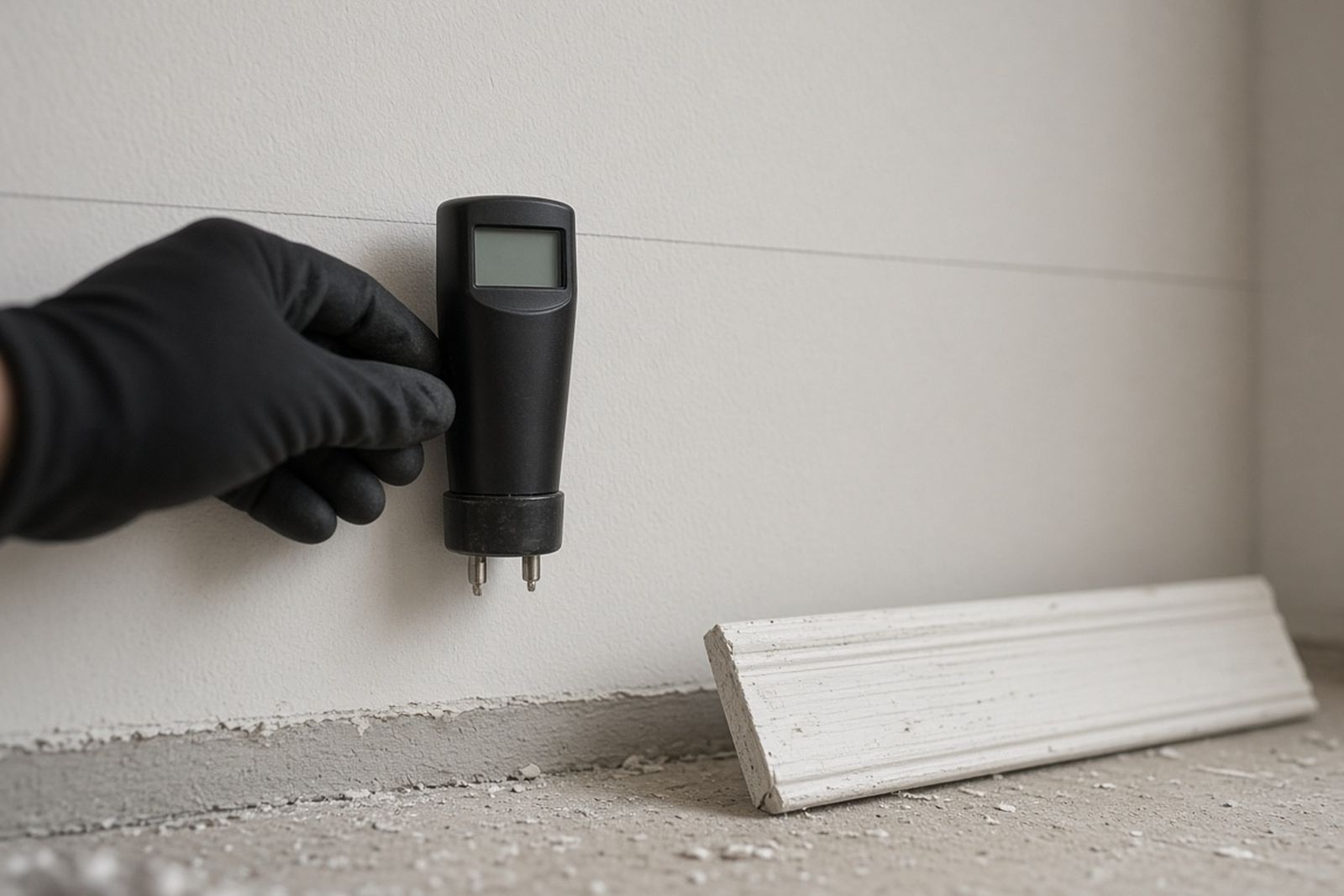
Swabbing a series of spots along the contamination path, such as the toilet base, a grab bar, the floor along the wall, and the vinyl baseboard, shows where readings climb. A low reading on the grab bar alongside a high reading on the floor and the highest reading at the baseboard points toward urine wicking behind the baseboard and into the edge of the subfloor. Pulling the baseboard confirms it.
The fix in that case is structural: remove the baseboard and the damaged section of subfloor, clean and disinfect the exposed framing, let it dry, and install a sealed cove base. Follow-up swabs on the new floor and base should read low. The numbers do not prove the room is pathogen-free, but they point the crew to hidden residue that daily mopping could never reach.
Reporting results, and verifying beyond ATP
A useful report lists the meter brand, the date and time of each swab, the exact location swabbed, the surface type, and the reading. It should say whether the swab was taken before cleaning, after cleaning, or after disinfection, and how long after any disinfectant was applied.
The report should also state what pass or fail level the provider used and where it came from. Many providers rely on thresholds suggested by the meter's manufacturer or their own internal standards. There is no single universal number for residential waste cleanup, so the reasoning matters more than the digit.
If a location failed, the report should show that it was recleaned and retested. A report that only shows passing numbers with no history is harder to trust.
ATP is a quick, objective check, but it works best alongside other evidence. A complete verification for a feces or fluid job usually combines several methods.
- A visual inspection with good lighting, including under fixtures and along baseboards
- Moisture readings in subfloors and wall cavities, since trapped moisture can hold residue and feed odor
- An odor check after the space has been closed up for some hours
- Confirmation that every porous item listed for removal was actually removed
- Records of the disinfectant used, its registration number, and the contact time observed
Should you pay extra for ATP testing?
For a small, clearly contained spill on a tile floor, ATP testing may add little beyond what a careful visual check provides. For larger jobs, recurring odor problems, care settings, or disputes between a landlord and tenant, it can be worth asking for.
The value is in the documentation. A before-and-after set of readings gives an owner, an insurer, or a family member a way to see that cleaning worked on the surfaces tested. Ask the provider in advance how many swabs they plan to take and how the results will be shared.
It also helps when you are caring for someone vulnerable at home. If a family member with a weakened immune system will return to a bathroom that was contaminated, a documented drop in residue on the surfaces they will touch can offer some peace of mind, as long as you remember what the number does and does not cover.
Treat a provider who refuses to share raw readings, or who only offers a pass or fail label, with some caution. The numbers belong to you as part of the job record.
Some care facilities or licensing agencies may have their own expectations for how cleaning is verified, and those should take priority over general advice.